


Some error occured while loading the Quick View. Please close the Quick View and try reloading the page.
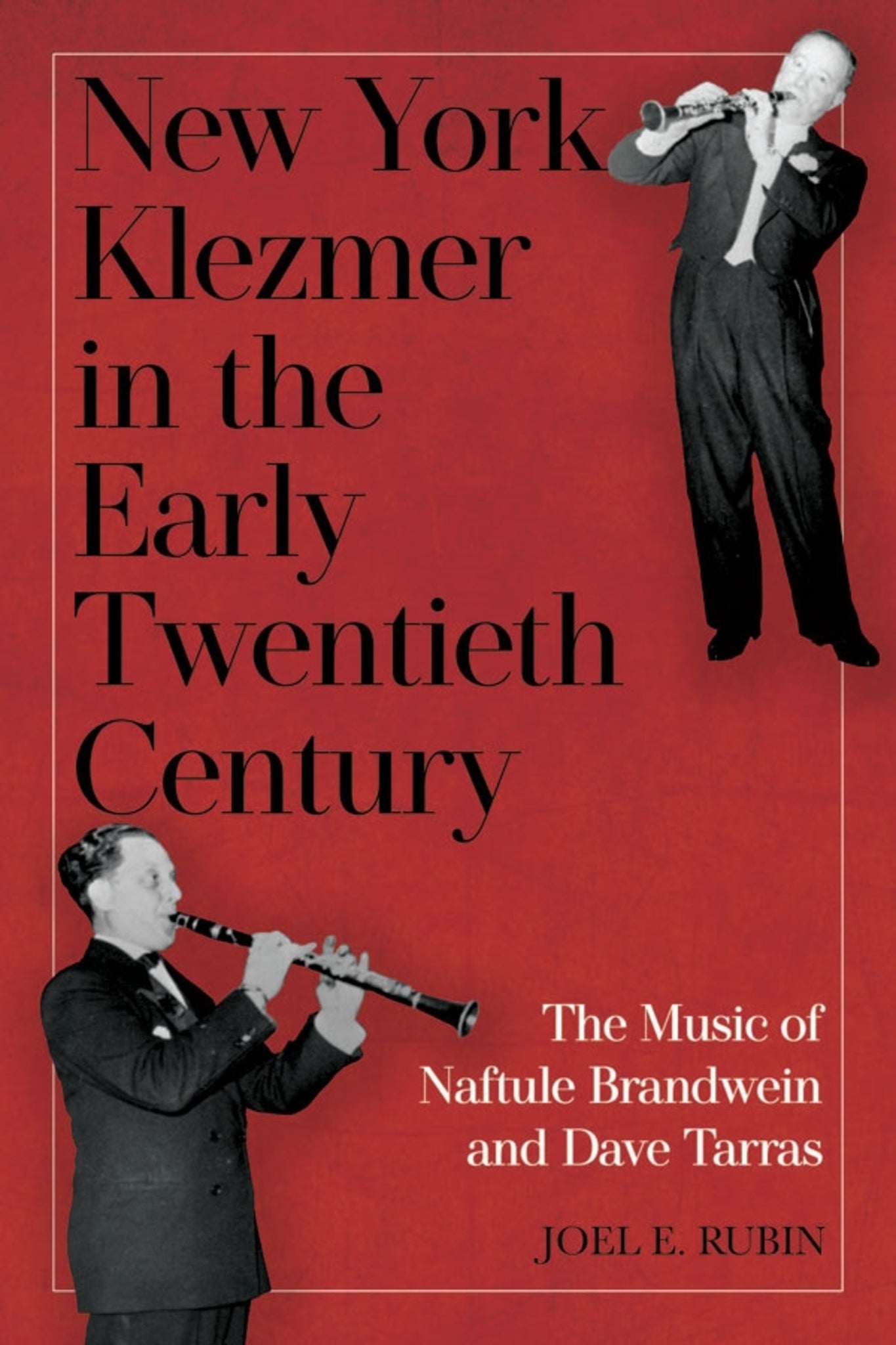
The music of clarinetists Naftule Brandwein and Dave Tarras is iconic of American klezmer music. Their legacy has had an enduring impact on the development of the popular world music genre.
Since the 1970s, klezmer music has become one of the most popular world music genres, at the same time influencing musical styles as diverse as indie rock, avant-garde jazz, and contemporary art music. Klezmer is the celebratory instrumental music that developed in the Jewish communities of eastern Europe over the course of centuries and was performed especially at weddings. Brought to North America in the immigration wave in the late nineteenth century, klezmer thrived and developed in the Yiddish-speaking communities of New York and other cities during the period 1880-1950.
No two musicians represent New York klezmer more than clarinetists Naftule Brandwein (1884-1963)and Dave Tarras (1897-1989). Born in eastern Europe to respected klezmer families, both musicians had successful careers as performers and recording artists in New York. Their legacy has had an enduring impact and helped to spurthe revival of klezmer since the 1970s.
Using their iconic recordings as a case study, New York Klezmer in the Early Twentieth Century looks at the inner workings of klezmer dance music, from its compositional aspects to the minutiae of style. Making use of historical and ethnographic sources, the book places the music within a larger social and cultural context stretching from eastern Europe of the nineteenth century to the United Statesof the present.
JOEL E. RUBIN is Associate Professor of Music at the University of Virginia and an acclaimed performer of traditional klezmer music.
Since the 1970s, klezmer music has become one of the most popular world music genres, at the same time influencing musical styles as diverse as indie rock, avant-garde jazz, and contemporary art music. Klezmer is the celebratory instrumental music that developed in the Jewish communities of eastern Europe over the course of centuries and was performed especially at weddings. Brought to North America in the immigration wave in the late nineteenth century, klezmer thrived and developed in the Yiddish-speaking communities of New York and other cities during the period 1880-1950.
No two musicians represent New York klezmer more than clarinetists Naftule Brandwein (1884-1963)and Dave Tarras (1897-1989). Born in eastern Europe to respected klezmer families, both musicians had successful careers as performers and recording artists in New York. Their legacy has had an enduring impact and helped to spurthe revival of klezmer since the 1970s.
Using their iconic recordings as a case study, New York Klezmer in the Early Twentieth Century looks at the inner workings of klezmer dance music, from its compositional aspects to the minutiae of style. Making use of historical and ethnographic sources, the book places the music within a larger social and cultural context stretching from eastern Europe of the nineteenth century to the United Statesof the present.
JOEL E. RUBIN is Associate Professor of Music at the University of Virginia and an acclaimed performer of traditional klezmer music.

Price: $190.00
Pages: 484
Publisher: Boydell & Brewer Inc.
Imprint: University of Rochester Press
Publication Date:
20 August 2020
Trim Size: 9.00 X 6.00 in
ISBN: 9781580465984
Format: Hardcover
BISACs:
MUSIC / Ethnomusicology, Theory of music and musicology, RELIGION / Judaism / General, HISTORY / United States / 20th Century, Judaism

Rubin's book, based on his 2001 PhD research but comprehensively updated, will doubtless stand as
one of the defining scholarly pillars in this occasionally messy field. Not only does it provide the most
detailed and fine-grained musical analysis of klezmer's stylistic and structural elements seen to date, but the fact that this analysis is based upon a particular and clearly-defined corpus reduces guesswork and in fact allows larger conclusions to be more effectively drawn.
[This] book, in its steadfast all-in approach to defining musical style, stands [...] as a classic of its discipline, further reinforcing the foundation from which the field continues to move forward.
New York Klezmer marks a milestone, not only for the study of klezmer music but also and especially for the study of performance practice. Lucidly written, this volume will greatly satisfy music researchers of all stripes interested in music and Jewish studies, the study of interpretation and performance practice, urban ethnomusicology and local music history. Sections can easily serve as assigned reading in classes on klezmer culture. Free from highbrow academic jargon and equipped with a glossary, this book will also be a welcome read for generations of klezmorim. As such, it is not only highly recommended, it might remain unrivaled for some time.
— Tina Frühauf
one of the defining scholarly pillars in this occasionally messy field. Not only does it provide the most
detailed and fine-grained musical analysis of klezmer's stylistic and structural elements seen to date, but the fact that this analysis is based upon a particular and clearly-defined corpus reduces guesswork and in fact allows larger conclusions to be more effectively drawn.
[This] book, in its steadfast all-in approach to defining musical style, stands [...] as a classic of its discipline, further reinforcing the foundation from which the field continues to move forward.
New York Klezmer marks a milestone, not only for the study of klezmer music but also and especially for the study of performance practice. Lucidly written, this volume will greatly satisfy music researchers of all stripes interested in music and Jewish studies, the study of interpretation and performance practice, urban ethnomusicology and local music history. Sections can easily serve as assigned reading in classes on klezmer culture. Free from highbrow academic jargon and equipped with a glossary, this book will also be a welcome read for generations of klezmorim. As such, it is not only highly recommended, it might remain unrivaled for some time.
— Tina Frühauf
Introduction: "If you called me a klezmer thirty-five years ago..."
A Wedding in Town Was Like a Holiday: A Short History of Klezmorim in Europe
Life Began with the Lower East Side: Changing Meanings, Changing Contexts
A Kind of "Ethnomusicological Archive": Commercial 78-rpm Recordings of Klezmer Music
A Single Field Irrespective of Origin: Polymusicality and Language, Aesthetics, Classification, and Transcription
"What mattered was what's happening with the tune": Modality and Compositional Processes
"The little things that they do": Ornaments and Performance Practice Techniques
"The newest bulgar out that everyone played": New York Klezmer Post-1929
Glossary of Terms
Notes
Bibliography
A Wedding in Town Was Like a Holiday: A Short History of Klezmorim in Europe
Life Began with the Lower East Side: Changing Meanings, Changing Contexts
A Kind of "Ethnomusicological Archive": Commercial 78-rpm Recordings of Klezmer Music
A Single Field Irrespective of Origin: Polymusicality and Language, Aesthetics, Classification, and Transcription
"What mattered was what's happening with the tune": Modality and Compositional Processes
"The little things that they do": Ornaments and Performance Practice Techniques
"The newest bulgar out that everyone played": New York Klezmer Post-1929
Glossary of Terms
Notes
Bibliography