


Some error occured while loading the Quick View. Please close the Quick View and try reloading the page.
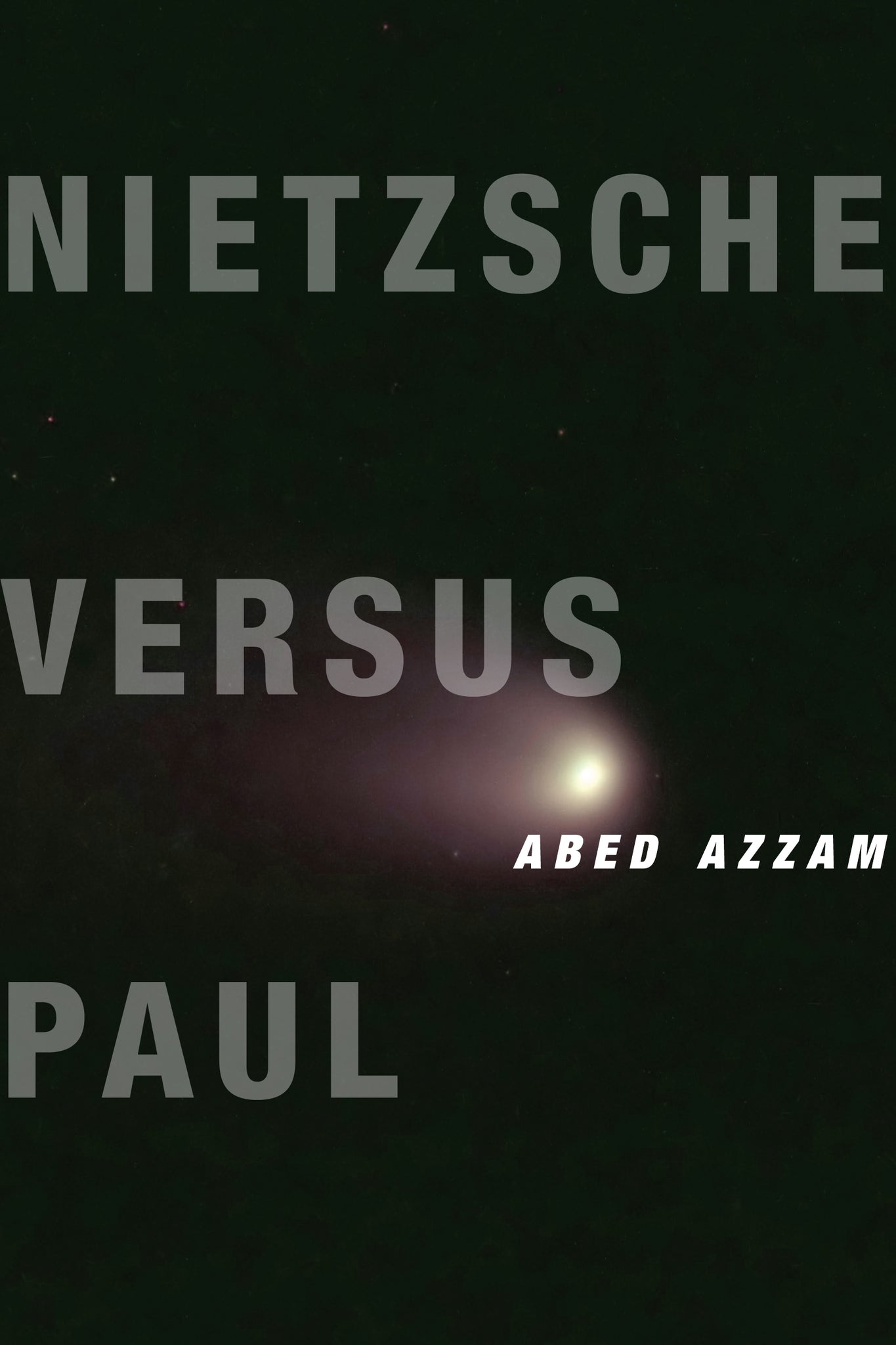
Abed Azzam offers a fresh interpretation of Nietzsche's engagement with the work of Paul the Apostle, reorienting the relationship between the two thinkers while embedding modern philosophy within early Christian theology. Paying careful attention to Nietzsche's dialectics, Azzam situates the philosopher's thought within the history of Christianity, specifically the Pauline dialectics of law and faith, and reveals how atheism is constructed in relation to Christianity.
Countering Heidegger's characterization of Nietzsche as an anti-Platonist, Azzam brings the philosopher closer to Paul through a radical rereading of his entire corpus against Christianity. This approach builds a compelling new history of the West resting on a logic of sublimation, from ancient Greece and early Judaism to the death of God. Azzam discovers in Nietzsche's philosophy a solid, tangible Pauline structure and virtual, fragile Greek content, positioning the thinker as a forerunner of the recent "return to Paul" led by Badiou, Agamben, iek, and Breton. By changing the focus of modern philosophical inquiry from "Nietzsche and philosophy" to "Nietzsche and Christianity," Azzam initiates a major challenge to the primacy of Plato in the history of Western philosophy and narrow certainties regarding Nietzsche's relationship to Christian thought.


— Judith Butler, University of California, Berkeley
Nietzsche versus Paul is a wonderful, philosophically engaging book, meticulous -- even relentless -- in its argumentation, arresting in its interpretive scope, and dedicated to the surprisingly neglected presence of Christianity in Nietzsche.
— Gil Anidjar, Columbia University
A brilliant reconstructive projective which fills a genuine lacuna in recent scholarship in history, philosophy, and theology alike. Nietzsche versus Paul is coherent, well formulated, and of extraordinary importance for all of the larger philosophical and historical discussions which have emerged, surprisingly, to become some of the most pressing 'theory' topics of our time.
— Ward Blanton, University of Kent
Acknowledgments
List of Abbreviations
Introduction
1. From Dionysian Tragedy to Christianity
2. From Judaism to Christianity
3. Jesus-Christ and the Two Worlds of Early Christianity
4. Paul: The First Christian
5. Science and Art After the Death of God
6. Beyond Modern Temporality
Notes
Bibliography
Index