


Some error occured while loading the Quick View. Please close the Quick View and try reloading the page.
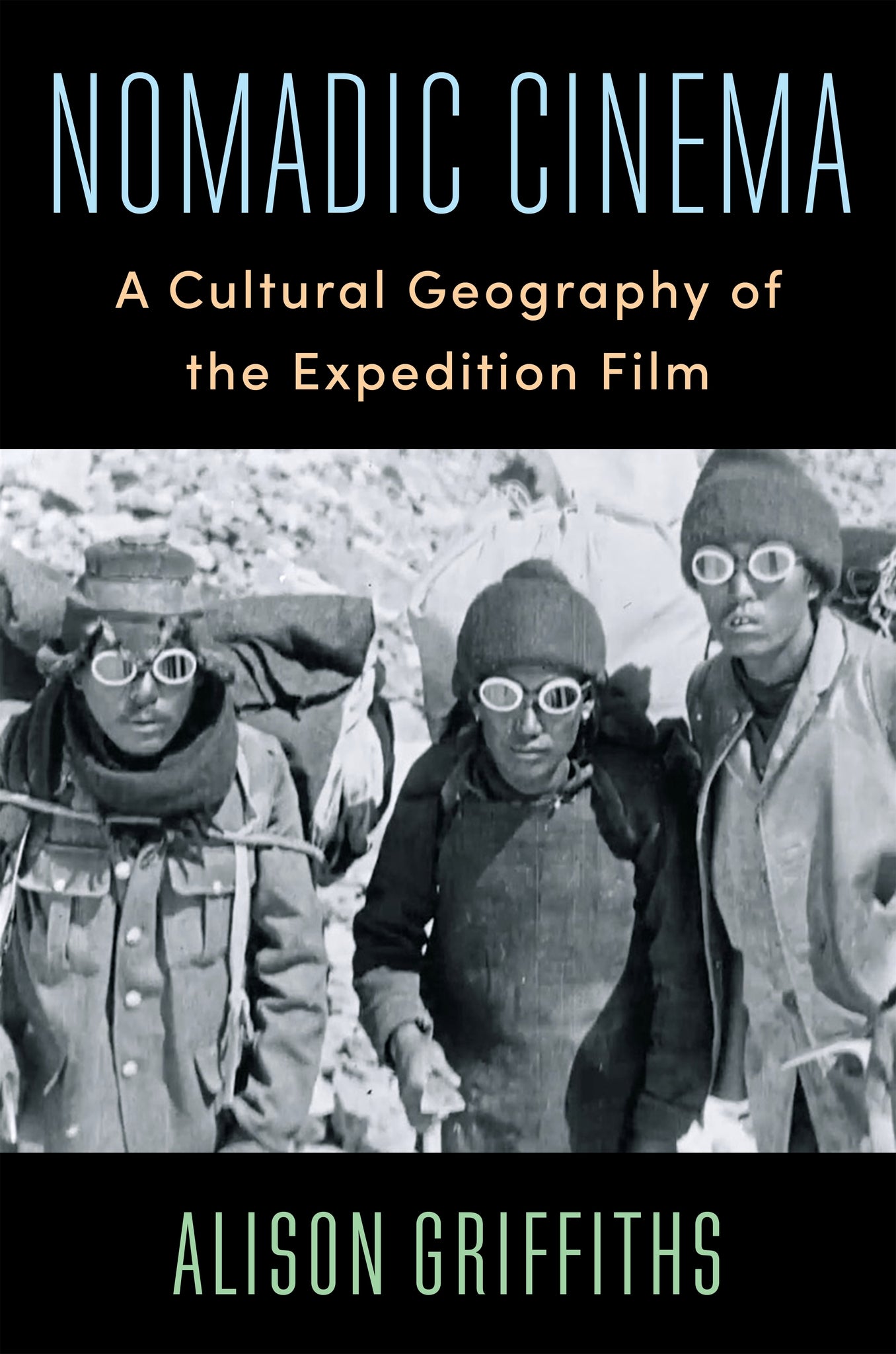
From In Borneo, the Land of the Head-Hunters to The Epic of Everest to Camping Among the Indians, the early twentieth century was the heyday of expedition filmmaking. As new technologies transformed global transportation and opened new avenues for documentation, and as imperialism and capitalism expanded their reach, Western filmmakers embarked on journeys to places they saw as exotic, seeking to capture both the monumental and the mundane. Their films portrayed far-flung locales, the hardships of travel, and the day-to-day lives of Indigenous people through a deeply colonial lens.
Nomadic Cinema is a groundbreaking history of these films, analyzing them as visual records of colonialism that also offer new possibilities for recognizing Indigenous histories. Alison Griffiths examines expedition films made in Borneo, Central Asia, Tibet, Polynesia, and the American Southwest, reinterpreting them from decolonial perspectives to provide alternative accounts of exploration. She considers the individuals and institutions—including the American Museum of Natural History—responsible for creating the films, the spectators who sought them out, and the Indigenous intermediaries whose roles white explorers minimized. Ambitious and interdisciplinary, Nomadic Cinema ranges widely, from the roots of expedition films in medieval cartography and travel writing to still-emerging technologies of virtual and augmented reality. Highlighting the material conditions of filmmaking and the environmental footprint left by exploration, this book recovers Indigenous memory and sovereignty from within long-buried sources.


List of Illustrations
Acknowledgments
Introduction: Decolonial Praxis
Part I. Prehistories and Contexts of the Expedition Film
1. Medieval Cartography and the Repressed Imaginary of the Exploitation Expedition Film
2. The Dialectics of Adventure: Counterhistory and the Explorers Club in New York City
Part II. The Small Expedition Film and Archival Return
3. Intersubjectivity and Selfhood in the Lone-Wolf Expedition
4. Southwest Imaginaries: Native American Identity and Digital Return
Part III. Affective Geography and Spatial Epistemologies
5. Cinema in Extremis: Monumentality, Mount Everest, and Indigenous Intermediaries
6. Cinema as Visual Small Talk: The Anxious Optic of the 1926 Morden-Clark Expedition Across Central Asia
Conclusion: Virtual Reality, Indigenous Futurism, and the Legacy of the Expedition Film
Notes
Filmography
Bibliography
Index