


Some error occured while loading the Quick View. Please close the Quick View and try reloading the page.
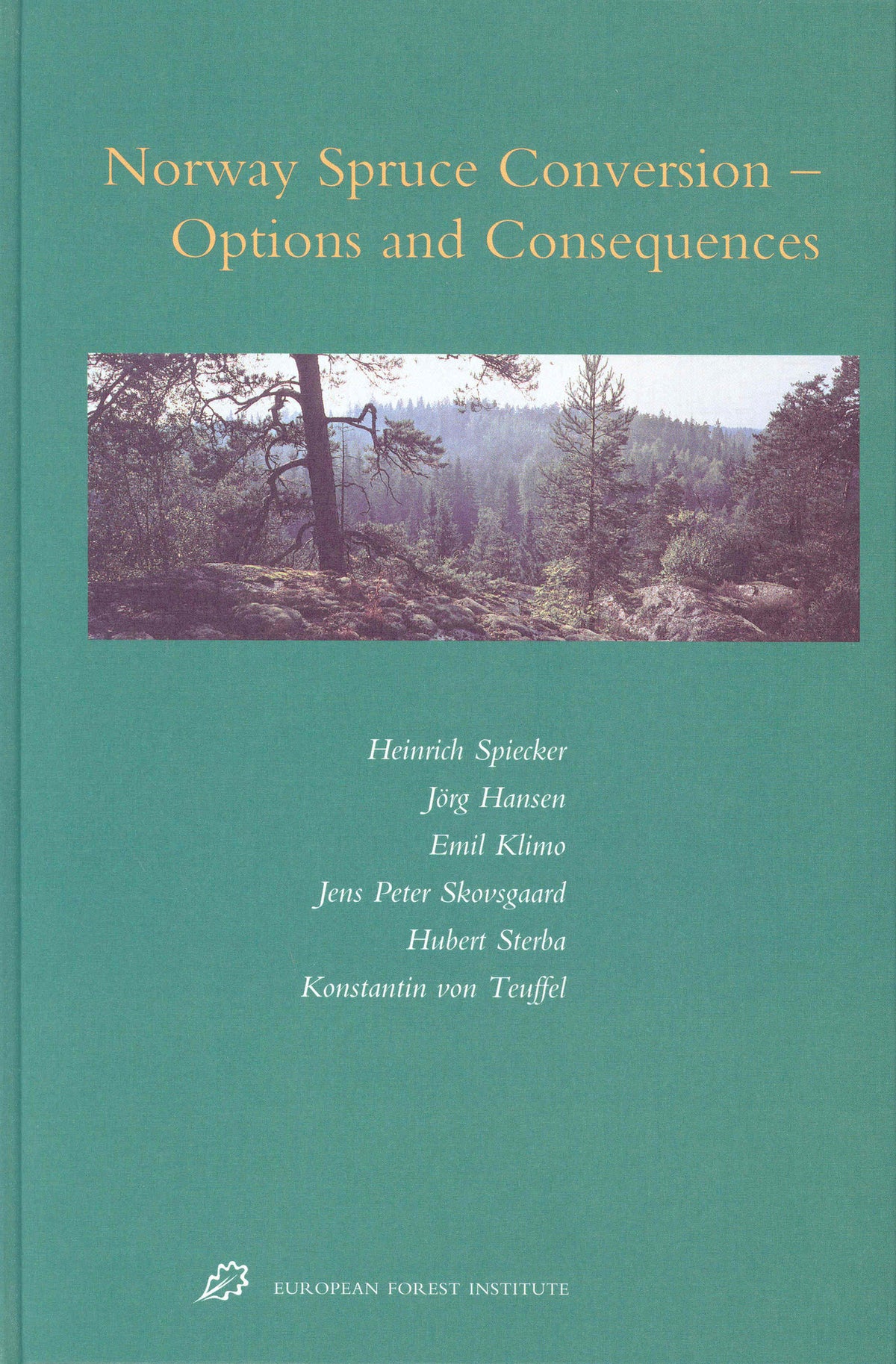
Up to the end of the 19th century, many European forests suffered from devastation and soil deterioration, which caused fears of timber shortage. In order to counteract this possible shortage, many forest areas were reforested with coniferous tree species, especially Norway spruce (Picea abies [L.] Karst). Consequently, coniferous forests (often Norway spruce forests), consisting of trees of the same age, were established on many sites naturally dominated by broadleaves. As a result, damages caused by storm, snow, ice, drought, insects, fungi and possibly soil degradation seemed to occur more frequently in these secondary Norway spruce forests than in forests consisting of species better adapted to the ambient conditions. Conversion of Norway spruce stands may reduce these risks and upgrade biodiversity and the genetic potential of forests. As the economic results of forestry, future wood markets and various other goods and services that are provided to society by forest ecosystems, are affected by present and future decision-making, all aspects of conversion must be well understood.
EFI’s Regional Project Centre, CONFOREST, is continuously striving to improve implementation of conversion projects by consolidation of the expertise available in all forestry disciplines. This book comprises the findings in all conversion-related areas aiming to consider ecosystem needs while ensuring availability of silvicultural methods and operational feasibility of their implementation. Simultaneously, the cost-effectiveness of conversion scenarios is analysed by forestry economists. Since a change in public perception and ecological awareness may cause policy makers to either or not endorse further conversion efforts, input by experts in forestry politics is also provided.
EFI’s Regional Project Centre, CONFOREST, is continuously striving to improve implementation of conversion projects by consolidation of the expertise available in all forestry disciplines. This book comprises the findings in all conversion-related areas aiming to consider ecosystem needs while ensuring availability of silvicultural methods and operational feasibility of their implementation. Simultaneously, the cost-effectiveness of conversion scenarios is analysed by forestry economists. Since a change in public perception and ecological awareness may cause policy makers to either or not endorse further conversion efforts, input by experts in forestry politics is also provided.

Price: $211.00
Pages: 272
Publisher: Brill
Imprint: Brill
Publication Date:
15 February 2004
ISBN: 9789004137288
Format: Hardcover
