


Some error occured while loading the Quick View. Please close the Quick View and try reloading the page.
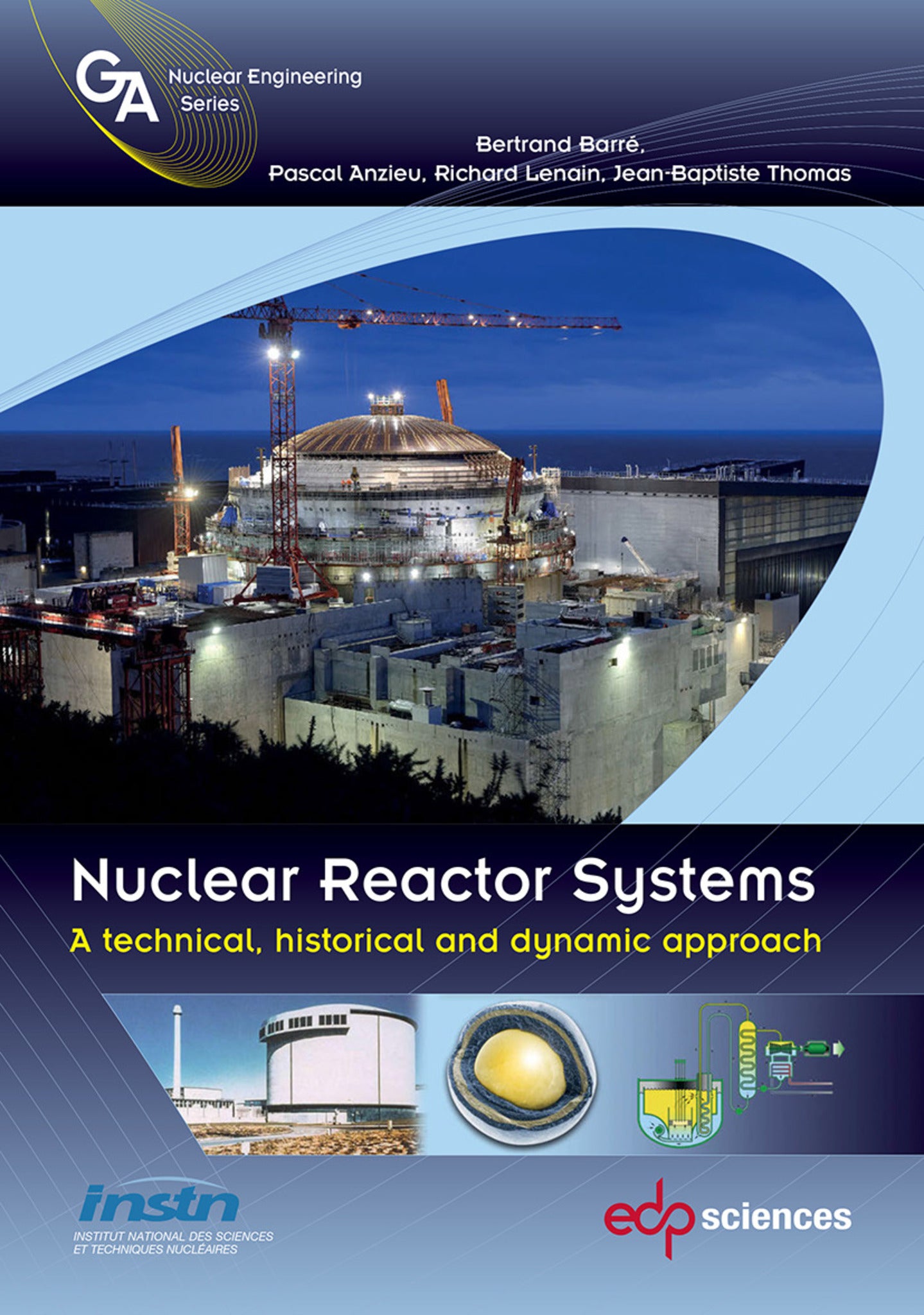
The evolution of nuclear reactors since the 1942 Fermi experiment can be described along the lines of natural history, with an initial flourish of uninhibited creativity followed by a severe selection process leading to a
handful of surviving species, with light water reactors occupying most of the biotope today.
The is book combines four approaches:
- A descriptive one. This gives an overview of the main strengths and weaknesses of the different reactor systems.
- A historical approach, from the 1940’s to nowadays, with an extrapolation to the near future. The LWR dominance being firmly established, what is the next step?
- An axiomatic approach. Starting with a set of long term criteria concerning the fuel cycle sustainability, a conceptual solution is established, and then a family of reactor systems is selected for development and qualifycation.
- A dynamic approach. In the early 2000s, the prevailing image combined a “nuclear renaissance”, a strong limitation of the greenhouse gases concentration and a dynamic growth of the world economy. Updating the strategy in the wake of the last decade events requires a sharper understanding of the driving forces as well as of the influence of the post-Fukushima safety framework on the design constraints.
All the books of the “Génie Atomique” series have adopted an instructional approach. Initially intended for INSTN’s students, they can be greatly helpful to physicists and engineers involved in the development or operational aspects of nuclear power.


Graduated from École des Mines de Nancy, retired from CEA and AREVA, Bertrand Barré teaches Nuclear Engineering at Institut National des Sciences et Techniques Nucléaires, and Sciences-Po. He was Nuclear Attaché in Washington DC, Director of Engineering at Technicatome, Head of the Nuclear Reactors Directorate at CEA, R&D Vice-president at COGEMA, Scientific Advisor to AREVA, and Member of many Scientific Committees in France and abroad.
--- Contributor: Pascal AnzieuGraduated from the École Centrale de Paris, France, Pascal Anzieu made his career at CEA on nuclear reactors design and safety. He led the Superphenix research program from 1994 to 1998 and then conducted research programs on future nuclear systems: sodium, gas, molten salt reactors, accelerator-driven systems, etc. He currently teaches at the National Institute for Nuclear Science and Technology and several engineering schools and universities.
--- Contributor: Richarch LenainDoctor of Orsay University 1982, currently coordinator of a CEA PWR expert group, Richard Lenain teaches Reactor Physics and Nuclear Engineering at INSTN, École Polytechnique and École Centrale de Paris. He was formerly head of Applied Mathematics and Reactor Studies Section in CEA/Saclay.
--- Contributor: Jean-Baptiste ThomasGraduated from École Centrale de Paris with a postgraduate degree in Theoretical Physics (atomic and nuclear) at Orsay University, currently scientific advisor to the Nuclear Energy Director in CEA, Jean-Baptiste Thomas teaches Reactor Physics and Nuclear Engineering as a professor at INSTN (in charge of the Nuclear Reactor Systems course created by Bertrand Barré). He was formerly Director for ADS studies in CEA and Director for Simulation and Experimental Facilities in the Nuclear Energy Directorate.