


Some error occured while loading the Quick View. Please close the Quick View and try reloading the page.
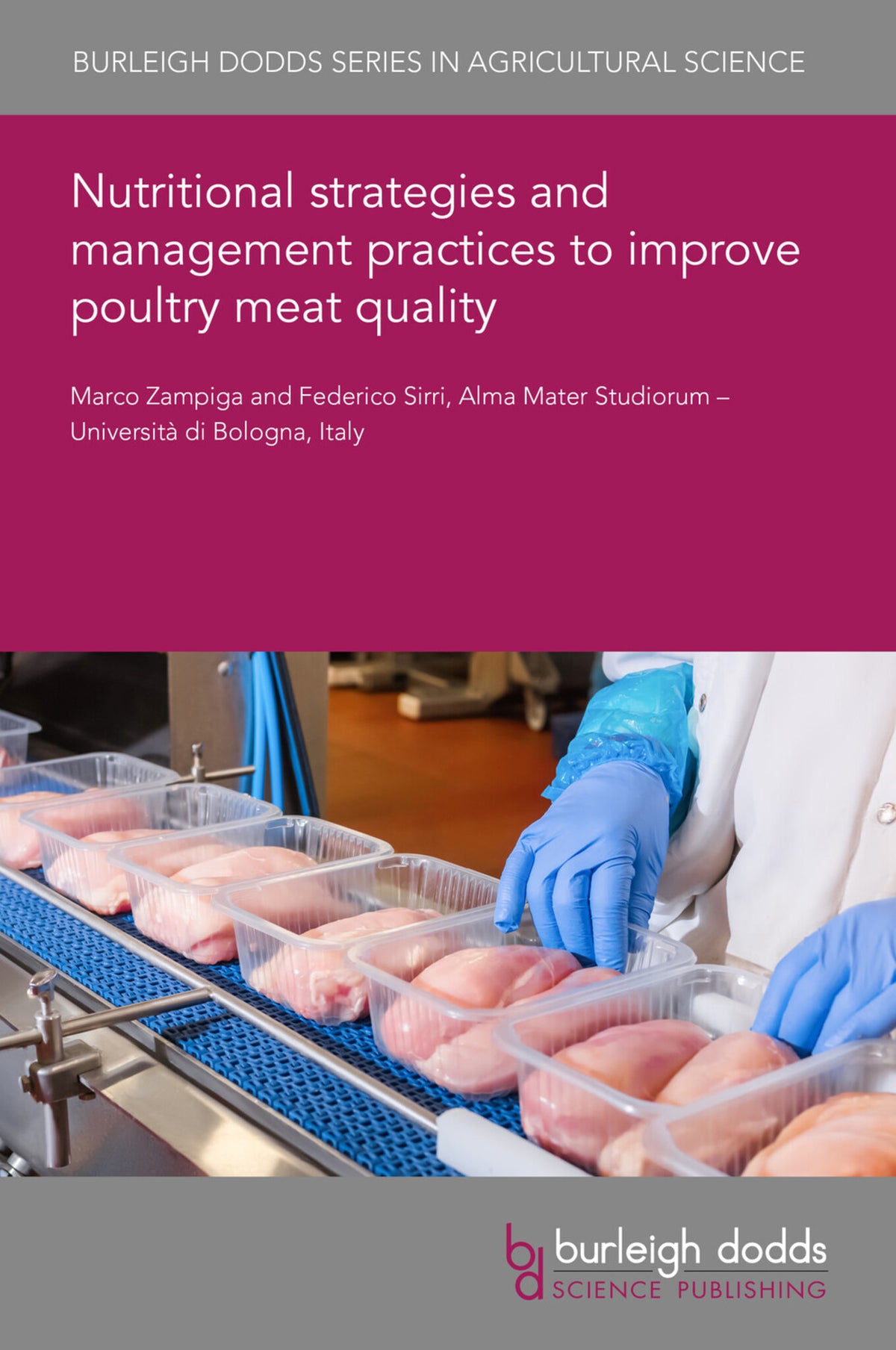
The concept of meat quality is of primary relevance for both producers, due to the implications for fresh retail and value-added meat products, and consumers, which are increasingly aware of the nutritional quality of food. Beside the genetic background, many environmental factors are able to influence meat quality traits in poultry. For instance, nutrition is considered as one of the most important determinants of poultry meat quality due to its effects on proximate composition, technological properties, oxidative stability and sensory traits. Furthermore, nutritional strategies can also play a role in limiting the negative consequences exerted on meat quality by certain conditions to which modern broiler lines are particularly susceptible, such as muscle abnormalities and heat stress. From another perspective, some management practices can also provide relevant benefits in terms of meat quality. In this context, the ancient practice known as “caponization” (i.e. castration) can deeply modify meat and carcass quality by changing the animal metabolism, providing to the consumers a high-quality alternative to conventional chicken meat. The aim of this chapter is, therefore, to summarize the most relevant findings concerning the effects of nutrition and feeding strategies on the different facets of the meat quality concept as well as to discuss the consequences of some environmental and management factors, such as heat stress and caponization, on this crucial topic for the modern poultry industry.

Price: $32.50
Publisher: Burleigh Dodds Science Publishing
Imprint: Burleigh Dodds Science Publishing
Series: Burleigh Dodds Series in Agricultural Science
Publication Date:
05 December 2022
ISBN: 9781801467377
Format: eBook

1 Introduction 2 Nutritional and feeding strategies to modulate meat composition 3 Nutritional and feeding strategies to improve meat quality and mitigate the incidence of breast meat abnormalities 4 Consequences of heat stress on poultry meat quality and nutritional strategies to limit product alterations 5 Effect of management practices on meat quality: the case of caponization 6 Conclusion and future trends in research 7 Where to look for further information 8 References