Skip to product information
1 of 1

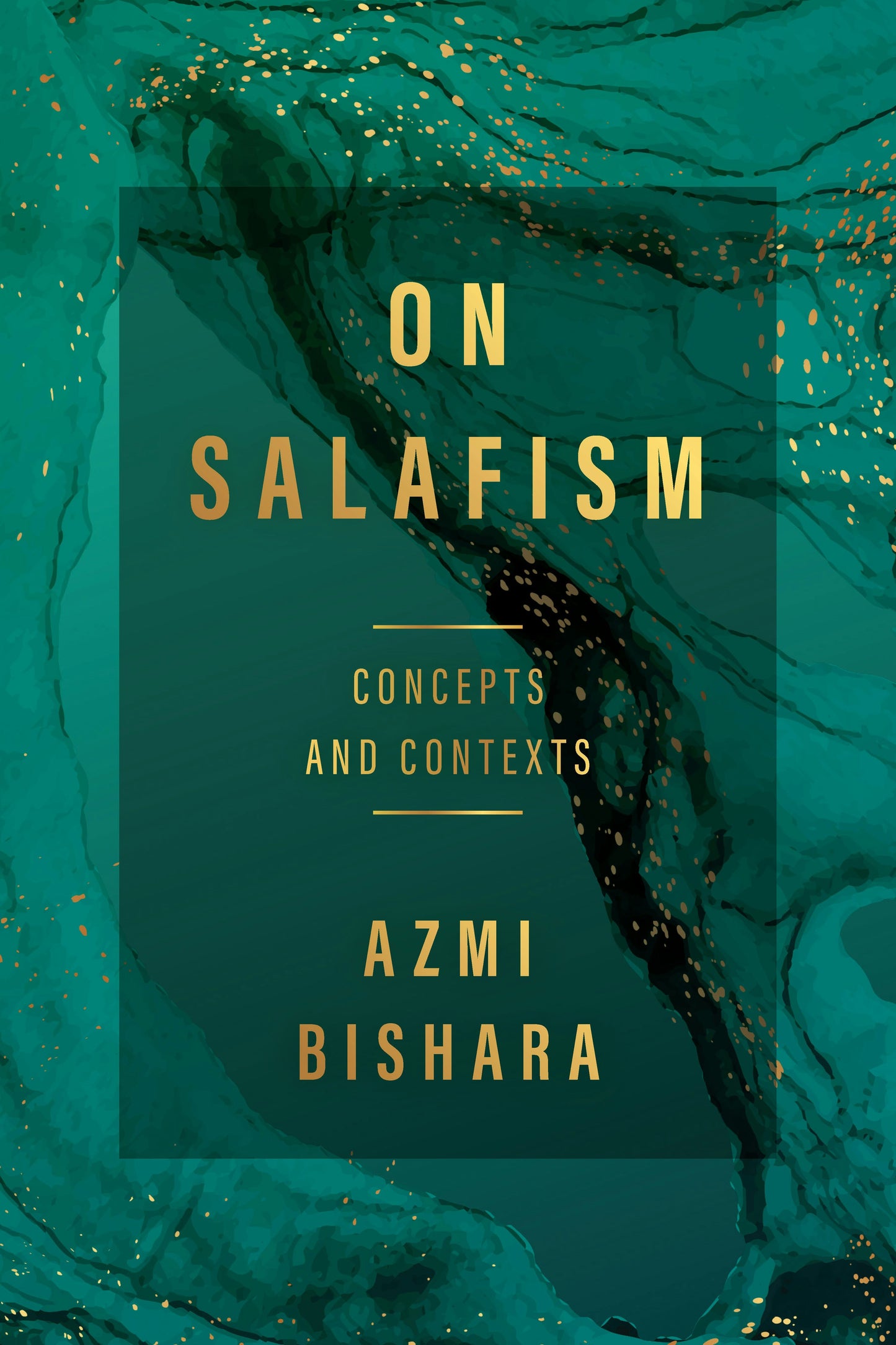
On Salafism

Regular price $60.00
Regular price $60.00 Sale price $60.00
Sold out
On Salafism offers a compelling new understanding of this phenomenon, both its development and contemporary manifestations. Salafism became associated with fundamentalism when the 9/11 Commission u...
Read More
  • 27 September 2022
View Product Details

On Salafism offers a compelling new understanding of this phenomenon, both its development and contemporary manifestations. Salafism became associated with fundamentalism when the 9/11 Commission used it to explain the terror attacks and has since been connected with the violence of the so-called Islamic State. With this book, Azmi Bishara critically deconstructs claims of continuity between early Islam and modern militancy and makes a counterargument: Salafism is a wholly modern construct informed by specific sociopolitical contexts.

Bishara offers a sophisticated account of various movements—such as Wahabbism and Hanbalism—frequently collapsed into simplistic understandings of Salafism. He distinguishes reformist from regressive Salafism, and examines patterns of modernization in the development of contemporary Islamic political movements and associations. In deconstructing the assumptions of linear continuity between traditional and contemporary movements, Bishara details various divergences in both doctrine and context of modern Salafisms, plural. On Salafism is a crucial read for those interested in Islamism, jihadism, and Middle East politics and history.

files/i.png Icon
Price: $60.00
Pages: 246
Publisher: Stanford University Press
Imprint: Stanford University Press
Series: Stanford Studies in Middle Eastern and Islamic Societies and Cultures
Publication Date: 27 September 2022
Trim Size: 9.00 X 6.00 in
ISBN: 9781503630352
Format: Hardcover
REVIEWS Icon
"On Salafism is a timely, erudite account of the genealogy of Salafism, covering a broad chronological and geographical scope. Azmi Bishara provides important correctives to recent scholarly approaches to Salafism, and forcefully demonstrates that modern articulations of Salafism are facets of ideological projects, not natural culminations of classical Islamic traditions." —Ahmad Dallal, American University in Cairo
Azmi Bishara is one of the Arab world's most prominent scholars, a critic of authoritarianism and colonialism, and a staunch supporter of democratic transition in the region. Named by Le Nouveau Magazine Littéraire among the world's most influential thinkers, he has published on political thought, social theory, and philosophy, including Religion and Secularism in Historical Context (2013) and Sectarianism without Sects (2021).
Chapter 1: What Is Salafism?
Chapter 2: On Apostasy
Chapter 3: Religious Associations and Political Movements
Chapter 4: Wahhabism in Context
Conclusion