


Some error occured while loading the Quick View. Please close the Quick View and try reloading the page.
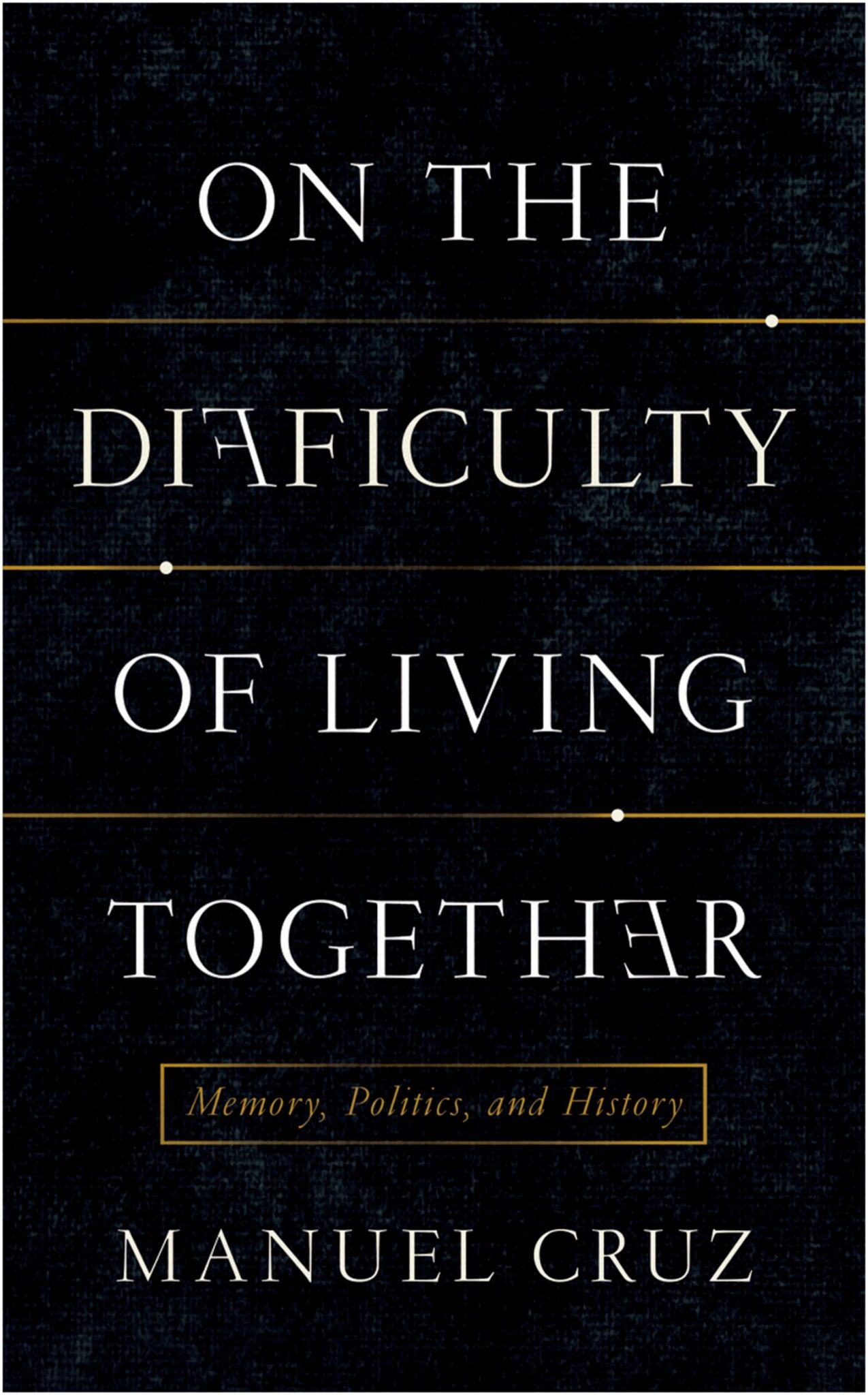
In On the Difficulty of Living Together, Manuel Cruz launches a nuanced study of memory and forgetting, defining their forms and uses, political meanings, and social and historical implications. Memory is not an intrinsically positive phenomenon, he argues, but an impressionable and malleable one, used to advance a variety of agendas.
Cruz focuses on five memory models: that which is inherently valuable, that which legitimizes the present, that which supports retributive justice, that which is essential to mourning, and that which elicits renunciation or revelation. His methodical approach makes sense of memory's positive and negative effects, its contradictions, and its tensions. Cruz shows us that remembering is not necessarily an end in itself, nor is it a supreme value, immune to external influence. The exercise of memory guarantees nothing, though many insist it is a progressive act preventing the repetition of past mistakes. Tying the making of memory to the movements of history, Cruz prioritizes memory's political dimensions over its philosophical aspects and helps us remember its myriad uses.


— Alessandro Ferrara, author of The Force of the Example: Explorations in the Paradigm of Judgment
On the Difficulty of Living Together poses the question of memory as a methodological framework, revealing how the concept is in need of critical scrutiny. Cruz approaches this question with clear arguments that will appeal to a wide audience, including philosophers, historians, and specialists in law, literature, and politics. The result is an important contribution that will introduce the English-speaking world to a European philosopher whose work on the concept of history deserves attention.
— María Pía Lara, author of The Disclosure of Politics: Struggles Over the Semantics of Secularization
In this book a major contemporary philosopher reflects on community from the point of view of our relationship with the past. In this way, memory takes on a uniquely deep political importance. But, far from being a necessary link, it is situated at a fluctuating margin that simultaneously joins and separates remembrance and forgetting. Ultimately allowing the book to remain open to unpredictable directions throughout. An important book, which analyses the complex relationship between origin and actuality.
— Roberto Esposito, author of Living Thought: The Origins and Actuality of Italian Philosophy
Recommended.
— CHOICE
Nuanced and thought-provoking.... The English translation of Manuel Cruz's important work is a welcome addition to the field of memory studies.
— The Use of English
Preface to the English Edition
1. Of Memory and Time
2. The Present Breathes Through History
3. For an Urgent Typology of Memory
4. We Need to Start Defending Ourselves from the Past
5. More About Traumas
By Way of an Epilogue: A Future with Not Much Future (or About How the Perplexity of the Will Is Possible)
Notes
Index