


Some error occured while loading the Quick View. Please close the Quick View and try reloading the page.
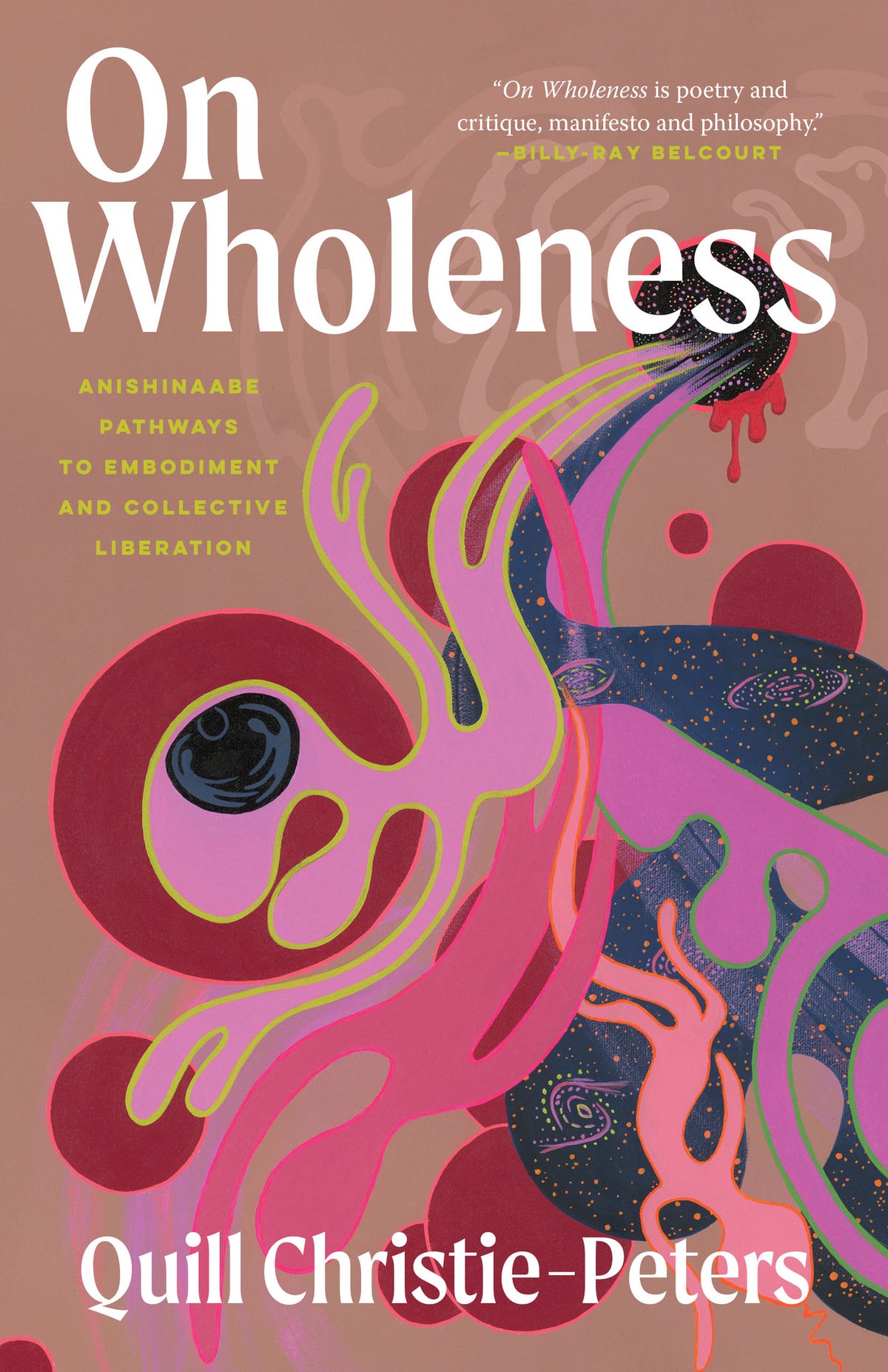
A brilliant exploration embodied wholeness as a pathway to our collective liberation
Through reflections on childbirth, parenting, creative practice, and expansive responsibility, Anishinaabe visual artist Quill Christie-Peters explores how reconnecting with the body can be an act of resistance and healing. She shows that wholeness—despite pain and displacement—is not just possible but essential for liberation, not only for Indigenous people but for all of us.
In poetic and raw storytelling, Quill shares her own experiences of gendered violence and her father’s survival of residential school, revealing how colonialism disconnects us from ourselves. Yet, through an Anishinaabe lens, the body is more than just flesh—it extends to ancestors, homelands, spirit relations, and animal kin.
This fierce and enlightening book reimagines the way we understand settler colonialism—through the body itself. On Wholeness takes us on a journey that begins before birth, in a realm where ancestors and spirits swirl like smoke in the great beyond.


“Quill Christie-Peters demonstrates with wisdom and love that we can imagine and enact a world beyond the depravities of the colonial present.” —Billy-Ray Belcourt, author of Coexistence and A Minor Chorus
“An emotional and spiritual journey of liberatory embodiment.” —Wanda Nanibush, Anishinaabe writer/curator
“Quill Christie-Peters’ voice is vital, and the messages that spill out of this book are timely reminders of what it means to be whole, to be connected to land and others, and to be alive.” —Helen Knott, author of Becoming a Matriarch
“An embodied voyage through Anishinaabe culture, wisdom, and storytelling … A must-read.” —Céline Semaan, Slow Factory
“Intense and unforgettable.” — The Miramichi Reader
“A vital, much-needed book as we reckon with both the ravages and the unraveling of settler colonialism.” — 49th Shelf