


Some error occured while loading the Quick View. Please close the Quick View and try reloading the page.
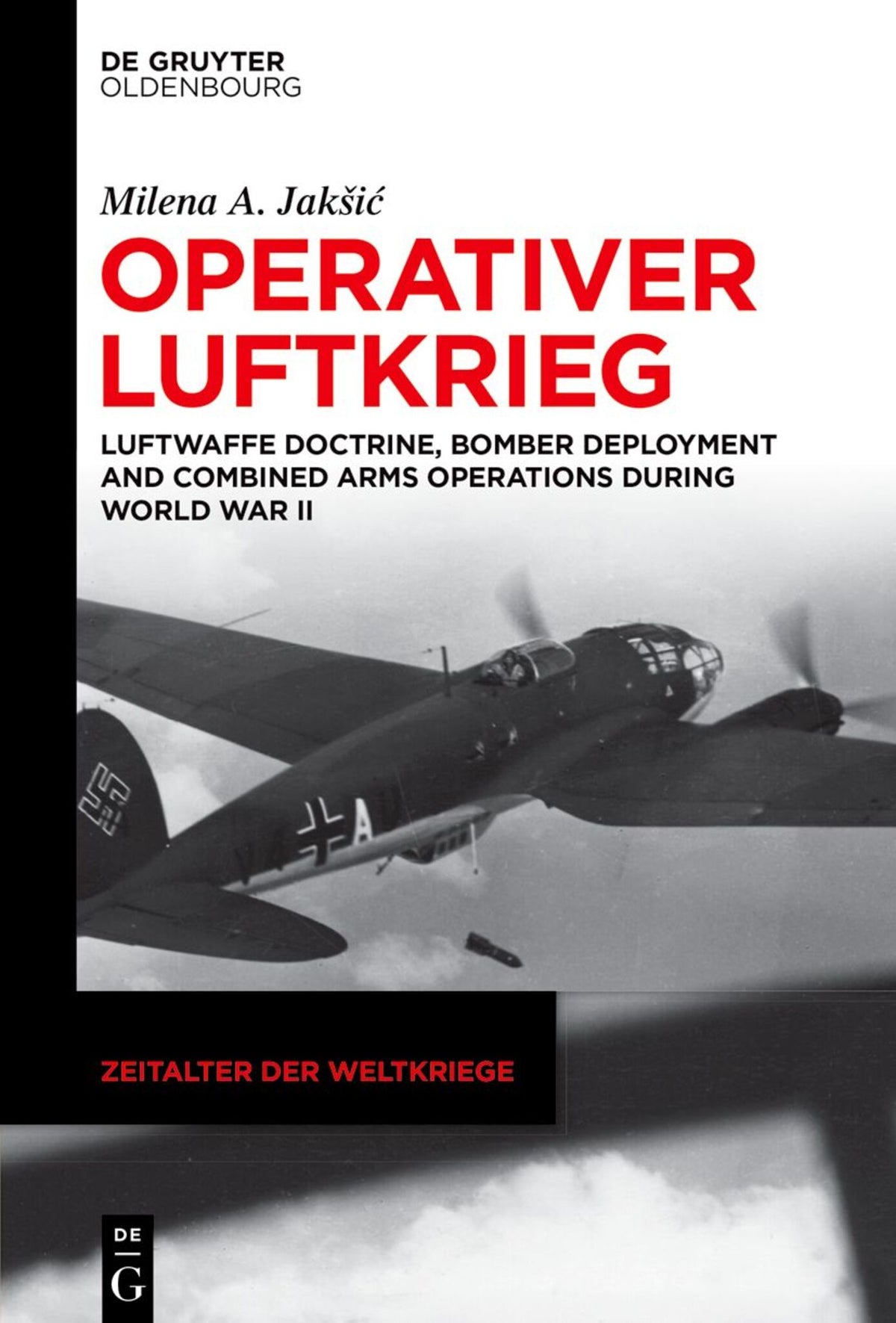
Interest in the World War II Luftwaffe remains high, but much of the literature emphasizes aircraft technology, high-scoring "Experten" fighter pilots, and battle accounts. The basic theoretical ideas that underpinned the Luftwaffe’s evolution, and account for both its remarkable early success and later catastrophic failure, remain poorly understood.
This important work examines traditional German military thinking and how it helped shape the air service after the First World War. It sheds new light on the often-misunderstood concept of "operational air warfare", and how the Luftwaffe attempted to create an independent role for itself while still addressing the demands of the Army for support of fast moving land campaigns through deep interdiction, close air support, and operational paralysis of the enemy. Instead of viewing the Luftwaffe as falling short of the Anglo-American ideal, the work shows how it evolved as a force structurally and intellectually embedded in a joint concept of war. What we might today describe as cross-domain integration was central to its self-image, limited by the technological and institutional conditions of the time.
The book offers fresh interpretations of the air force’s role in the Spanish Civil War, the Polish and French campaigns, and Operation Barbarossa. It makes a significant contribution to our broader understanding of airpower, joint warfare, and the enduring tension between operational brilliance and strategic sustainability.


Dr. Milena A. Jakšić ist Luftkriegshistorikerin und Strategieanalystin. Sie promovierte an der Universität Potsdam und war im Rahmen ihrer Promotion wissenschaftlich an der School of Advanced Air and Space Studies (SAASS) der U.S. Air Force angebunden. Ihre Forschung beschäftigt sich mit der Entwicklung operativer Luftkriegskonzepte und deren Bedeutung für heutige Multi Domain Operations.