


Some error occured while loading the Quick View. Please close the Quick View and try reloading the page.
Gary Hall, Editor of Plum Lines, the quarterly journal of The Wodehouse Society
Thomas Langston Reeves Smith, past President, The Wodehouse Society (US)
In 1915, and for the next decade or so, P.G. Wodehouse’s fictional world mushroomed within his imagination. His best-known creations, Jeeves and Bertie, arrived in that year, as did Lord Emsworth and many of the Blandings circle; the Oldest Member teed off in 1919; the Drones Club threw open its doors in 1921; a new, thoroughly improved Stanley Featherstonehaugh Ukridge returned to the fold in 1923, and Mr Mulliner sipped his first hot scotch and lemon at the bar parlour of the Angler’s Rest in 1926.
Plum would steadily re-visit these characters and locations for another half-century, interspersing his tales with one off novels, stories and further, less voluminous sub series until his death in 1975. These were truly golden years, with Plum at the height of what he called his “mid-season form”.
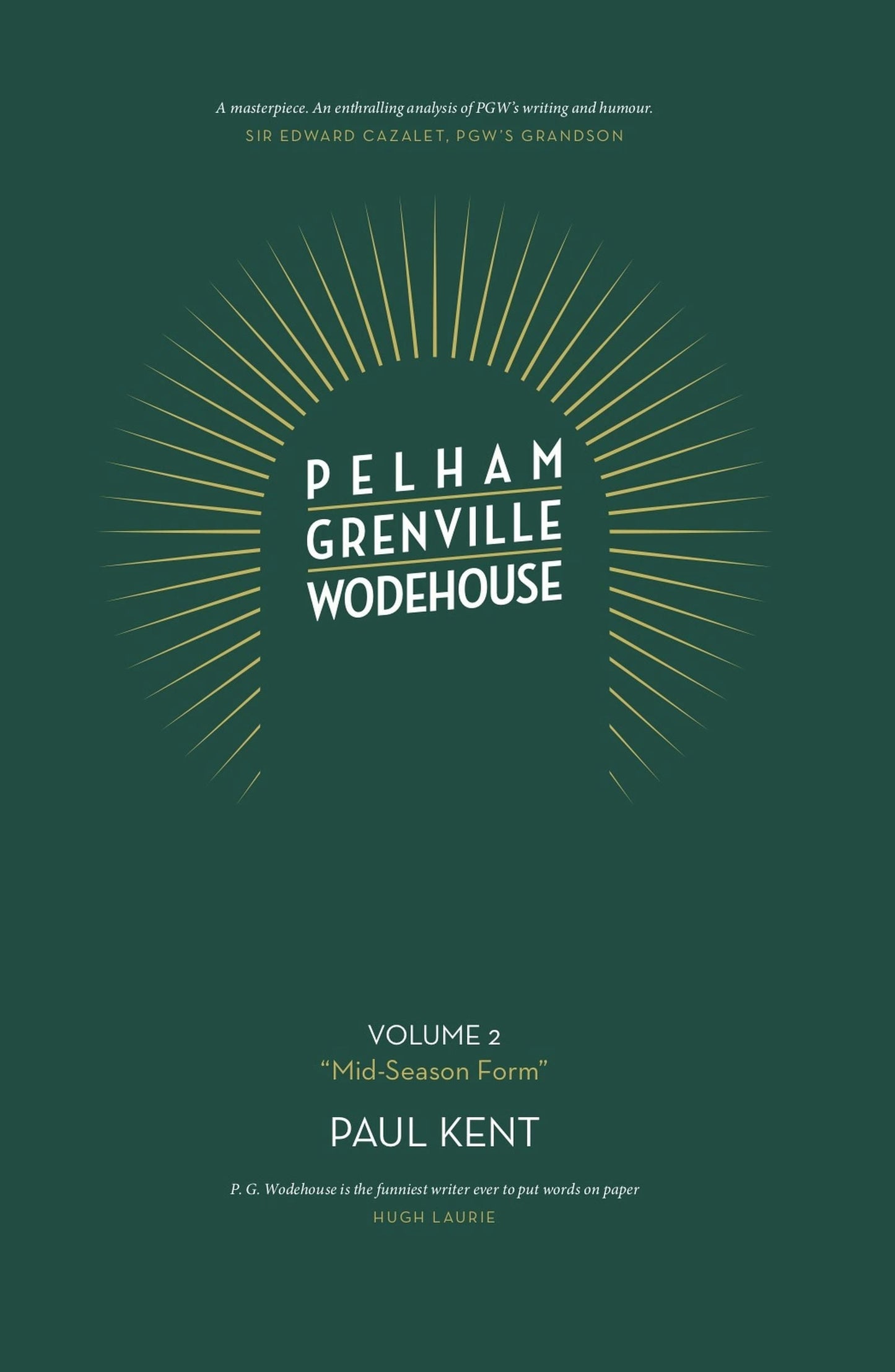
Paul Kent continues his groundbreaking study of Wodehouse’s imagination by casting a fresh eye over his created world, whose characters and stories have made our world feel better about itself for well over a century.


Despite Wodehouse's antipathy towards critics, Kent's first volume demonstrates just how much the thick-skinned of us have to explore in his work. The term sweetness and light has notable literary origins in distinctly literary works, stemming from dulce et utile (literally sweet and useful ) from Horace s Ars Poetica, by way of Jonathan Swift and Matthew Arnold. The words symbolize not just a Victorian gentility but a classless curiosity, and love for fellow man. Wodehouse s work should perhaps be seen in this vein, useful tonic to the darkness in the world, and more poetry than plot. It is therefore excellent news that we await two more volumes of Paul Kent s work that can help us to unpick that poetry and try to better understand the source of that sunlit perfection .
-- Eliza Easton In the Times Literary Supplement (TLS)
It s amazing after the many thousands of words written about PGW that there can still be anything new to say but Paul offers many fresh thoughts and assessments, expressing them most effectively and entertainingly . -- Murray Hedgcock, author of Wodehouse at the Wicket
A delightful work, complex and full of revelation throughout. And yet for me, the best part of reading this is the tone that somehow simulates Wodehouses in an academic work . Gary Hall, Editor of Plum Lines, the quarterly journal of the Wodehouse Society
The book is great . . . most excellent. Thomas Langston Reeves Smith, past President, The Wodehouse Society (US)