


Some error occured while loading the Quick View. Please close the Quick View and try reloading the page.
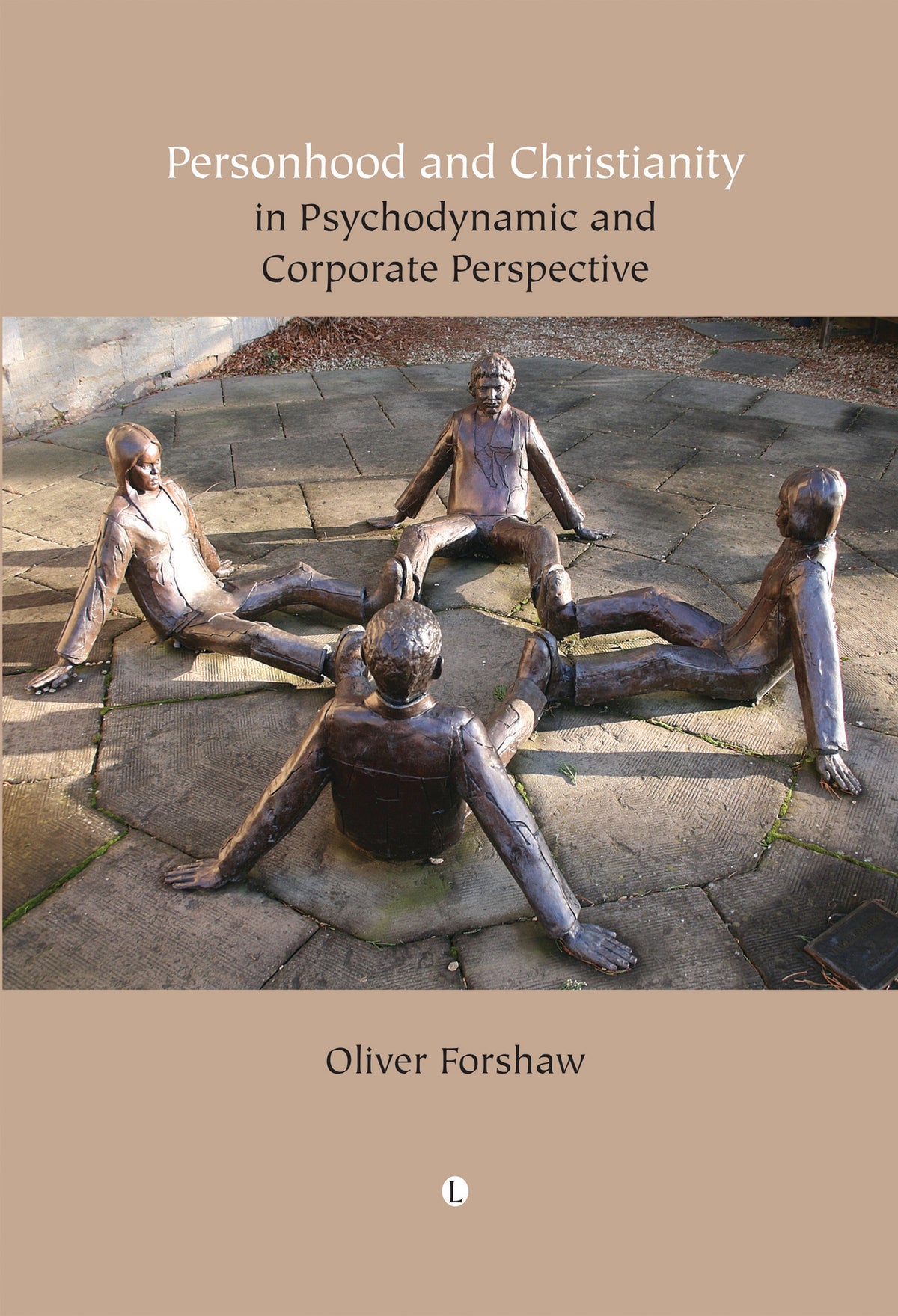
An examination of the theology of pastoral counselling, emphasising the implications for individual and communal Christian life in the modern world.
Making clear the Christian position that God's self-revelation is through human nature, the author gives an account of the way a person is formed as an individual in community from the moment of conception onward. The research and teaching of Dr Frank Lake are explained, drawing out the distinction between Lake's kind of psychodynamic therapy and psychoanalytical practices, whether Freudian or Jungian. The book is aimed at showing that Christian living and spirituality are properly focused on the non-religious activity of God in the world, and that the Church's mission requires the formation of worshipping congregations that are increasingly free of the defensive behaviours commonly encouraged by religion. In Personhood and Christianity Forshaw makes a three-fold approach: - Arguing that many of the practices and attitudes of the divided churches still make it difficult for people to understand Christianity; - Taking up proposals of leading theologians and therapists he discusses the kind of holiness in the midst of ordinary life that can lead to practical reform in parishes, and contribute towards radical change in community life more widely. The discussion focuses on emotional healing as a primary element in the Church's work, and on the New Testament theology of the corporate Christ as key to the recovery of faith in the 21st century; - Stress is laid on the world-directed purpose of the Eucharist through the ascended Jesus who is present everywhere. Personhood and Christianity will be of great interest to all involved in Christian leadership and in the caring services of Church and society generally, to those training for ministry and to everyone engaged in pastoral counselling and therapy.
Making clear the Christian position that God's self-revelation is through human nature, the author gives an account of the way a person is formed as an individual in community from the moment of conception onward. The research and teaching of Dr Frank Lake are explained, drawing out the distinction between Lake's kind of psychodynamic therapy and psychoanalytical practices, whether Freudian or Jungian. The book is aimed at showing that Christian living and spirituality are properly focused on the non-religious activity of God in the world, and that the Church's mission requires the formation of worshipping congregations that are increasingly free of the defensive behaviours commonly encouraged by religion. In Personhood and Christianity Forshaw makes a three-fold approach: - Arguing that many of the practices and attitudes of the divided churches still make it difficult for people to understand Christianity; - Taking up proposals of leading theologians and therapists he discusses the kind of holiness in the midst of ordinary life that can lead to practical reform in parishes, and contribute towards radical change in community life more widely. The discussion focuses on emotional healing as a primary element in the Church's work, and on the New Testament theology of the corporate Christ as key to the recovery of faith in the 21st century; - Stress is laid on the world-directed purpose of the Eucharist through the ascended Jesus who is present everywhere. Personhood and Christianity will be of great interest to all involved in Christian leadership and in the caring services of Church and society generally, to those training for ministry and to everyone engaged in pastoral counselling and therapy.

Price: $40.95
Pages: 332
Publisher: Boydell & Brewer Inc.
Imprint: Lutterworth Press
Publication Date:
25 February 2010
Trim Size: 9.21 X 6.14 in
ISBN: 9780718892296
Format: Paperback
BISACs:
RELIGION / Christian Living / General

Oliver Forshaw is an experienced parish priest and this book is clearly (and happily) not one written to a deadline to meet the academic demands of a Research Assessment Exercise. Rather it flows from a lifetime's engagement with the subject matter as a Clinical Theology seminar leader and its use as a tool for the respective practice in ministry. There is a deep understanding of Lake's work not only with regard to the framework of the early seminars but also with Lake's later, and more controversial, theories in which he linked the formation of personality to events taking place in the life of the mother at the moment of conception.'
— David Lyall: Journal of Practical Theology, Vol. 5 (2), 2012.
Because both Christian belief and worship, alongside psychodynamic therapeutic practices, honours the whole person, without flinching from the realities of their long-standing brokenness, Forshaw is able to offer a meditative and measured reflection on the experience/s of natality and the personhood of the unborn. He is not seeking to be controversial (if anything his prose style holds back from stronger conclusions) but wants to foster a real sense of the wholeness of the human person.
— Nigel Zimmermann
— David Lyall: Journal of Practical Theology, Vol. 5 (2), 2012.
Because both Christian belief and worship, alongside psychodynamic therapeutic practices, honours the whole person, without flinching from the realities of their long-standing brokenness, Forshaw is able to offer a meditative and measured reflection on the experience/s of natality and the personhood of the unborn. He is not seeking to be controversial (if anything his prose style holds back from stronger conclusions) but wants to foster a real sense of the wholeness of the human person.
— Nigel Zimmermann
Tribute
Acknowledgements
Introduction: The dimensions of wellbeing
One: Persons in dependence on God’s presence
A. Resources and consent for self-criticism
B. Critique of religious experience
C. Duality not dualism
D. Being responsible and submissive to God
E. Subjectivity and the Spirit
F. Within a divine matrix
G. Intersubjective first
H. Proposals
Two: Need, defence and the stages of life-change
A. The inner dynamic for emotional healing and growth
B. Models of the self compared
C. Freud’s anxious withdrawal
D. Mental suffering and defensive lifestyles
E. Promoting reconciliation and transformation
F. The stages of dispossession through Christ
Appendix to Chapter Two: The ‘transpersonal’ self
Three: Identifying the Spirit’s coaxing
A. Judgement and liberation in one action
B. Faith and extraordinary discoveries
C. Gender theology and conversion
D. The significance of Bonhoeffer
E. God’s agency and desire enables our own
F. Recovering confi dence in the gospel
Four: The witness of corporate holiness
A. The significance of ‘flesh’ in Jesus and in ourselves
B. Faith and the continuity of each person
C. The individual’s commitment to the Church’s mission
D. The ministry of Christ’s body
E. Our penitence elicits God’s further action
Diagrams
Chapter Notes
Bibliography
Index
Acknowledgements
Introduction: The dimensions of wellbeing
One: Persons in dependence on God’s presence
A. Resources and consent for self-criticism
B. Critique of religious experience
C. Duality not dualism
D. Being responsible and submissive to God
E. Subjectivity and the Spirit
F. Within a divine matrix
G. Intersubjective first
H. Proposals
Two: Need, defence and the stages of life-change
A. The inner dynamic for emotional healing and growth
B. Models of the self compared
C. Freud’s anxious withdrawal
D. Mental suffering and defensive lifestyles
E. Promoting reconciliation and transformation
F. The stages of dispossession through Christ
Appendix to Chapter Two: The ‘transpersonal’ self
Three: Identifying the Spirit’s coaxing
A. Judgement and liberation in one action
B. Faith and extraordinary discoveries
C. Gender theology and conversion
D. The significance of Bonhoeffer
E. God’s agency and desire enables our own
F. Recovering confi dence in the gospel
Four: The witness of corporate holiness
A. The significance of ‘flesh’ in Jesus and in ourselves
B. Faith and the continuity of each person
C. The individual’s commitment to the Church’s mission
D. The ministry of Christ’s body
E. Our penitence elicits God’s further action
Diagrams
Chapter Notes
Bibliography
Index