


Some error occured while loading the Quick View. Please close the Quick View and try reloading the page.
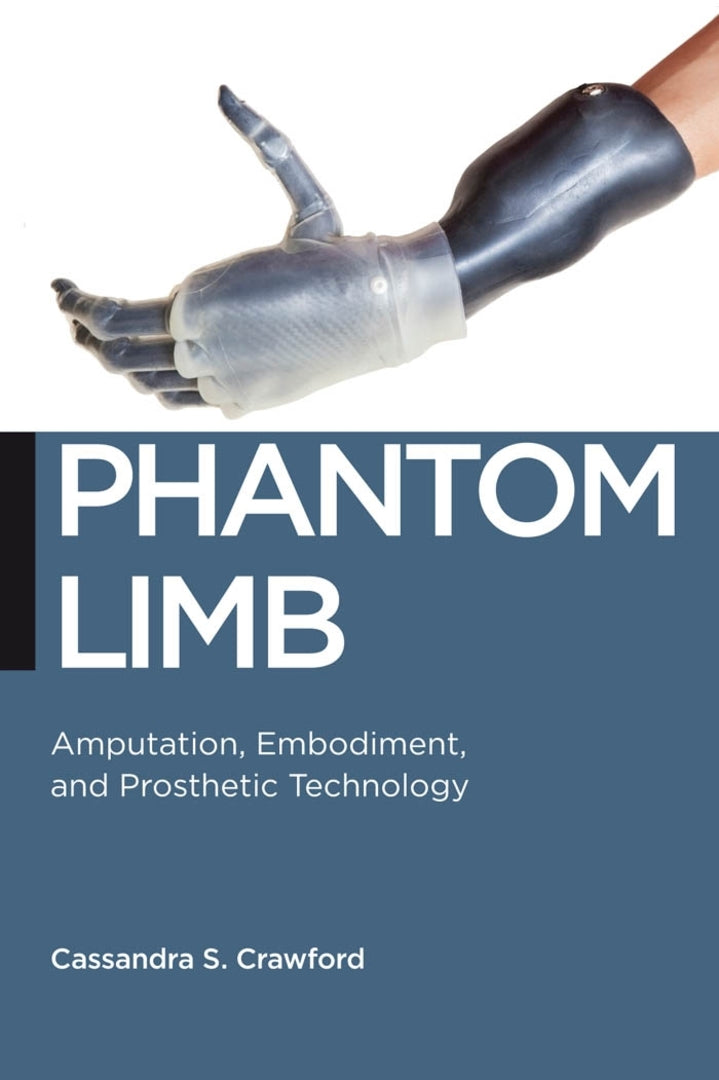
Phantom limb pain is one of the most intractable and merciless pains ever known—a pain that haunts appendages that do not physically exist, often persisting with uncanny realness long after fleshy limbs have been traumatically, surgically, or congenitally lost. The very existence and “naturalness” of this pain has been instrumental in modern science’s ability to create prosthetic technologies that many feel have transformative, self-actualizing, and even transcendent power. In Phantom Limb, Cassandra S. Crawford critically examines phantom limb pain and its relationship to prosthetic innovation, tracing the major shifts in knowledge of the causes and characteristics of the phenomenon.
Crawford exposes how the meanings of phantom limb pain have been influenced by developments in prosthetic science and ideas about the extraordinary power of these technologies to liberate and fundamentally alter the human body, mind, and spirit. Through intensive observation at a prosthetic clinic, interviews with key researchers and clinicians, and an analysis of historical and contemporary psychological and medical literature, she examines the modernization of amputation and exposes how medical understanding about phantom limbs has changed from the late-19th to the early-21st century. Crawford interrogates the impact of advances in technology, medicine, psychology and neuroscience, as well as changes in the meaning of limb loss, popular representations of amputees, and corporeal ideology. Phantom Limb questions our most deeply held ideas of what is normal, natural, and even moral about the physical human body.


— Adele E. Clarke,author of Disciplining Reproduction
"In this compelling book, Cassandra Crawford recounts medical ghost stories about the sensations of absent bodies. Cutting through an esoteric literature with verve and empathy, her research reveals the boundary where mind and body meet and social imprinting occurs."
— Stefan Timmermans,author of Postmortem: How Medical Examiners Explain Suspicious Deaths
"Crawfords captivating and enlightening monograph offers a critical perspective on the phenomena of phantom limbs, prostheses, and the relationship(s) between that so-called ghost and the machine."
"[I]f you are interested in thinking about the nature of bodies and how our (supposed) relationship with them has developed, then I think this book is a must. Crawford's aim is to dig under and around the nature and concepts surrounding body parts that hold no corporealityphantom limbs."
"[] Crawfords book is a very important contribution to discussions about the construction of a technoscape made murky by the churning of constant discovery and innovation. Her conclusionallows Crawford to consider how knowledge is produced and generates meaning for both researchers and those it describes."