


Some error occured while loading the Quick View. Please close the Quick View and try reloading the page.
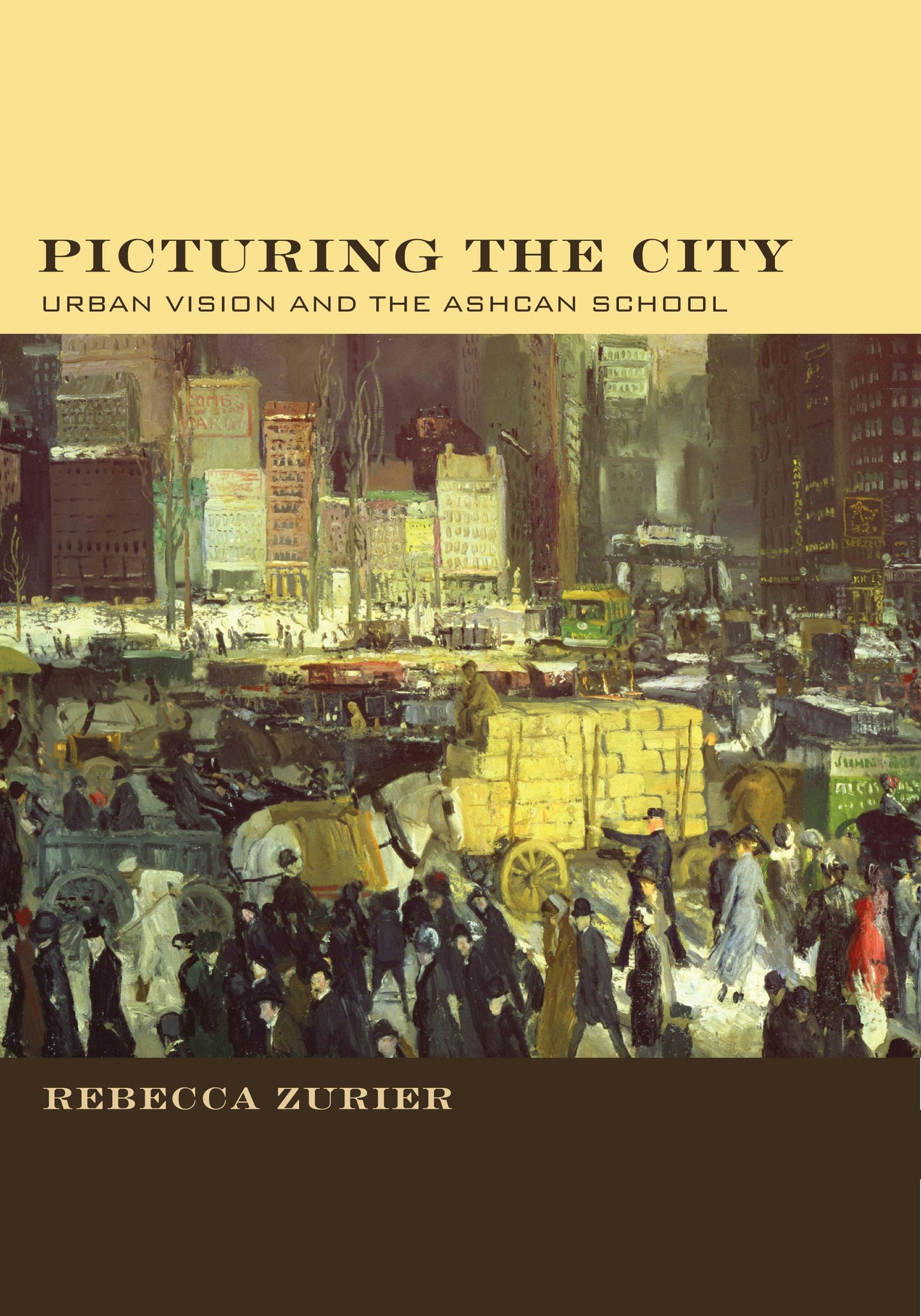
Picturing the City takes an innovative look at the group of urban realists known as the Ashcan School, and at the booming cultures of vision and representation in early twentieth-century New York. Offering fresh insights into the development of modern cities and modern art in America, Rebecca Zurier considers what it meant to live in a city where strangers habitually watched each other and public life seemed to consist of continual display, as new classes of immigrants and working women claimed their places in the metropolis. Through her study of six artists—George Bellows, William Glackens, Robert Henri, George Luks, Everett Shinn, and John Sloan—Zurier illuminates the quest for new forms of realism to describe changes in urban life, commercial culture, and codes of social conduct in the early 1900s.
Synthesizing visual and literary analysis with urban cultural history, Picturing the City focuses new attention on the materiality and design process of pictures. The author scrutinizes all manner of visual activity, from the pandemonium of comics to the mise-en-scene of early movies, from the mark of an individual pen stroke to a glance on the street, from illustrators’ manuals to ambitious paintings that became icons of American art. By situating the Ashcan School within its proper visual culture, Zurier opens up the question of what the artists’ "realism" meant at a time when many other forms of representation, including journalism and cinema, were competing to define "real life" in New York City.
Synthesizing visual and literary analysis with urban cultural history, Picturing the City focuses new attention on the materiality and design process of pictures. The author scrutinizes all manner of visual activity, from the pandemonium of comics to the mise-en-scene of early movies, from the mark of an individual pen stroke to a glance on the street, from illustrators’ manuals to ambitious paintings that became icons of American art. By situating the Ashcan School within its proper visual culture, Zurier opens up the question of what the artists’ "realism" meant at a time when many other forms of representation, including journalism and cinema, were competing to define "real life" in New York City.

Price: $29.95
Pages: 418
Publisher: University of California Press
Imprint: University of California Press
Publication Date:
06 September 2006
ISBN: 9780520923553
Format: eBook

Acknowledgments
Introduction
PART ONE: THE SETTING
1. Another Look at the Ashcan School
2. Seeing New York: The Turn-of-the-Century Culture of Looking
3. A Walk through the City on Paper: The Tradition of the
Mobile Observer
PART TWO: THE ARTISTS
4. Robert Henri and the Real Thing
5. The Reporter’s Vision: Everett Shinn and the City as Spectacle
6. The Cartoonist’s Vision (Part 1): William Glackens and the
Legible City
7. The Cartoonist’s Vision (Part 2): Bellows, Luks, and Urban Difference
PART THREE: JOHN SLOAN'S URBAN VISION
8. The Storyteller’s Vision: John Sloan and the Limits of
Visual Knowledge
Conclusion: The Legacy of the Ashcan School
Notes
Selected Bibliography
List of Illustrations
Index
Introduction
PART ONE: THE SETTING
1. Another Look at the Ashcan School
2. Seeing New York: The Turn-of-the-Century Culture of Looking
3. A Walk through the City on Paper: The Tradition of the
Mobile Observer
PART TWO: THE ARTISTS
4. Robert Henri and the Real Thing
5. The Reporter’s Vision: Everett Shinn and the City as Spectacle
6. The Cartoonist’s Vision (Part 1): William Glackens and the
Legible City
7. The Cartoonist’s Vision (Part 2): Bellows, Luks, and Urban Difference
PART THREE: JOHN SLOAN'S URBAN VISION
8. The Storyteller’s Vision: John Sloan and the Limits of
Visual Knowledge
Conclusion: The Legacy of the Ashcan School
Notes
Selected Bibliography
List of Illustrations
Index