


Some error occured while loading the Quick View. Please close the Quick View and try reloading the page.
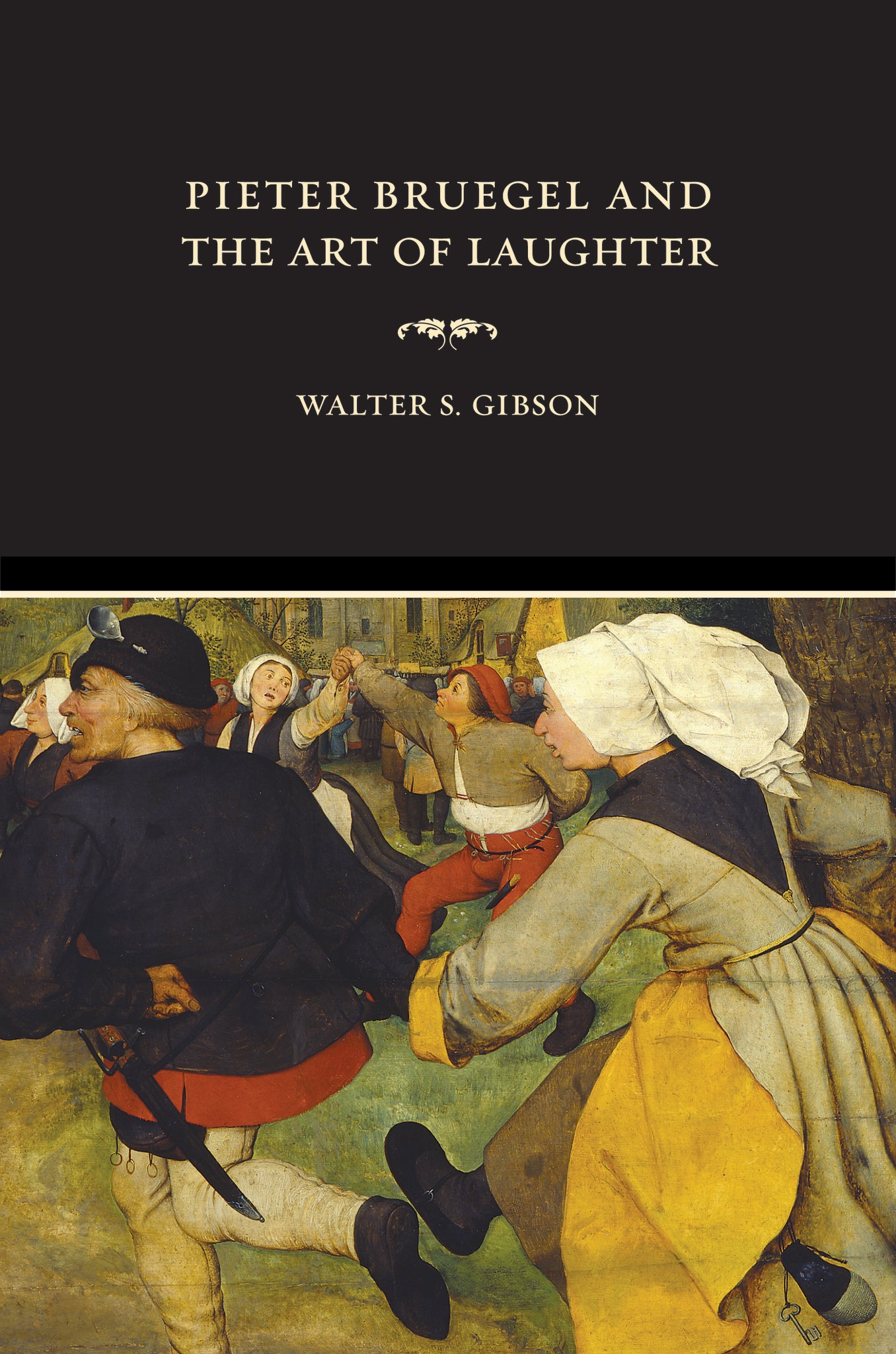
Pieter Bruegel (ca. 1525–1569), generally considered the greatest Flemish painter of the sixteenth century, was described in 1604 by his earliest biographer as a supremely comic artist, few of whose works failed to elicit laughter. Today, however, we approach Bruegel’s art as anything but a laughing matter. His paintings and drawings are thought to conceal profound allegories best illuminated with scholarly erudition. In this delightfully engaging book, Walter S. Gibson takes a new look at Bruegel, arguing that the artist was no erudite philosopher, but a man very much in the world, and that a significant part of his art is best appreciated in the context of humor. In his illuminating examination of the witty and amusing elements in Bruegel’s paintings, prints, and drawings in relation to the sixteenth century European culture of laughter, Gibson reminds us exactly why Bruegel was one of the most original artists of his time.
In a series of engrossing chapters, Gibson explores the function and production of laughter in the sixteenth century, examines the ways in which Bruegel exploited the comic potential of Hieronymus Bosch, and traces how the artist developed his remarkable gift for physiognomy in his work, culminating in three paintings of festive peasants he produced during the 1560s: the Wedding Dance, the Kermis, and the Wedding Banquet. Gibson also takes a detailed look at the Dulle Griet, Bruegel’s most complex evocation of Bosch.
In a series of engrossing chapters, Gibson explores the function and production of laughter in the sixteenth century, examines the ways in which Bruegel exploited the comic potential of Hieronymus Bosch, and traces how the artist developed his remarkable gift for physiognomy in his work, culminating in three paintings of festive peasants he produced during the 1560s: the Wedding Dance, the Kermis, and the Wedding Banquet. Gibson also takes a detailed look at the Dulle Griet, Bruegel’s most complex evocation of Bosch.

Price: $85.00
Pages: 287
Publisher: University of California Press
Imprint: University of California Press
Publication Date:
01 February 2006
Trim Size: 9.00 X 6.00 in
ISBN: 9780520245211
Format: Hardcover

Walter S. Gibson is Andrew W. Mellon Professor of the Humanities Emeritus at Case Western Reserve University and the author of several books, including Pleasant Places: The Rustic Landscape from Bruegel to Ruisdael (California, 2000) and Pieter Bruegel the Elder: Two Studies (1991).
List of Illustrations
Acknowledgments
prologue
Deciphering Bruegel
chapter 1
The Commodity of Laughter in the Sixteenth Century
chapter 2
Bruegel’s Art of Laughter
chapter 3
A Bankrupt and His Bruegels
chapter 4
Rustic Revels
chapter 5
Making Good Cheer
chapter 6
The Devil’s Nemesis: Griet and Her Sisters
epilogue
Taking Laughter Seriously
Notes
Select Bibliography
Index
Acknowledgments
prologue
Deciphering Bruegel
chapter 1
The Commodity of Laughter in the Sixteenth Century
chapter 2
Bruegel’s Art of Laughter
chapter 3
A Bankrupt and His Bruegels
chapter 4
Rustic Revels
chapter 5
Making Good Cheer
chapter 6
The Devil’s Nemesis: Griet and Her Sisters
epilogue
Taking Laughter Seriously
Notes
Select Bibliography
Index