


Some error occured while loading the Quick View. Please close the Quick View and try reloading the page.
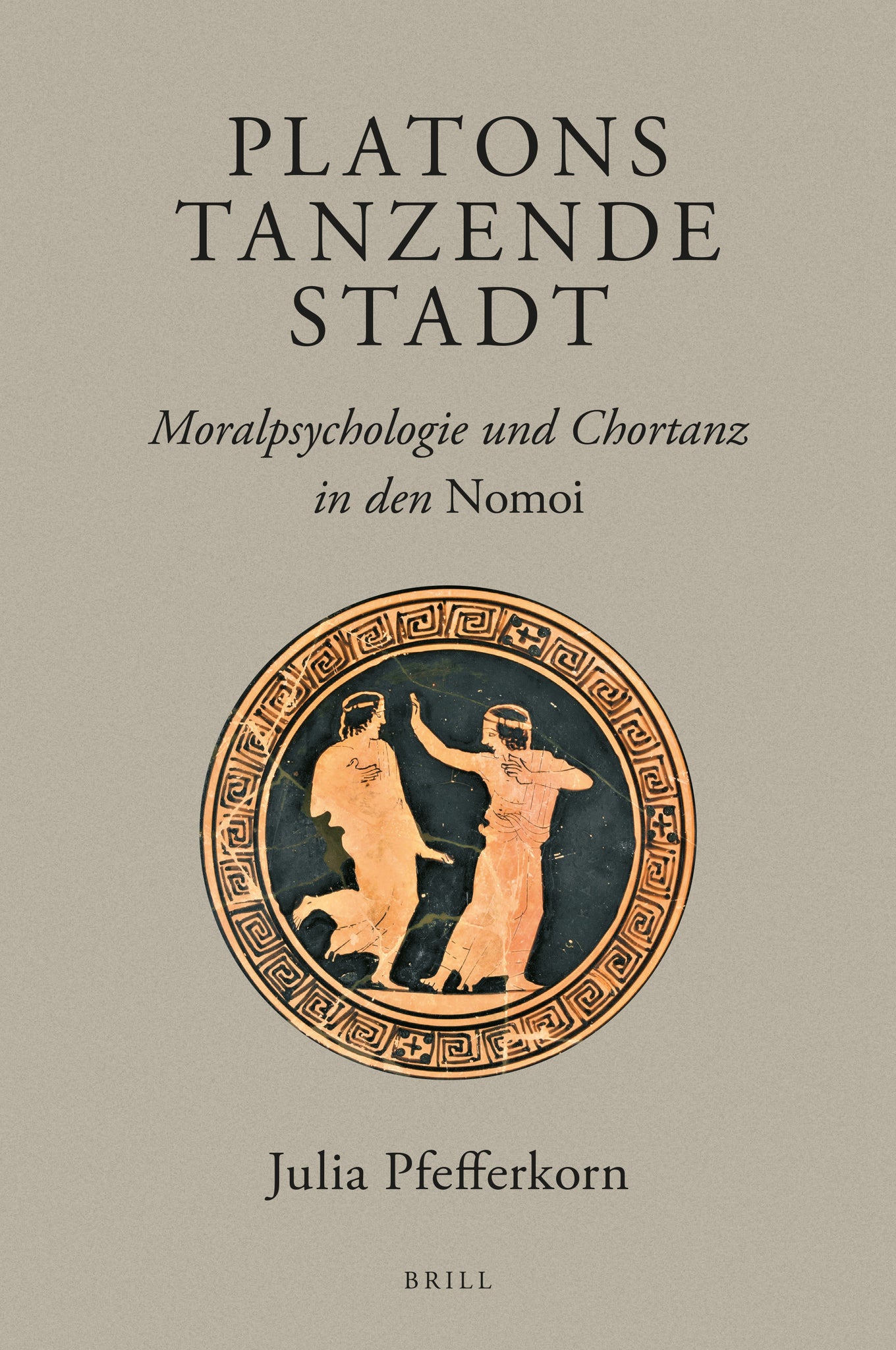
Weshalb ist der Chortanz (χορεία) in Platons Nomoi so prominent? Zur Beantwortung dieser Frage bietet dieses Buch eine eingehende Analyse der Moralpsychologie des Dialogs und argumentiert, dass der Tanz nicht nur ein erzieherisches Instrument, sondern – als körperlicher Ausdruck geordneter Lust – auch ein Symbolbild für das Hauptziel der moralischen Erziehung ist: die Mäßigung (σωφροσύνη). So wird der Chortanz zu einem wirkmächtigen Konstrukt zur Veranschaulichung der philosophischen Hauptanliegen Platons. Zu den Schwerpunkten des Buches gehören darüber hinaus eine innovative Erklärung des komplexen Aufbaus des Dialogs, neue Deutungen des Marionettengleichnisses und der Ansprache an die Tragiker sowie die erste Untersuchung der moralischen Funktion der Scham in Kapitellänge.
Ausgezeichnet mit dem Conrado Eggers Lan Prize der International Plato Society 2022.
Why is choral dance (χορεία) so prominent in Plato’s Laws? In answer to this question, this book offers an in-depth analysis of the dialogue’s moral psychology, arguing that dance is not only an educational instrument but also, in terms of the physical expression of ordered pleasure, a symbolic image of the principal goal of moral education: moderation (σωφροσύνη). Thus, choral dance becomes a powerful construct to illustrate Plato’s main philosophical concerns. Other key features of the book include an innovative account of the dialogue’s complex composition, new interpretations of the puppet image and the tragedy claim, and the first chapter-length investigation of the moral funtion of shame.
Winner of the Conrado Eggers Lan Prize of the International Plato Society 2022.
Ausgezeichnet mit dem Conrado Eggers Lan Prize der International Plato Society 2022.
Why is choral dance (χορεία) so prominent in Plato’s Laws? In answer to this question, this book offers an in-depth analysis of the dialogue’s moral psychology, arguing that dance is not only an educational instrument but also, in terms of the physical expression of ordered pleasure, a symbolic image of the principal goal of moral education: moderation (σωφροσύνη). Thus, choral dance becomes a powerful construct to illustrate Plato’s main philosophical concerns. Other key features of the book include an innovative account of the dialogue’s complex composition, new interpretations of the puppet image and the tragedy claim, and the first chapter-length investigation of the moral funtion of shame.
Winner of the Conrado Eggers Lan Prize of the International Plato Society 2022.

Price: $131.00
Pages: 376
Publisher: Brill
Imprint: Brill
Publication Date:
12 January 2023
ISBN: 9789004525610
Format: Hardcover

Julia Pfefferkorn, Dr. phil. (2020, Tübingen und Salerno), ist gegenwärtig wissenschaftliche Mitarbeiterin in antiker Philosophie an der Universität Trier. Unter ihren jüngsten Veröffentlichungen sind der Tagungsband Platonic Mimesis Revisited (Academia 2021, IPS 40) und der Artikel „The Three Choruses of Plato’s Laws and their Function in the Dialogue“ (Phronesis 66/4, 2021).
Julia Pfefferkorn, PhD (2020, Tübingen and Salerno), is currently assistant professor in ancient philosophy at the University of Trier. Her most recent publications include the conference volume Platonic Mimesis Revisited (Academia 2021, IPS 40) and the article “The Three Choruses of Plato’s Laws and their Function in the Dialogue“ (Phronesis 66/4, 2021).
Julia Pfefferkorn, PhD (2020, Tübingen and Salerno), is currently assistant professor in ancient philosophy at the University of Trier. Her most recent publications include the conference volume Platonic Mimesis Revisited (Academia 2021, IPS 40) and the article “The Three Choruses of Plato’s Laws and their Function in the Dialogue“ (Phronesis 66/4, 2021).