


Some error occured while loading the Quick View. Please close the Quick View and try reloading the page.
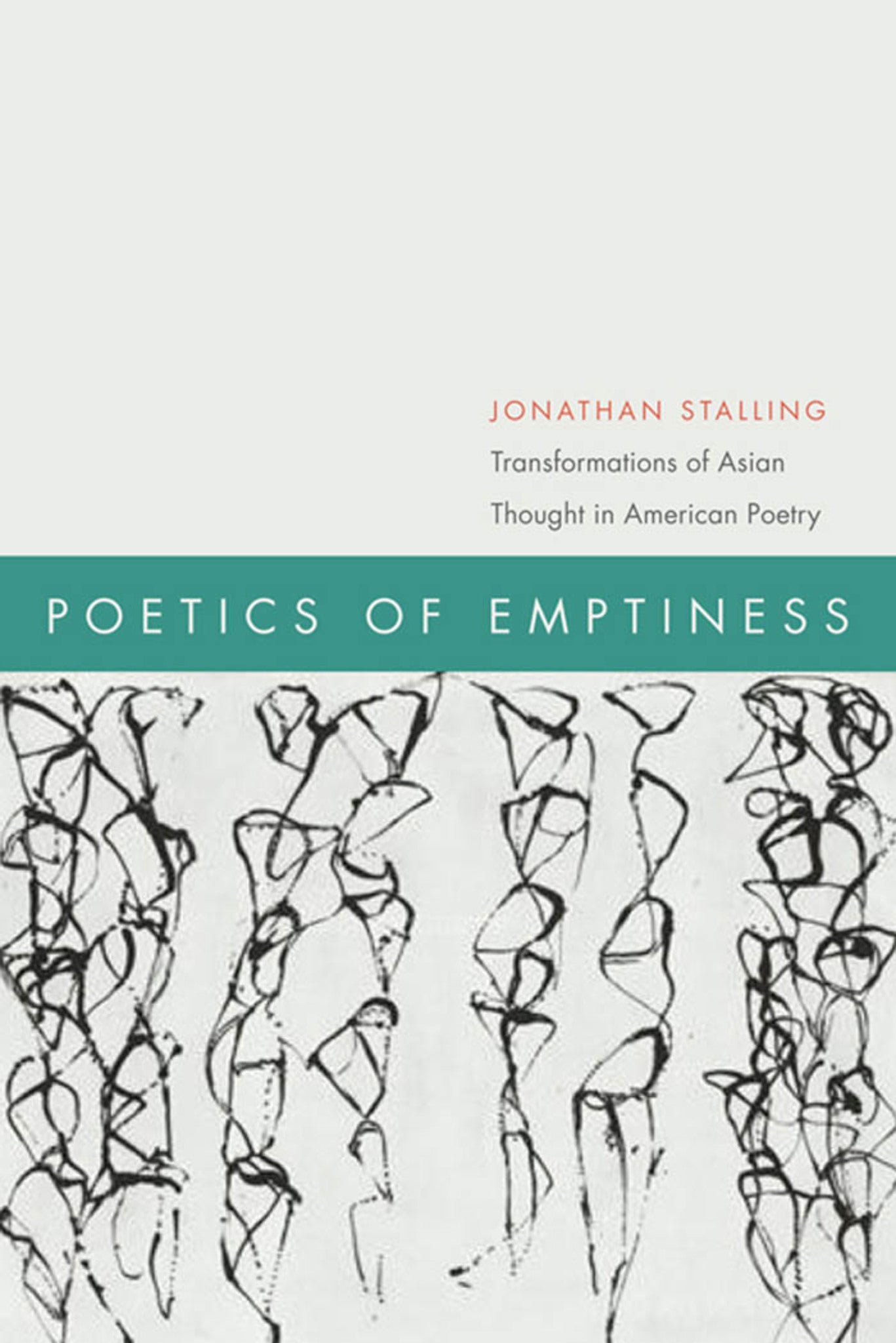
The Poetics of Emptiness uncovers an important untold history by tracing the historically specific, intertextual pathways of a single, if polyvalent, philosophical term, emptiness, as it is transformed within twentieth-century American poetry and poetics.
This conceptual migration is detailed in two sections. The first focuses on "transpacific Buddhist poetics," while the second maps the less well-known terrain of "transpacific Daoist poetics."
In Chapters 1 and 2, the author explores Ernest Fenollosa's "The Chinese Written Character as a Medium for Poetry" as an expression of Fenollosa's distinctly Buddhist poetics informed by a two-decade-long encounter with a culturally hybrid form of Buddhism known as Shin Bukkyo ("New Buddhism"). Chapter 2 explores the classical Chinese poetics that undergirds the lost half of Fenellosa's essay. Chapter 3 concludes the first half of the book with an exploration of the didactic and soteriological function of "emptiness" in Gary Snyder's influential poetry and poetics.
The second half begins with a critical exploration of the three-decades-long career of the poet/translator/critic Wai-lim Yip, whose "transpacific Daoist poetics" has been an important fixture in American poetic late modernism and has begun to gain wider notoriety in China. The last chapter engages the intertextual weave of poststructural thought and Daoist and shamanistic discourses in Theresa Hak Kyung Cha's important body of heterocultural productions.
By formulating interpretive frames as hybrid as the texts being read, this book makes available one of the most important yet still largely unknown stories of American poetry and poetics.


In a splendidly focused and original study, Stalling makes the quest for a “poetics of emptiness” resonate with the metamorphosis in a range of American modern figures, early and late—Fenollosa, Snyder, Wai-lim Yip, and Theresa Hak Kyung Cha—to imagine, translate, and enact in their poetics and life work an alternative to East/West power-dynamics as marred by legacies of imperialism and orientalism. Contexts and texts are thus made to resonate in multi-sonic elaborations, as “emptiness” becomes charged with history, situation, authority, theo-poetic implication, and exchange.
Far reaching yet exacting, Stalling’s study elegantly expands and complicates existing American formations of East Asia and the Pacific Rim as tied to a geopoetic internationalism that, early and late, helped transform the region. Poetics of Emptiness shows that modern American poets’ work in trans-Pacific poetry and poetics has left a lasting legacy of vision, hope, dialogue, quest, and transcultural fusion that can be drawn upon for decades to come in writers like Arthur Sze, Anne Waldman, Red Pine, or Leslie Scalapino.
Petics of Emptiness: Transformations of Asian Thought in American Poetry discusses how Asian thought processes, spirituality, beliefs, and faith has been reflected in the past hundred years by using poetry as a chart of these changes. Scholarly and thoughtful, everything from Buddhism and tradition to the law is discussed and makes for a fascinating read. Poetics of Emptiness is a key addition to any poetry or literary studies collection.
The Poetics of Emptiness brings the bubbling transpacific conversation we hear all around us to a boil. Through brilliant readings of Ernest Fenollosa, Gary Snyder, Wai-lim Yip, and Theresa Hak Kyung Cha, Jonathan Stalling traces out the varieties of Buddhist and Daoist thought that contribute to 'a poetics of emptiness' in Asian and American poetry. An authoritative, inventive, necessary book.---—Stephen Fredman, Author of Contextual Practice: Assemblage and the Erotic in Postwar Poetry and Art
A beautifully, coherently argued, and well researched book. Stalling goes
beyond merely recovering the missing pieces in literary history; he has
instead presented a brand new reading of Fenollosa, making him a key
figure in the poetic and philosophical tradition that Stalling has shrewdly described as the 'poetics of emptiness.'