


Some error occured while loading the Quick View. Please close the Quick View and try reloading the page.
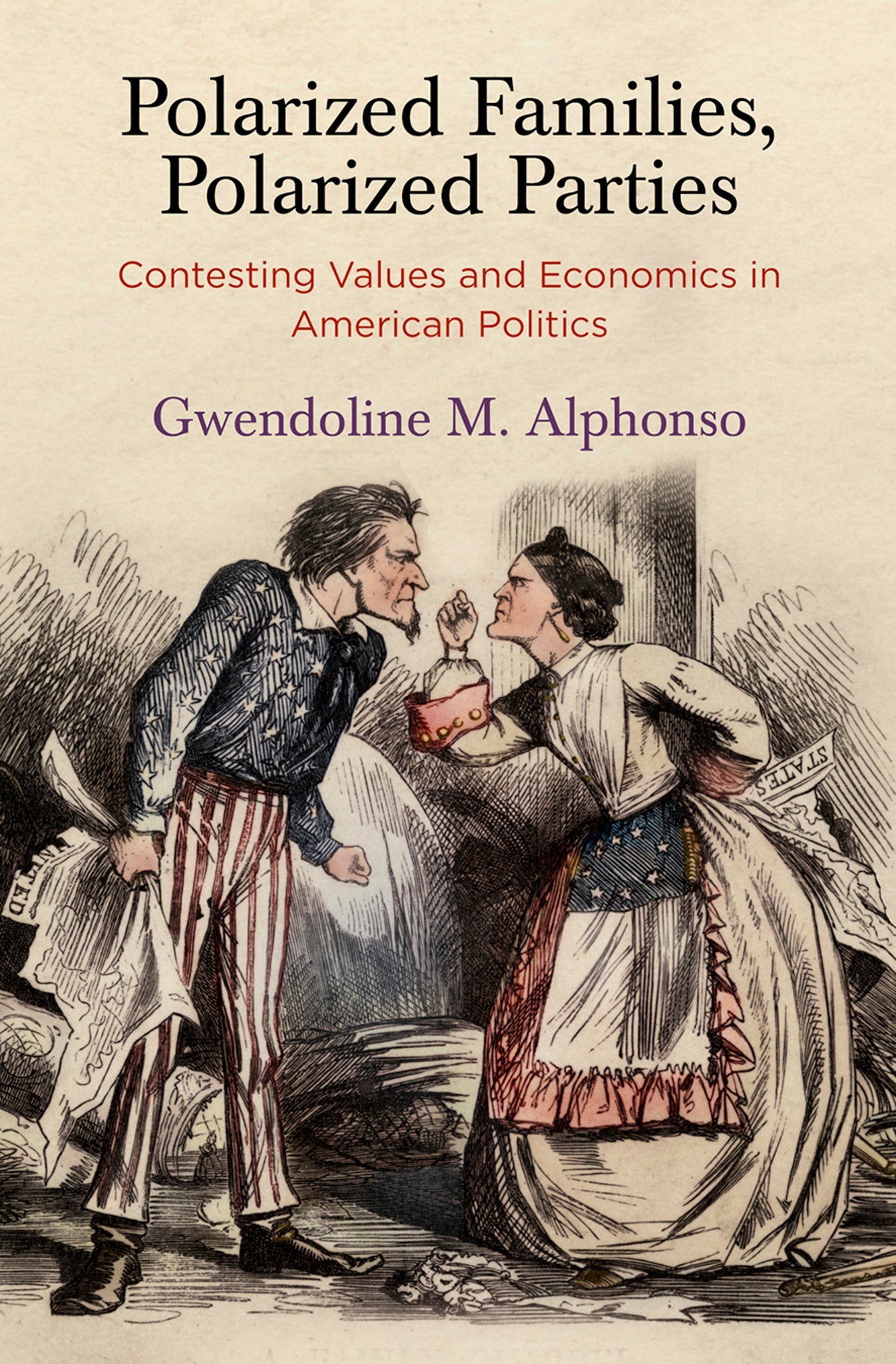
A demonstration of how differing regional ideals of family have shaped party policy and ideological positions throughout the twentieth century
Struggles to define the soul of America roil the nation's politics. Debates over the roles of gays, lesbians, women, immigrants, racial and religious minorities, and disputes over reproductive and abortion rights serve as rallying points for significant electoral groups and their representatives in government. Although the American family lies at the core of these fierce battles, the alignment of family with social or cultural issues is only a partial picture—a manifestation of the new right's late twentieth-century success in elevating "family values" over family economics.
Gwendoline Alphonso makes a significant contribution to the prevailing understanding of party evolution, contemporary political polarization, and the role of the family in American political development by placing family at the center of political and cultural clashes. She demonstrates how regional ideas about family in the twentieth century have continually shaped not only Republican and Democratic policy and ideological positions concerning race and gender but also their ideals concerning the economy and the state. Drawing on extensive data from congressional committee hearings, political party platforms, legislation sponsorship, and demographic data from the Progressive, post-World War II, and late twentieth-century periods in the United States, Polarized Families, Polarized Parties offers an intricate and sophisticated analysis of how deliberations around the ideal family became critical to characterizations of party politics. By revealing the deep historical interconnections between family and the two parties' ideologies and policy preferences, Alphonso reveals that American party development is more than a story of the state and its role in the economy but also, at its core, a debate over the political values of family and the social fabric it embodies.


"Skillfully combining political science and history, thick description and empirical data, and top down-bottom up vantage points, Polarized Families, Polarized Parties sheds new light on the mainsprings of American politics. Rejecting the conventional wisdom that party conflict is a contest over the size of government, Gwendoline Alphonso portrays a century long battle for the power to define the meaning, function, and purpose of the family-a Manichean struggle that animates the raw and disruptive partisanship of our political time."
"Gwendoline Alphonso complicates party ideology on the basis of a phenomenon that has gone largely unnoticed in political science literature: the shifting position of the family. Her book reveals the dynamics within parties that cause descriptions and classifications of the family to emerge, separate, or converge. Polarized Families, Polarized Parties demonstrates how regional differences in family experiences influence legislators and the stories they tell."
"Polarized Families, Polarized Parties deepens our understanding of the role that family plays in party politics. Gwendoline Alphonso masterfully illuminates how definitions of family have been crucial to partisan policy debates since the beginning of the twentieth century."