


Some error occured while loading the Quick View. Please close the Quick View and try reloading the page.
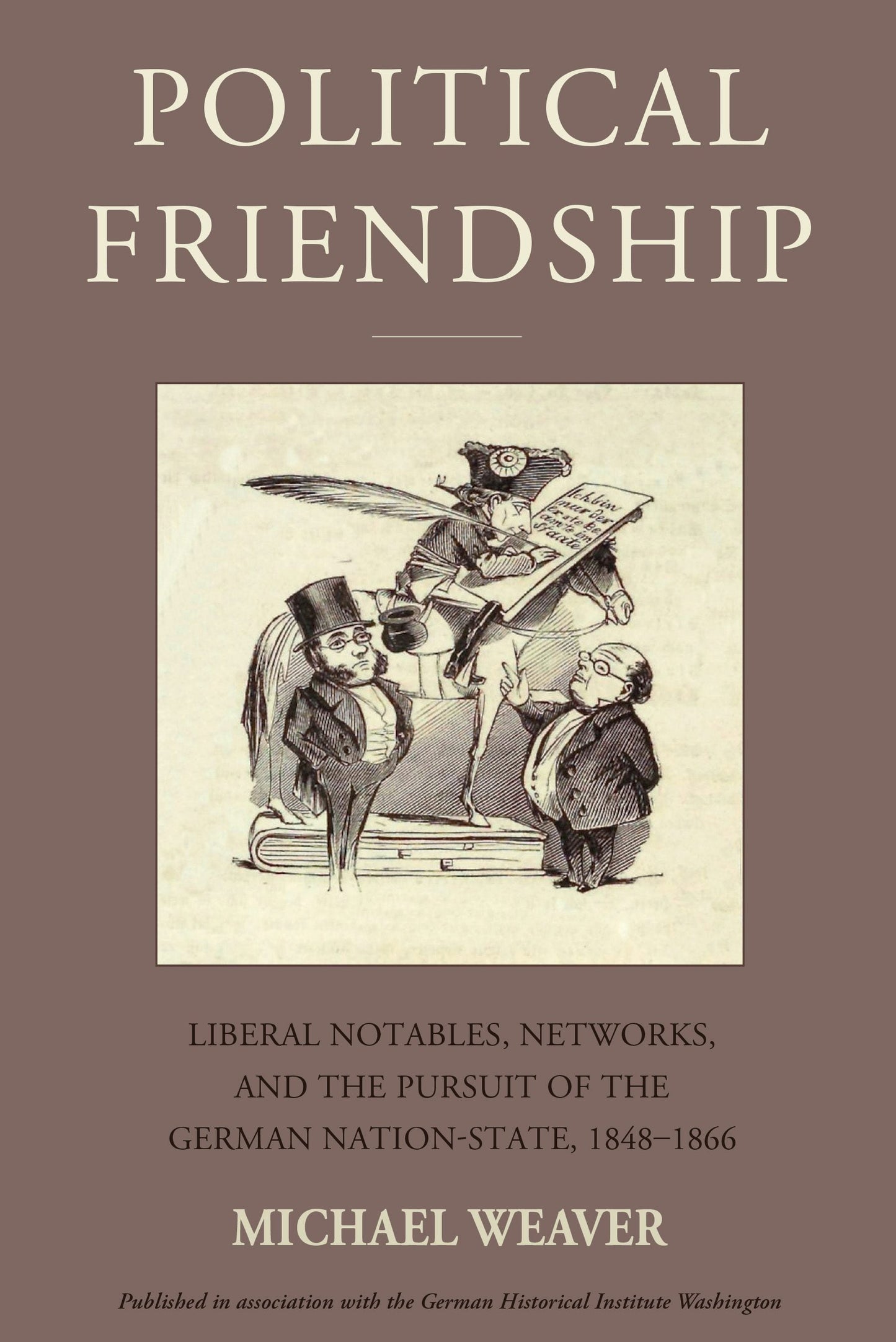
Between periods of revolution, state repression, and war across Central and Western Europe from the 1840s through the 1860s, German liberals practiced politics beyond the more well-defined realms of voluntary associations, state legislatures, and burgeoning political parties. Political Friendship approaches 19th century German history’s trajectory to unification through the lens of academics, journalists, and artists who formed close personal relationships with one another and with powerful state leaders. Michael Weaver argues that German liberals thought with their friends by demonstrating the previously neglected aspects of political friendship were central to German political culture.


Michael Weaver is a historian of European politics and culture. His work has been supported by the German Academic Exchange Service (DAAD), the Joint Initiative in German and European Studies at the Munk School of Global Affairs & Public Policy, and the Anne Tanenbaum Centre for Jewish Studies at the University of Toronto. Michael holds a Ph.D. in history from the University of Toronto and is an independent scholar.
List of Tables, Figure, and Maps
Acknowledgments
Abbreviations
Chapter 1. Friendly Preconditions
Chapter 2. Political Friendship and State Repression, 1851–1858
Chapter 3. Political Friendship in Power, 1858–1862
Chapter 4. Political Friendship and Political Crisis, 1863–1866
Chapter 5. Personal Pasts as National History