


Some error occured while loading the Quick View. Please close the Quick View and try reloading the page.
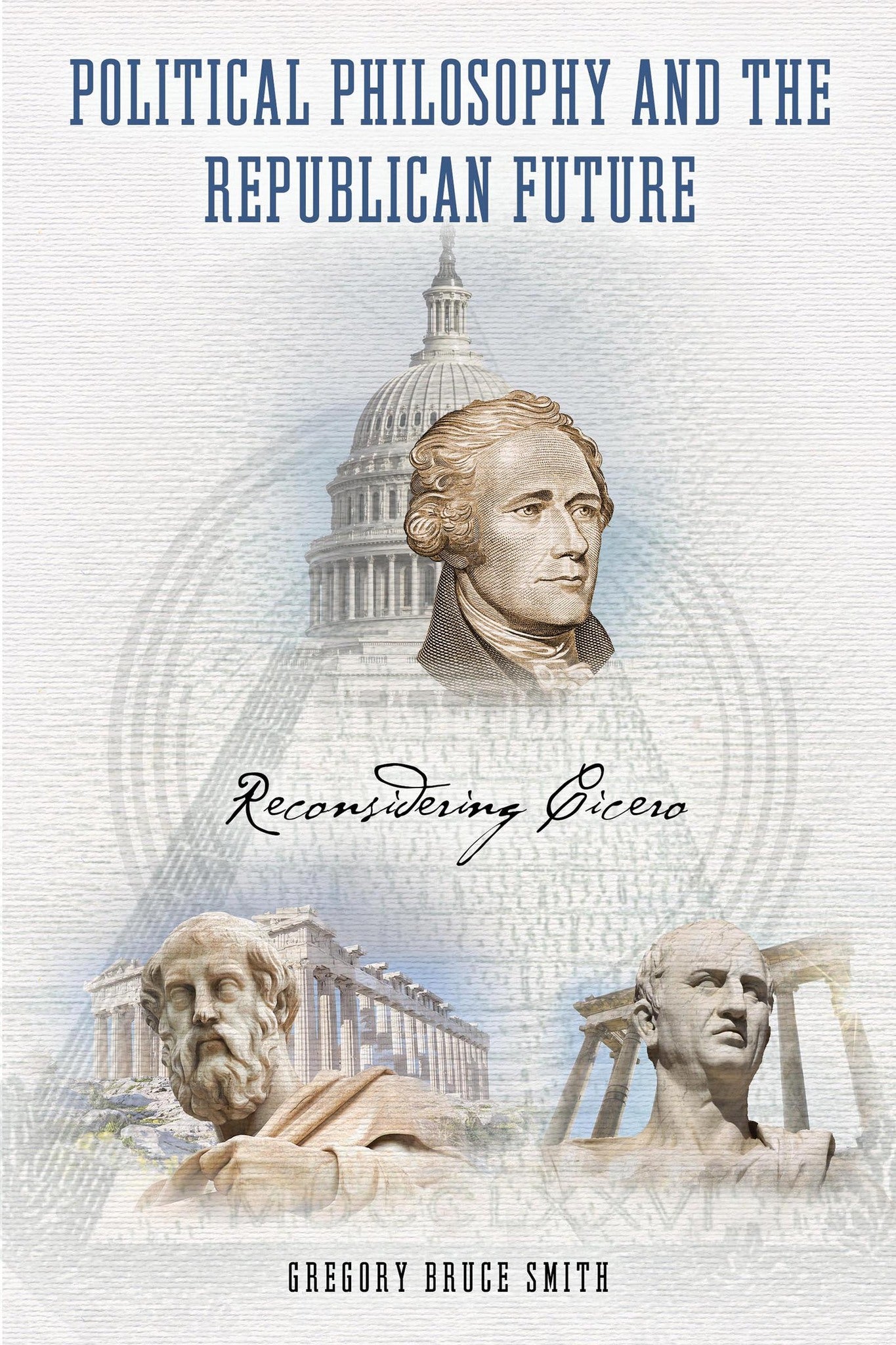
Are we moving inevitably into an irreversible era of postnationalism and globalism? In Political Philosophy and the Republican Future, Gregory Bruce Smith asks, if participation in self-government is not central to citizens’ vision of the political good, is despotism inevitable? Smith's study evolves around reconciling the early republican tradition in Greece and Rome as set out by authors such as Aristotle and Cicero, and a more recent tradition shaped by thinkers such as Machiavelli, Locke, Montesquieu, Adam Smith, Madison, and Rousseau. Gregory Smith adds a further layer of complexity by analyzing how the republican and the larger philosophical tradition have been called into question by the critiques of Nietzsche, Heidegger, and their various followers.
For Smith, the republican future rests on the future of the tradition of political philosophy. In this book he explores the nature of political philosophy and the assumptions under which that tradition can be an ongoing tradition rather than one that is finished. He concludes that political philosophy must recover its phenomenological roots and attempt to transcend the self-legislating constructivism of modern philosophy. Forgetting our past traditions, he asserts, will only lead to despotism, the true enemy of all permutations of republicanism. Cicero's thought is presented as a classic example of the phenomenological approach to political philosophy. A return to the architectonic understanding of political philosophy exemplified by Cicero is, Smith argues, the key to the republican future.


“Smith’s burning care for future generations’ possession of republican liberty makes this an important piece of political writing that reflects on the life well lived and exhorts us toward it.” —The Review of Politics
“Throughout his presentation, Smith makes clear that Cicero always begins with what is given, and seeks to weave strands together, to open the space necessary for a republican future. This book is highly recommended for scholars interested in phenomenology, as well as for undergraduates looking for an introduction to Cicero’s political philosophy.” —Choice
“Gregory Smith presents a thoughtful and expansive study of Cicero the republican. It is also an argument for Cicero’s relevance today that becomes a rescue operation for him from modern neglect and postmodern levity. The book explores Cicero and his surroundings through the lens of political philosophy to illuminate our present situation.” —Harvey Mansfield, Harvard University; senior fellow, Hoover Institution
“Gregory Bruce Smith’s book is significant as scholarship because there is no other comprehensive presentation that is more thorough or intelligent. Smith is especially effective in his presentation of Cicero as a kind of phenomenologist who does not forget the source of philosophy in everyday discourse, or ‘public space.’ He usefully argues that for Cicero the combination of rhetoric, public speaking, statesmanship, and philosophy is more worthwhile and significant than merely contemplative philosophy on its own.” —Mark Blitz, Claremont McKenna College
"The fragmentation of knowledge among competing schools in our time is not unlike the competing schools of philosophy confronting Cicero. This fragmentation—in his time and ours—manifests itself in the loss of public space. Without a public space—rooted in the phenomena of a shared public life—there can be no genuine knowledge and no free and active political life. In penetrating analysis, Gregory Bruce Smith engages Cicero as a master of the phenomenological method presented here and as a republican statesman opening opportunities for citizens—not subjects—to shape their own future." —Christopher A. Colmo, Dominican University
Gregory Bruce Smith is professor of political science and philosophy at Trinity College. He is the author of a number of books, including Nietzsche, Heidegger, and the Transition to Postmodernity and Martin Heidegger: Paths Taken, Paths Opened.
Preface
1. Reflections on the Tradition of Republicanism
2. Initial Reflections on Political Philosophy
3. Who Was Cicero?
4. Cicero on the Nature of Philosophy
5. Cicero on Cosmology and Natural Philosophy
6. Cicero on Natural Theology
7. Cicero on Ethics
8. Cicero on Oratory and the Language Arts
9. Cicero on Politics
10. A Brief Reflection on Nietzsche
11. Conclusion: Political Philosophy and the Republican Future
Bibliography
Index