


Some error occured while loading the Quick View. Please close the Quick View and try reloading the page.
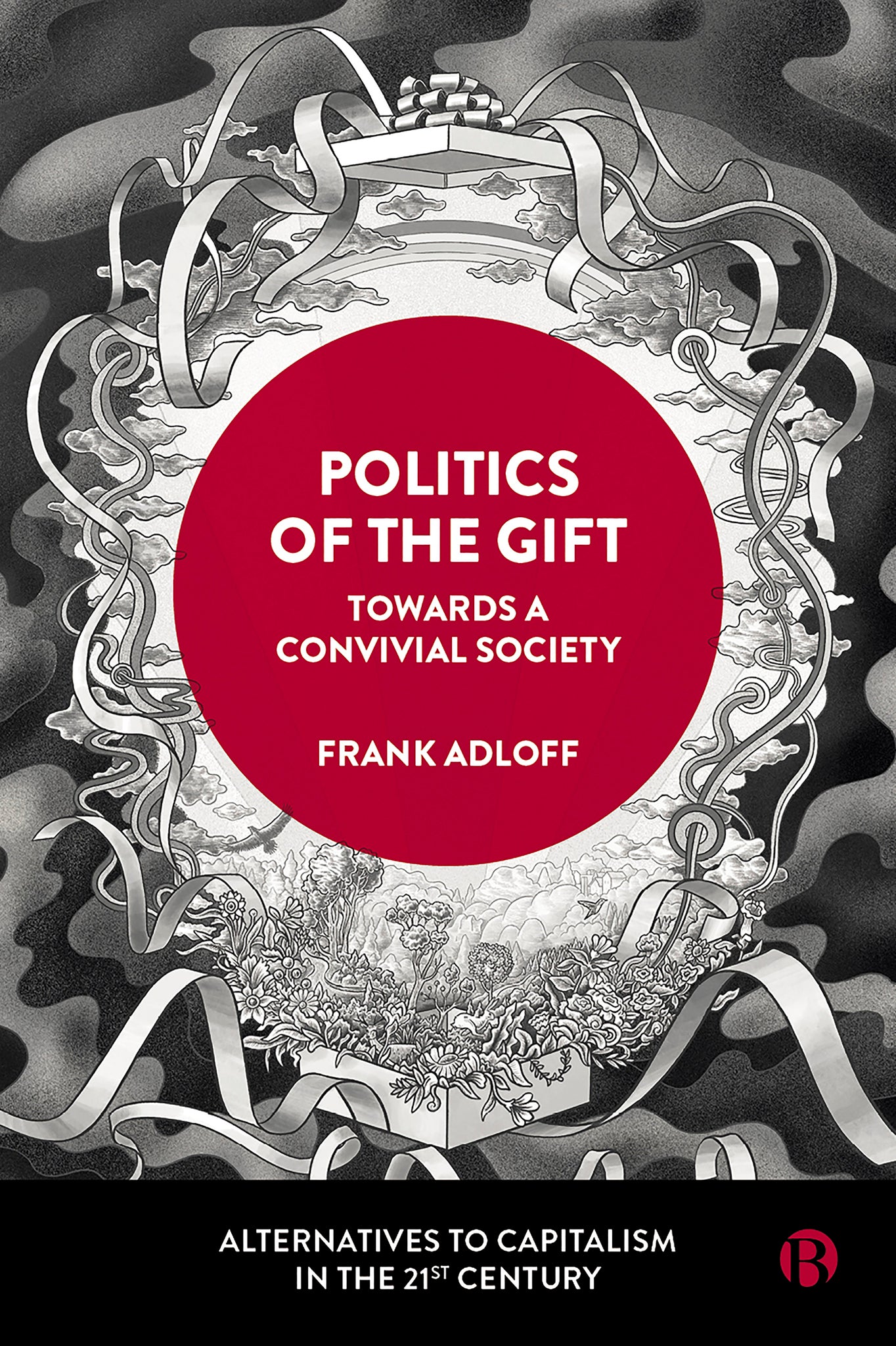
At the heart of capitalism lies the idea of ‘homo economicus’: an ever-rational human being motivated by self-interest which arguably leads societies to economic prosperity.
Drawing on French sociologist Marcel Mauss' influential theory of ‘the gift’, Frank Adloff shatters this fallacy to show mutual trust is the only glue that holds societies together; people are giving beings and they can cooperate for the benefit of all when the logic of maximizing personal gain in capitalism is broken.
Acknowledging the role of women, nature, and workers in the Global South in transforming society, this book proposes a politics of conviviality, (from the Latin con-vivere: living together) for global and environmental justice as an alternative to the pursuit of profit, growth, and consumption.


“This book nicely weaves together a philosophical anthropology, a moral economy, an ethics of care, a politics of cooperation, a convivial technology, and an ecology into the politics of the gift. It will be an inspiring read for all those who believe that another world beyond growth and greed is possible.” Frederic Vandenberghe, Federal University of Rio de Janeiro, Brazil
Introduction: From Capitalism’s Crises to a Convivial Society
Part 1: An Anthropology of Giving
1. Self-interest, Altruism, and the Gift
2. Mauss’ Gift
3. 'Homo donator': A Different Anthropology
Part 2: Society’s Gifts
4. Locating the Gift in Society
5. The Gift between Socialism and Capitalism
6. Commodities, Values, Money, Gifts
Part 3: Crossing the Borders
7. Science and Technology, Nature and Conviviality
8. Gifts of Nature
9. Civil Society, Conviviality, Utopia
Part 4: Worlds of Conviviality
10. Aesthetic Freedom, or The Gift of Art
11. Pluriversalism: Towards a European and Global Politics of Conviviality
Conclusion