


Some error occured while loading the Quick View. Please close the Quick View and try reloading the page.
Honorable Mention, 2024 T.V. Paul Best Book in Global International Relations, Global International Relations Section, International Studies Association
Conventional wisdom holds that China’s rise is disrupting the global balance of power in unpredictable ways. However, China has often deferred to the consensus of smaller neighboring countries on regional security rather than running roughshod over them. Why and when does China exercise restraint—and how does this aspect of Chinese statecraft challenge the assumptions of international relations theory?
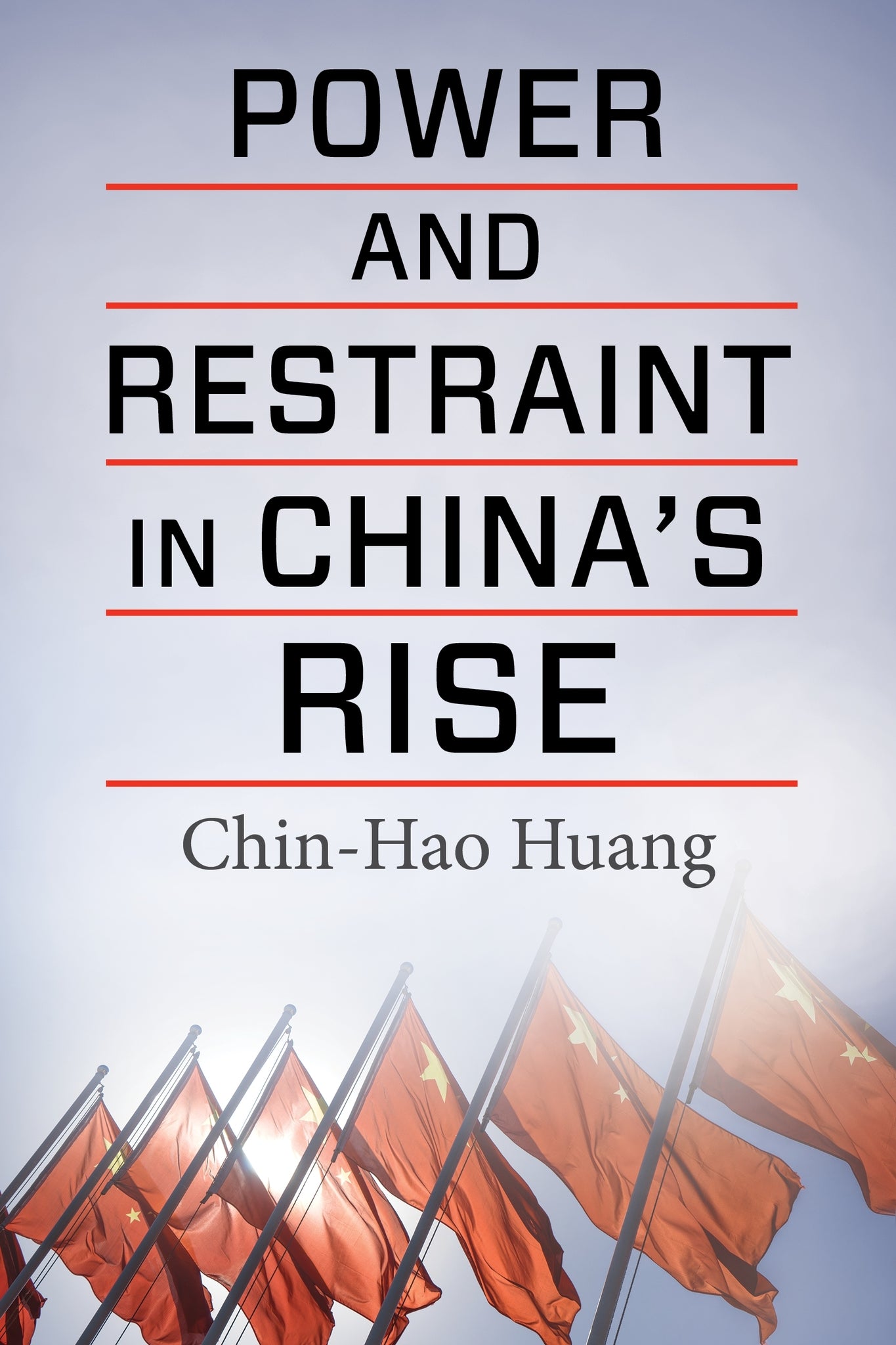
In Power and Restraint in China’s Rise, Chin-Hao Huang argues that a rising power’s aspirations for acceptance provide a key rationale for refraining from coercive measures. He analyzes Chinese foreign policy conduct in the South China Sea, showing how complying with regional norms and accepting constraints improves external perceptions of China and advances other states’ recognition of China as a legitimate power. Huang details how member states of the Association of Southeast Asian Nations have taken a collective approach to defusing tension in maritime disputes, incentivizing China to support regional security initiatives that it had previously resisted. Drawing on this empirical analysis, Huang develops new theoretical perspectives on why great powers eschew coercion in favor of restraint when they seek legitimacy. His framework explains why a dominant state with rising ambitions takes the views and interests of small states into account, as well as how collective action can induce change in a major power’s behavior. Offering new insight into the causes and consequences of change in recent Chinese foreign policy, this book has significant implications for the future of engagement with China.


Why should a risen China care about how small states feel, especially when they have rival territorial claims? Chin-Hao Huang employs a framework of power and restraint in international politics to challenge the conventional wisdom about ASEAN’s role, China’s restraint, and U.S. power in a rapidly-changing Asia-Pacific. This book is a welcome contribution to the literature that shows why paying attention to the targets of Chinese power matters.
— Evelyn Goh, Shedden Professor of Strategic Policy Studies, The Australian National University
In this provocative and original book, Huang makes the case that China’s desire to be viewed as a legitimate leader of East Asia can induce restraint in how it pursues its interests—when the region’s smaller and weaker states present a united front by articulating a clear consensus on norms of behavior. An important contribution to the study of the South China Sea disputes, Chinese foreign policy, and the role of relational power in international relations theory.
— M. Taylor Fravel, Arthur and Ruth Sloan Professor of Political Science, Massachusetts Institute of Technology
Why does a rising power exercise restraint in foreign policy? Highlighting relational dimensions of power, Huang argues that regional consensus could shape the legitimation strategy of a rising power. The book provides a theoretically innovative and empirically refreshing analysis on China, Asian regional security, and international relations.
— Xiaoyu Pu, author of Rebranding China: Contested Status Signaling in the Changing Global Order
This book proposes an intriguing thesis that strong state restraint as legitimation strategy affects foreign policy behavior, if the strong state meets a clear consensus from the small states in the region. Huang examines China’s actions in the South China Sea and in UN peacekeeping operations in Africa to test this hypothesis. He compares this imperative against the countervailing external challenges as a factor moderating behavior. A provocative and absorbing read.
— Chan Heng Chee, Singaporean ambassador-at-large and chair of the ISEAS–Yusof Ishak Institute
After 33 intense years of diplomatic engagements, particularly within the ASEAN family, I know well that reason and persuasion work in international relations. But no theory would explain this counter-intuitive phenomenon. Through an analysis of how China uses reason and persuasion in global statecraft, this remarkably insightful volume by Chin-Hao Huang provides path-breaking new theoretical insights which will shape debate significantly in the coming decades. A must-read for both scholars and policymakers.
— Kishore Mahbubani, Singapore’s former ambassador to the United Nations and author of Has China Won?: The Chinese Challenge to American Primacy
Provocative and well-written....[Power and Restraint in China's Rise] ought to be read by all students of Chinese foreign policy.
— Niv Horesh, Western Sydney University
Should be a mandatory reading for sinologists and students.
Huang’s approach and findings offer those working on China, ASEAN, US strategy, and international relations, in general, food for thought and reasons to look beyond the power explanations and to investigate further the effects of regional collective normative action on strong state behavior.
List of Figures and Tables
Preface and Acknowledgments
Abbreviations
1. The Puzzle and Argument
2. Theorizing About Power, Legitimacy, and Restraint
3. ASEAN Consensus in the South China Sea Conflict, 2012–2018
4. A Cautionary Assessment of U.S. Deep Engagement in the South China Sea
5. China’s Identity as a Legitimate Power
6. Conclusions on Power and Restraint in China’s Rise
Appendix: Discourse Analysis of ASEAN Summit Statements, 2012–2018
Notes
References
Index