


Some error occured while loading the Quick View. Please close the Quick View and try reloading the page.
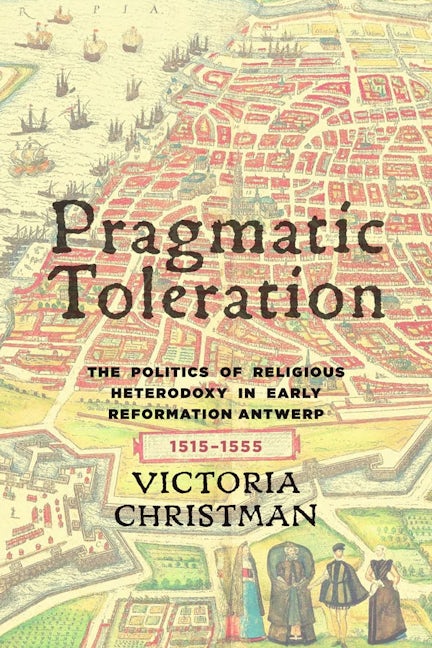
Using the case of early-sixteenth-century Antwerp, argues that practices of religious toleration in the Christian West first emerged not as the outgrowth of beliefs about human rights, but as a practical consequence of religious coexistence.
In a modern world still struggling to achieve religious coexistence, there has been a recent burgeoning of scholarship aimed at examining the history of such coexistence. Most of these studies focus on developments in the seventeenth century and beyond. This book redirects attention earlier, to the first half of the sixteenth century, and argues that impulses to toleration were already at work even amid the religious upheaval of the European Reformations.In the early modern metropolis of Antwerp, the author finds a wealthy merchant city struggling to balance the competing interests of municipality and empire. While their imperial overlords attempted to impose religious uniformityvia increasingly repressive anti-heresy edicts, the city fathers of Antwerp found ways to circumvent those laws in order to accommodate the religious heterodoxy of their most valued inhabitants. The result was the development of pragmatically tolerant practices that arose in the service of fundamentally nonreligious motivations.
Via a series of case studies, this book documents the development of such practices on the part of the Antwerp fathersas they defended their heterodox inhabitants. It seeks to understand the motivations underlying the councilors' lenient treatment of heterodoxy in their city, and attempts to answer the question of how we are to understand such pragmatically tolerant behavior as part of the broader history of religious tolerance in the Christian West.
Victoria Christman is associate professor of history at Luther College.
In a modern world still struggling to achieve religious coexistence, there has been a recent burgeoning of scholarship aimed at examining the history of such coexistence. Most of these studies focus on developments in the seventeenth century and beyond. This book redirects attention earlier, to the first half of the sixteenth century, and argues that impulses to toleration were already at work even amid the religious upheaval of the European Reformations.In the early modern metropolis of Antwerp, the author finds a wealthy merchant city struggling to balance the competing interests of municipality and empire. While their imperial overlords attempted to impose religious uniformityvia increasingly repressive anti-heresy edicts, the city fathers of Antwerp found ways to circumvent those laws in order to accommodate the religious heterodoxy of their most valued inhabitants. The result was the development of pragmatically tolerant practices that arose in the service of fundamentally nonreligious motivations.
Via a series of case studies, this book documents the development of such practices on the part of the Antwerp fathersas they defended their heterodox inhabitants. It seeks to understand the motivations underlying the councilors' lenient treatment of heterodoxy in their city, and attempts to answer the question of how we are to understand such pragmatically tolerant behavior as part of the broader history of religious tolerance in the Christian West.
Victoria Christman is associate professor of history at Luther College.

Price: $120.00
Pages: 256
Publisher: Boydell & Brewer Inc.
Imprint: University of Rochester Press
Publication Date:
20 April 2015
Trim Size: 9.00 X 6.00 in
ISBN: 9781580465168
Format: Hardcover
BISACs:
HISTORY / Europe / Western, European history, RELIGION / History, History of religion

Offers much new insight into the early history of religious toleration in the Low Countries.
Acknowledgments
Introduction
1. The Lay of the Land: Government and Law in Brabant
2. Undercover: The Claes vander Eslt Conventicle
3. Pragmatic Intolerance: Antwerp's Anabaptists
4. People of the Book: Heterodox Printers and Publishers in Antwerp
5. Between Stage and Scaffold: Rederijker Trials in Antwerp
6. Trade in Tolerance:The Portuguese New Christians in Antwerp, 1526-50
Conclusion: Rulers and Religious Renegades
Appendix 1: Chronology of Antiheresy Legislation in Brabant
Appendix 2: Answers at Ghent
Abbreviations
Notes
Bibliography
Index
Introduction
1. The Lay of the Land: Government and Law in Brabant
2. Undercover: The Claes vander Eslt Conventicle
3. Pragmatic Intolerance: Antwerp's Anabaptists
4. People of the Book: Heterodox Printers and Publishers in Antwerp
5. Between Stage and Scaffold: Rederijker Trials in Antwerp
6. Trade in Tolerance:The Portuguese New Christians in Antwerp, 1526-50
Conclusion: Rulers and Religious Renegades
Appendix 1: Chronology of Antiheresy Legislation in Brabant
Appendix 2: Answers at Ghent
Abbreviations
Notes
Bibliography
Index