


Some error occured while loading the Quick View. Please close the Quick View and try reloading the page.
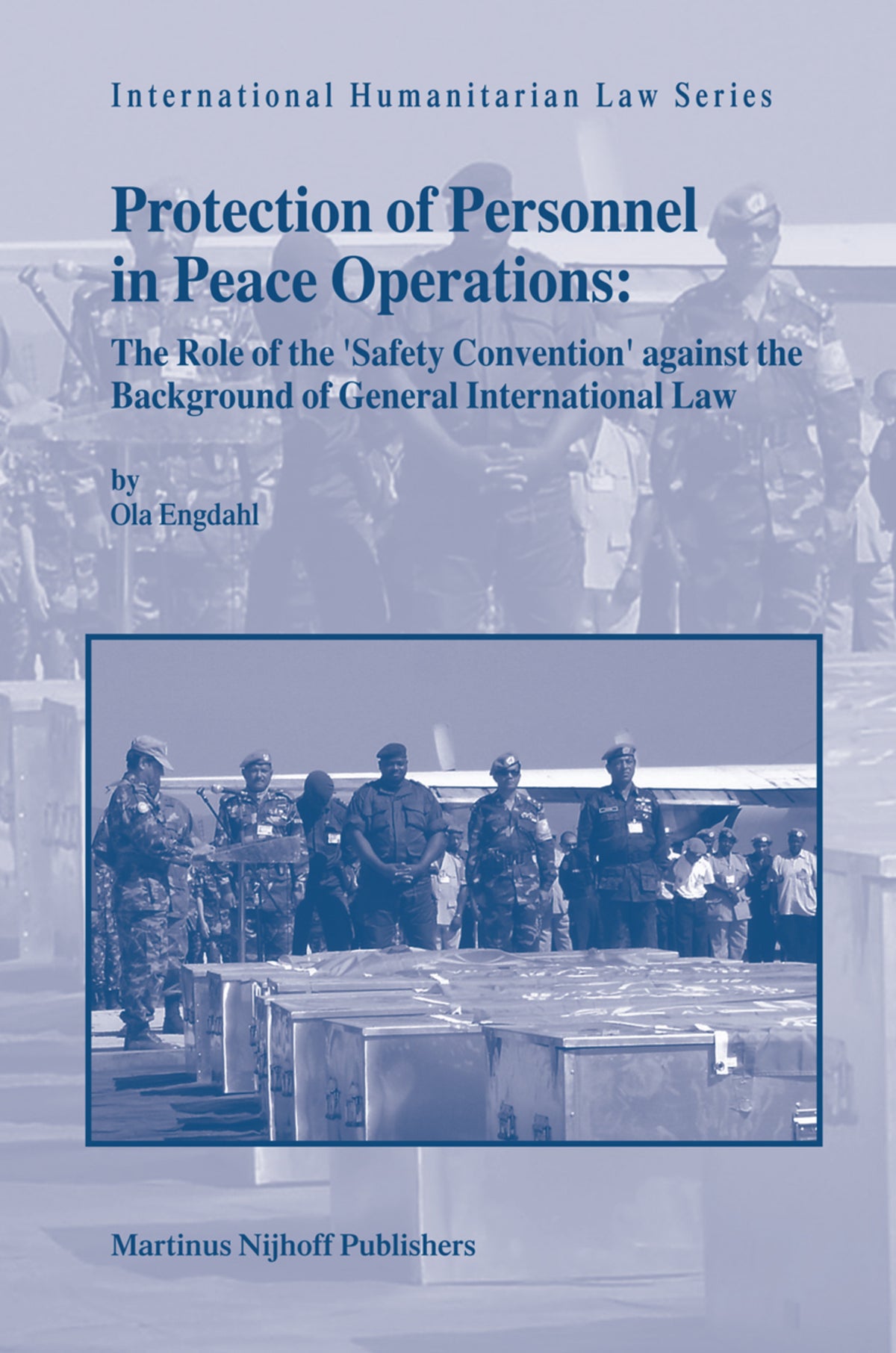
The 1994 Convention on the Safety of United Nations and Associated Personnel (Safety Convention) was the first multilateral convention to deal specifically with the protection of personnel engaged in peace operations. It should be viewed against the background of the increasingly volatile environments in which peace operation personnel were required to operate at the beginning of the 1990s. An Optional Protocol, extending the automatic application of the Safety Convention to new categories of operation, was adopted in December 2005.
Protection, which a host government is responsible for securing for personnel in peace operations, may be categorised as general and special protection. The former includes, for example, human rights law and international humanitarian law. The latter comprises privileges and immunities accorded to agents of states or organisations.
The contribution of the Safety Convention is mainly one of interstate penal law co-operation. States parties are obligated to co-operate in order to effectively prosecute the perpetrators of stipulated crimes. The protection afforded by the Safety Convention may therefore be categorised as being part of an emerging legal regime against impunity.
An effective protection needs to address the specific challenges surrounding peace operations. Some of these challenges, identified in this study, are related to the interplay between the rules of peace and war as well as responsibility and accountability of protected personnel. It is also contended that there is a need for an effective implementation of existing rules, and a careful development of so-called status-of-forces agreements applicable in peace operations.
Protection, which a host government is responsible for securing for personnel in peace operations, may be categorised as general and special protection. The former includes, for example, human rights law and international humanitarian law. The latter comprises privileges and immunities accorded to agents of states or organisations.
The contribution of the Safety Convention is mainly one of interstate penal law co-operation. States parties are obligated to co-operate in order to effectively prosecute the perpetrators of stipulated crimes. The protection afforded by the Safety Convention may therefore be categorised as being part of an emerging legal regime against impunity.
An effective protection needs to address the specific challenges surrounding peace operations. Some of these challenges, identified in this study, are related to the interplay between the rules of peace and war as well as responsibility and accountability of protected personnel. It is also contended that there is a need for an effective implementation of existing rules, and a careful development of so-called status-of-forces agreements applicable in peace operations.

Price: $203.00
Pages: 360
Publisher: Brill
Imprint: Brill | Nijhoff
Publication Date:
09 March 2007
ISBN: 9789004154667
Format: Hardcover

Ola Engdahl is a Research Fellow at the Swedish National Defence College. In 1999 he served as the Legal Adviser to the Commander of the Nordic-Polish Brigade, SFOR, in Bosnia-Herzegovina. He is currently Legal Adviser to the Army Tactical Command, Swedish Armed Forces and Rapporteur on Swedish State Practice for the Yearbook on International Humanitarian Law.