


Some error occured while loading the Quick View. Please close the Quick View and try reloading the page.
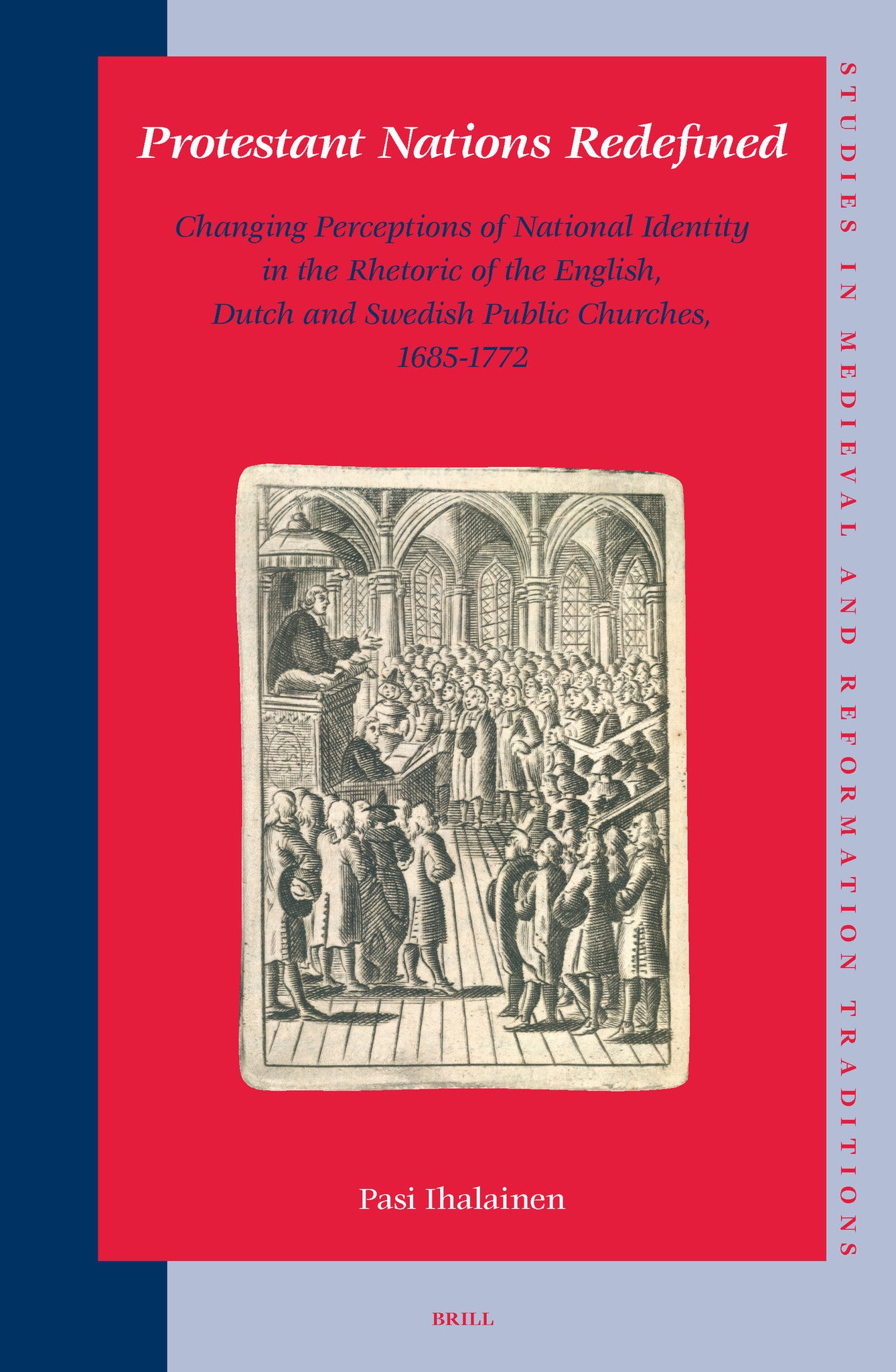
This volume reconstructs the various meanings attached to the concepts of nation and fatherland in eighteenth-century English, Dutch and Swedish political preaching. After discussing sermons as a medium of national ideology, it analyses the decline of the Israelite prototype of nation, the changing relationship between religious and national communities, international Protestantism, the weakening stereotype of popery, redefinitions of the Protestant monarchy, and the diversification of national vocabulary. It also compares the rise of non-theological languages of classical patriotism, freedom, economy and nature in three political cultures, revealing how the secular worship of nation arose even within the public presentation of religion. As post-nationalist comparative history, this study will be welcomed by readers with varied national and scholarly backgrounds interested in the Enlightenment and nationalism.

Price: $168.00
Pages: 666
Publisher: Brill
Imprint: Brill
Publication Date:
23 September 2005
ISBN: 9789004144859
Format: Hardcover

‘The book is well-written and well-documented, and the topic regarding rhetoric in stare sermons and formal church statements is well-researched.’ - R. D. Culbertson, in: Renaissance Quarterly
‘One of the more original aspects of Pasi Ihalainen's study is to compare the development of the idea of nationhood as it emerges from the state, or parliamentary, sermons delivered in three different Protestant countries, England, Holland, and Sweden, in the late 17th and 18th centuries. The phenomenon is thus essentially linked with Protestantism, and with how Protestantism was conceived and progressively redefined. This brings out certain fundamental differences between the countries discussed which form an illuminating contribution to the history of the western Churches. [..] Protestant Nations Redefined is an intelligent work, and Ihalainen, who generally writes well, is both perceptive and persuasive.’ - A. Hamilton, in: Church History and Religious Culture
‘This is a thorough, comprehensive and lucid interpretation of a crucial aspect of one of the great transformations in history. The 18th century saw the birth of a secular nationalism out of the pre-existing religious matrix, and Ihalainen documents that evolution with exceptional clarity through a rigorous examination of a rich field of textual materials. [..] it is indicative of the thought-provoking and penetrating scholarship of Ihalainen’s monumental work that we are encouraged to raise such fundamental questions.' - A. D. Smith, in: Nations and Nationalism
'In this massive and scholarly work, Pasi Ihalainen intervenes by analysing sermons on “state occasions” between 1685 and 1772 and arguing that these provide an important insight into contemporary mentalities. [..] The strongest lesson of Ihalainen’s reading is that secularisation occurred in all three countries: but that the crucial decades were between 1740 and 1770 [..] Faith in the Netherlands and Sweden, as much as in England, was not so much displaced, as transformed into a different version of itself. [..] Concentrating on sermons, Ihalainen has given us a tool with which to compare three very different societies over a period of nearly a hundred years long. This work suggests patterns of rhetorical change, and raises a series of questions, which all scholars of Protestantism will have to take very seriously indeed.’ - T. Claydon, in: Journal of Ecclesiastical History
‘With Protestant Nations Redefined, Pasi Ihalainen has made a significant contribution to the scholarly literatures on the intersections of religion and politics in early modern Britain, Sweden and the Netherlands, and to the project of a comparative conceptual history of nationalism in 18th-century Europe. [..] As a piece of history, this is a meticulously documented and persuasively argued book. Ihalainen engages with an enormous range of recent historiography on politics, religion and society in Britain, the Netherlands and Sweden, and make a very convincing case for the merits of comparative conceptual analysis.’ - M. Burke, in: Redescriptions: Yearbook of Political Thought and Conceptual History
‘This major study [..] should be welcomed for several reasons. Firstly, the topic national identity before the era of nationalism has been a vigorous field of research in recent years; secondly, theology is too important for historians to be left to theologians alone; and thirdly, much historical research in Scandinavian topics tends to be nationally confined without comparative outlooks to other Scandinavian countries and still less to the rest of the world. Ihalainen is studying no. 1 but dealing with the two other points. [..] having read the book one gets to long for further comparative studies of this important and interesting question including more countries, both Protestant and Catholic.' - M. Bregnsbo, in: Scandinavian Journal of History
‘One of the more original aspects of Pasi Ihalainen's study is to compare the development of the idea of nationhood as it emerges from the state, or parliamentary, sermons delivered in three different Protestant countries, England, Holland, and Sweden, in the late 17th and 18th centuries. The phenomenon is thus essentially linked with Protestantism, and with how Protestantism was conceived and progressively redefined. This brings out certain fundamental differences between the countries discussed which form an illuminating contribution to the history of the western Churches. [..] Protestant Nations Redefined is an intelligent work, and Ihalainen, who generally writes well, is both perceptive and persuasive.’ - A. Hamilton, in: Church History and Religious Culture
‘This is a thorough, comprehensive and lucid interpretation of a crucial aspect of one of the great transformations in history. The 18th century saw the birth of a secular nationalism out of the pre-existing religious matrix, and Ihalainen documents that evolution with exceptional clarity through a rigorous examination of a rich field of textual materials. [..] it is indicative of the thought-provoking and penetrating scholarship of Ihalainen’s monumental work that we are encouraged to raise such fundamental questions.' - A. D. Smith, in: Nations and Nationalism
'In this massive and scholarly work, Pasi Ihalainen intervenes by analysing sermons on “state occasions” between 1685 and 1772 and arguing that these provide an important insight into contemporary mentalities. [..] The strongest lesson of Ihalainen’s reading is that secularisation occurred in all three countries: but that the crucial decades were between 1740 and 1770 [..] Faith in the Netherlands and Sweden, as much as in England, was not so much displaced, as transformed into a different version of itself. [..] Concentrating on sermons, Ihalainen has given us a tool with which to compare three very different societies over a period of nearly a hundred years long. This work suggests patterns of rhetorical change, and raises a series of questions, which all scholars of Protestantism will have to take very seriously indeed.’ - T. Claydon, in: Journal of Ecclesiastical History
‘With Protestant Nations Redefined, Pasi Ihalainen has made a significant contribution to the scholarly literatures on the intersections of religion and politics in early modern Britain, Sweden and the Netherlands, and to the project of a comparative conceptual history of nationalism in 18th-century Europe. [..] As a piece of history, this is a meticulously documented and persuasively argued book. Ihalainen engages with an enormous range of recent historiography on politics, religion and society in Britain, the Netherlands and Sweden, and make a very convincing case for the merits of comparative conceptual analysis.’ - M. Burke, in: Redescriptions: Yearbook of Political Thought and Conceptual History
‘This major study [..] should be welcomed for several reasons. Firstly, the topic national identity before the era of nationalism has been a vigorous field of research in recent years; secondly, theology is too important for historians to be left to theologians alone; and thirdly, much historical research in Scandinavian topics tends to be nationally confined without comparative outlooks to other Scandinavian countries and still less to the rest of the world. Ihalainen is studying no. 1 but dealing with the two other points. [..] having read the book one gets to long for further comparative studies of this important and interesting question including more countries, both Protestant and Catholic.' - M. Bregnsbo, in: Scandinavian Journal of History
Pasi Ihalainen, Ph.D. (1999) in General History, University of Jyväskylä, is a Research Fellow of the Academy of Finland. He has previously analysed the concepts of party in his Discourse on Political Pluralism in Early Eighteenth-Century England (Finnish Historical Society, 1999).