


Some error occured while loading the Quick View. Please close the Quick View and try reloading the page.
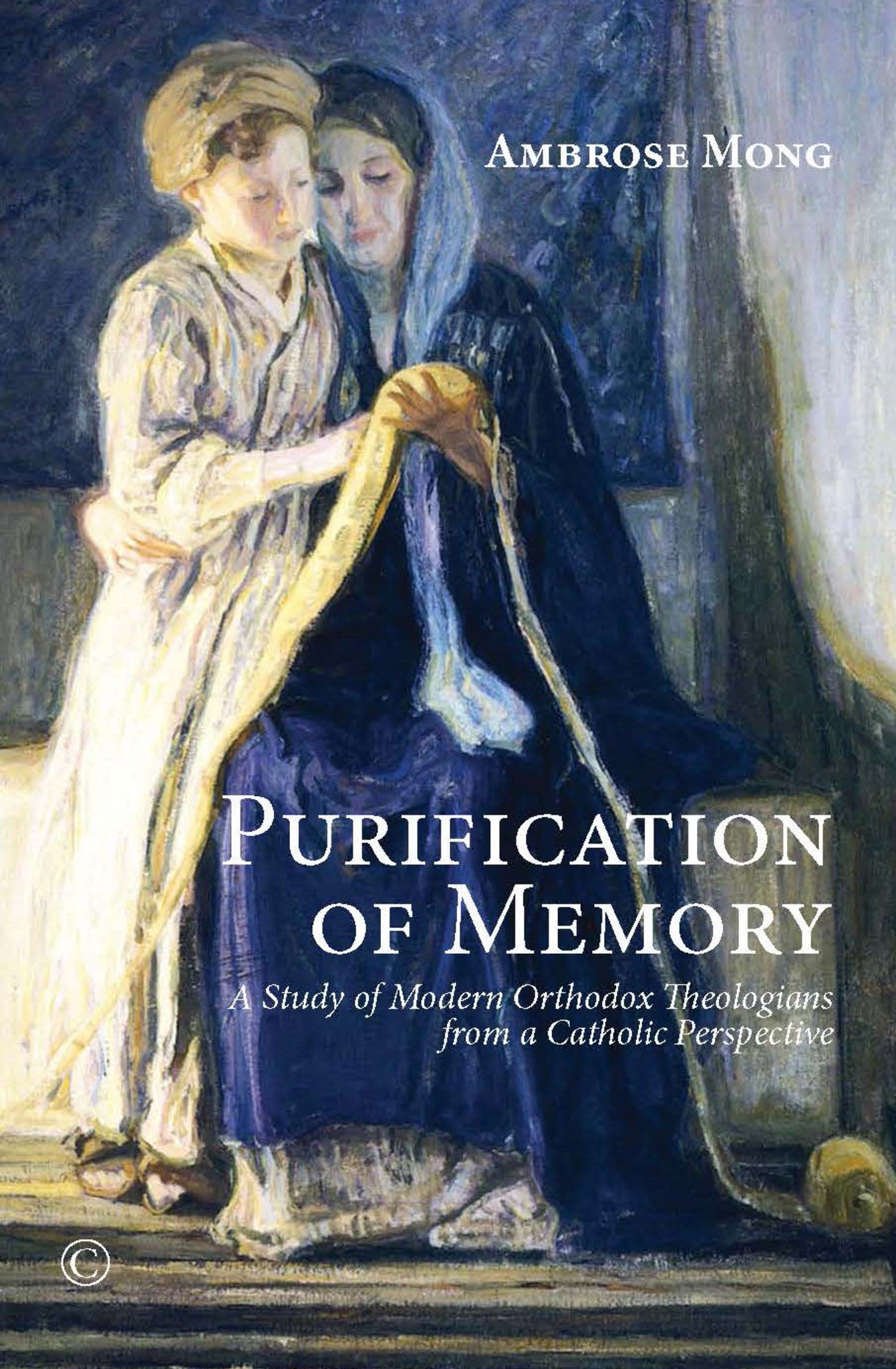
An ecumenical investigation of Eastern Orthodox theology through its most distinguished modern contributors, revealing commonalities with the Western church.
Although its various bodies boast a combined total of at least 300 million members, the Eastern Orthodox Church is widely perceived among members of other denominations to be an exotic branch of the faith, often shrouded in mysticism and misunderstanding that has been exacerbated by the longstanding Eastern-Western split. In 'Purification of Memory', Ambrose Mong casts light on the true nature of Orthodox theology, illuminating the thinking of eight distinguished modern Orthodox theologians who have made important contributions on topics as ecclesiology, ecumenism, Christology, and Mariology. Approaching the work of John Meyendorff, Nicholas Afanasiev, John Zizioulas, Georges Florovsky, Sergius Bulgakov, Vladimir Lossky, Nicolas Berdyaev, and Jaroslav Pelikan from an ecumenical standpoint, Mong deftly draws comparisons with the theology of their Roman Catholic counterparts to reveal points on which the two traditions have much more in common than either side will always admit.
The author interweaves these comparisons with a fascinating exposition of the history of the schism between the Eastern and Western Churches to demonstrate decisively that in spite of the bitter mistrust dividing them, they share a common heritage which could, and should, serve as a basis for reunification. Before old wounds can mend, however, a healing process of forgetting, characterized by Pope John Paul II as a 'purification of memory', must take place to clear the path towards a long-awaited return to unity.
Although its various bodies boast a combined total of at least 300 million members, the Eastern Orthodox Church is widely perceived among members of other denominations to be an exotic branch of the faith, often shrouded in mysticism and misunderstanding that has been exacerbated by the longstanding Eastern-Western split. In 'Purification of Memory', Ambrose Mong casts light on the true nature of Orthodox theology, illuminating the thinking of eight distinguished modern Orthodox theologians who have made important contributions on topics as ecclesiology, ecumenism, Christology, and Mariology. Approaching the work of John Meyendorff, Nicholas Afanasiev, John Zizioulas, Georges Florovsky, Sergius Bulgakov, Vladimir Lossky, Nicolas Berdyaev, and Jaroslav Pelikan from an ecumenical standpoint, Mong deftly draws comparisons with the theology of their Roman Catholic counterparts to reveal points on which the two traditions have much more in common than either side will always admit.
The author interweaves these comparisons with a fascinating exposition of the history of the schism between the Eastern and Western Churches to demonstrate decisively that in spite of the bitter mistrust dividing them, they share a common heritage which could, and should, serve as a basis for reunification. Before old wounds can mend, however, a healing process of forgetting, characterized by Pope John Paul II as a 'purification of memory', must take place to clear the path towards a long-awaited return to unity.

Price: $40.95
Pages: 232
Publisher: Boydell & Brewer Inc.
Imprint: James Clarke
Publication Date:
25 June 2015
Trim Size: 9.21 X 6.14 in
ISBN: 9780227175132
Format: Paperback
BISACs:
RELIGION / Christian Theology / General, Christianity, Theology

Ambrose Mong's research is very important for furthering conversations between the Orthodox and Roman Catholic Churches. Dr. Mong's study represents a major contribution addressing the gap that exists between Orthodox theological thinking and Roman Catholic readership. An example of inspired scholarship, Purification of Memory invites careful reading and contemplation as it dispels some deep-seated stereotypes and misconceptions.
— Dr Lasha Tchantouridzé, Professor of Church History, Saint Arseny Orthodox Christian Theological Institute, Winnipeg, Canada
...this study is a welcome addition to any scholar's library who desires to begin engaging with modern Orthodox theologians. Mong's summaries and analysis make an excellent resource for the educators looking to familiarize Roman Catholic and other Western theology students with an Orthodox theological outlook at the graduate and undergraduate level.
— Eric Lafferty
It is refreshing to find an introduction to the main figures and themes of twentieth-century Orthodoxy penned by a Chinese Catholic priest mainly writing for a Catholic audience.
— Thomas Cattoi
— Dr Lasha Tchantouridzé, Professor of Church History, Saint Arseny Orthodox Christian Theological Institute, Winnipeg, Canada
...this study is a welcome addition to any scholar's library who desires to begin engaging with modern Orthodox theologians. Mong's summaries and analysis make an excellent resource for the educators looking to familiarize Roman Catholic and other Western theology students with an Orthodox theological outlook at the graduate and undergraduate level.
— Eric Lafferty
It is refreshing to find an introduction to the main figures and themes of twentieth-century Orthodoxy penned by a Chinese Catholic priest mainly writing for a Catholic audience.
— Thomas Cattoi
Introduction
Chapter 1. Nicolas Afanasiev
Chapter 2. Jaroslav Pelikan
Chapter 3. Nicolas Berdyaev
Chapter 4. Georges Florovsky
Chapter 5. Sergei Bulgakov
Chapter 7. Vladimir Lossky
Chapter 8: John Meyendorff
Chapter 6. John Zizioulas
Conclusion
Chapter 1. Nicolas Afanasiev
Chapter 2. Jaroslav Pelikan
Chapter 3. Nicolas Berdyaev
Chapter 4. Georges Florovsky
Chapter 5. Sergei Bulgakov
Chapter 7. Vladimir Lossky
Chapter 8: John Meyendorff
Chapter 6. John Zizioulas
Conclusion