


Some error occured while loading the Quick View. Please close the Quick View and try reloading the page.
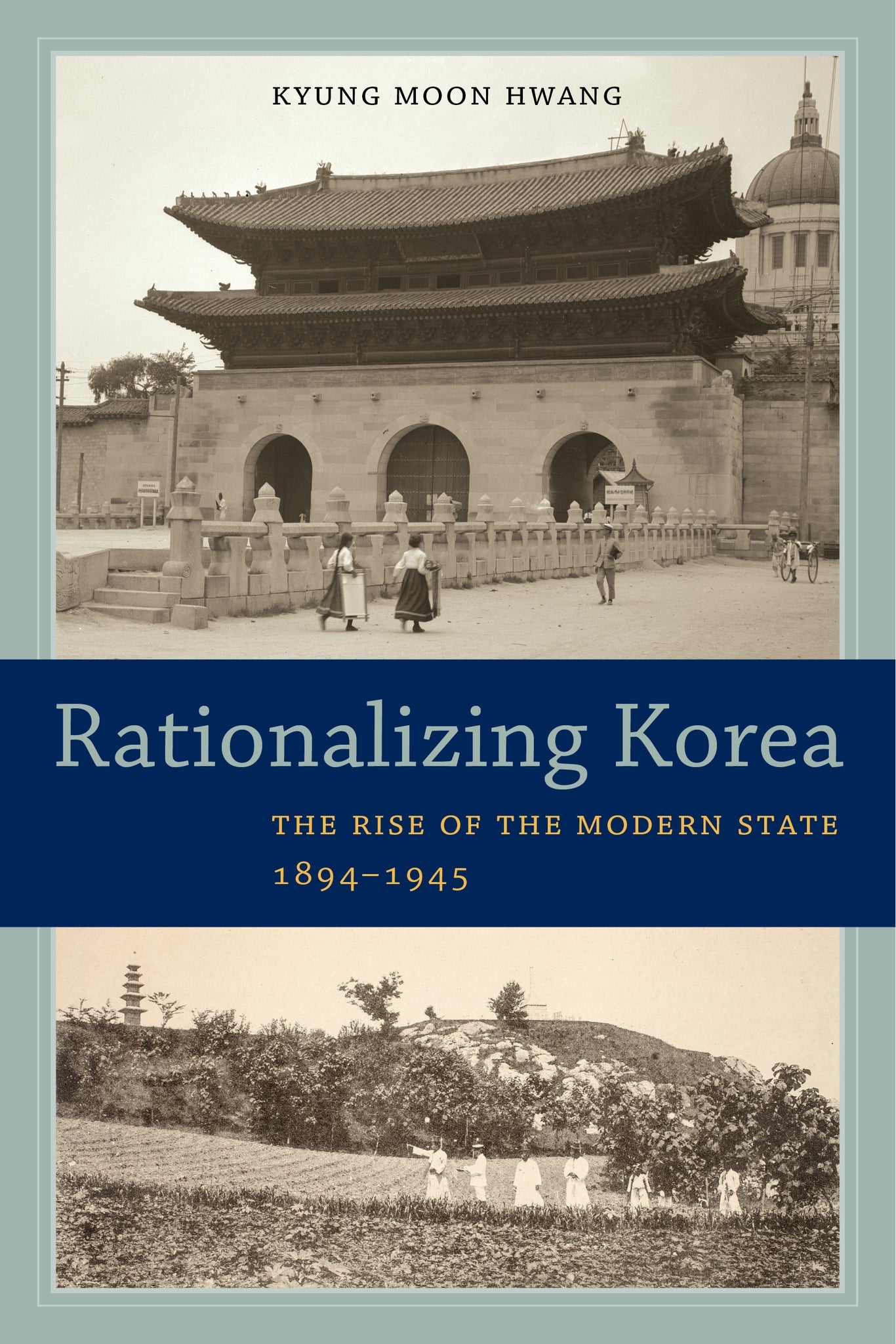
The first book to explore the institutional, ideological, and conceptual development of the modern state on the peninsula, Rationalizing Korea analyzes the state’s relationship to five social sectors, each through a distinctive interpretive theme: economy (developmentalism), religion (secularization), education (public schooling), population (registration), and public health (disease control). Kyung Moon Hwang argues that while this formative process resulted in a more commanding and systematic state, it was also highly fragmented, socially embedded, and driven by competing, often conflicting rationalizations, including those of Confucian statecraft and legitimation. Such outcomes reflected the acute experience of imperialism, nationalism, colonialism, and other sweeping forces of the era.

Price: $34.95
Pages: 416
Publisher: University of California Press
Imprint: University of California Press
Publication Date:
29 December 2015
ISBN: 9780520963276
Format: eBook

List of Illustrations
Preface
Note on Romanization and Translations
Introduction
PART ONE. THE STRUCTURES OF STATE RATIONALIZATION
1 • State Making under Imperialism: Fragmentation and Consolidation in the Central State
2 • Th e Centrality of the Periphery: Developing the Provincial and Local State
3 • Constructing Legitimacy: Symbolic Authority and Ideological Engineering
PART TWO. RATIONALIZING SOCIETY
4 • State and Economy: Developmentalism
5 • State and Religion: Secularization and Pluralism
6 • Public Schooling: Cultivating Citizenship Education
7 • Population Management: Registration, Classification, and the Remaking of Society
8 • Public Health and Biopolitics: Discipliningthrough Disease Control
Conclusion
Appendices
Notes
Bibliography
Index
Preface
Note on Romanization and Translations
Introduction
PART ONE. THE STRUCTURES OF STATE RATIONALIZATION
1 • State Making under Imperialism: Fragmentation and Consolidation in the Central State
2 • Th e Centrality of the Periphery: Developing the Provincial and Local State
3 • Constructing Legitimacy: Symbolic Authority and Ideological Engineering
PART TWO. RATIONALIZING SOCIETY
4 • State and Economy: Developmentalism
5 • State and Religion: Secularization and Pluralism
6 • Public Schooling: Cultivating Citizenship Education
7 • Population Management: Registration, Classification, and the Remaking of Society
8 • Public Health and Biopolitics: Discipliningthrough Disease Control
Conclusion
Appendices
Notes
Bibliography
Index