


Some error occured while loading the Quick View. Please close the Quick View and try reloading the page.
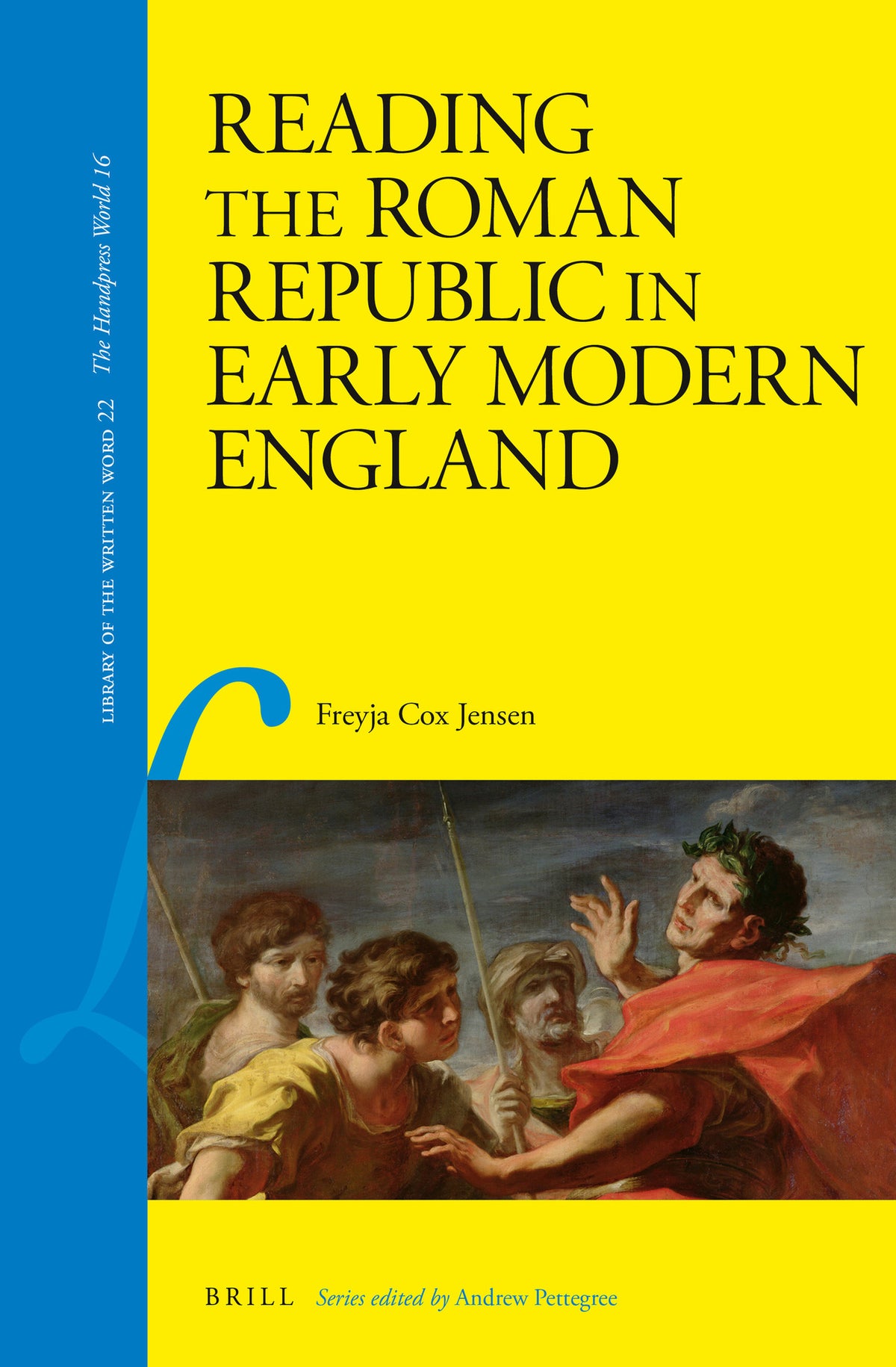
Placing the reading of history in its cultural and educational context, and examining the processes by which ideas about ancient Rome circulated, this study provides the first assessment of the significance of Roman history, broadly conceived, in early modern England. The existing scholarship, preoccupied with republicanism in the decades before the Civil Wars, and focusing on the major drama of the period, has distorted our understanding of what ancient history really meant to early modern readers. This study articulates the connections between the history of education, reading and writing, and challenges the schools of historical thought which associate a particular classical source with one set of readings; here, for the first time, is an in-depth analysis of the role of Roman history in creating an English latinate culture which encompassed far wider debates and ideas than the purely political.

Price: $186.00
Pages: 248
Publisher: Brill
Imprint: Brill
Publication Date:
August 3, 2012
ISBN: 9789004233034
Format: Other

“This book combines intellectual history, literary history, and the history of reading in innovative ways. […] both in its general approach and in the fresh evidence it offers, this book advances the subject a great deal.”
David Norbrook, Merton Professor of Renaissance English literature at the University of Oxford. In: Renaissance Quarterly, Vol. 66, No. 3 (Fall 2013), pp. 1080-1081.
“Freyja Cox Jensen’s Reading the Roman Republic in Early Modern England is one of those rare scholarly achievements that succeed in combining scrupulous documentation, painstaking textual analysis, and fascinating critical insight.”
Domenico Lovascio, University of Genoa. In: Sixteenth Century Journal, Vol. 45, No. 2 (2014), pp. 437-438.
“It will be clear that there is much material here that is likely to be of interest to classicists, literary scholars, and historians of the early modern period. Particularly valuable for the bibliographical world, I think, is the delivery of another model of book-historical research that embraces work on readership, ownership, and the use of books, and that integrates it with more traditional approaches to published output. We are seeing more of this, as we increasingly recognize the value of post-production evidence in understanding the social impact of books, and Jensen’s work is much to be welcomed as an addition to this ever-growing field.”
David Pearson, Director of Culture, Heritage and Libraries at the City of London. In: The Library, 7.15.1 (March 2014), pp. 82-84.
David Norbrook, Merton Professor of Renaissance English literature at the University of Oxford. In: Renaissance Quarterly, Vol. 66, No. 3 (Fall 2013), pp. 1080-1081.
“Freyja Cox Jensen’s Reading the Roman Republic in Early Modern England is one of those rare scholarly achievements that succeed in combining scrupulous documentation, painstaking textual analysis, and fascinating critical insight.”
Domenico Lovascio, University of Genoa. In: Sixteenth Century Journal, Vol. 45, No. 2 (2014), pp. 437-438.
“It will be clear that there is much material here that is likely to be of interest to classicists, literary scholars, and historians of the early modern period. Particularly valuable for the bibliographical world, I think, is the delivery of another model of book-historical research that embraces work on readership, ownership, and the use of books, and that integrates it with more traditional approaches to published output. We are seeing more of this, as we increasingly recognize the value of post-production evidence in understanding the social impact of books, and Jensen’s work is much to be welcomed as an addition to this ever-growing field.”
David Pearson, Director of Culture, Heritage and Libraries at the City of London. In: The Library, 7.15.1 (March 2014), pp. 82-84.
Freyja Cox Jensen obtained her DPhil in History in 2009 from Christ Church, Oxford, where she now holds the post of Junior Research Fellow.