


Some error occured while loading the Quick View. Please close the Quick View and try reloading the page.
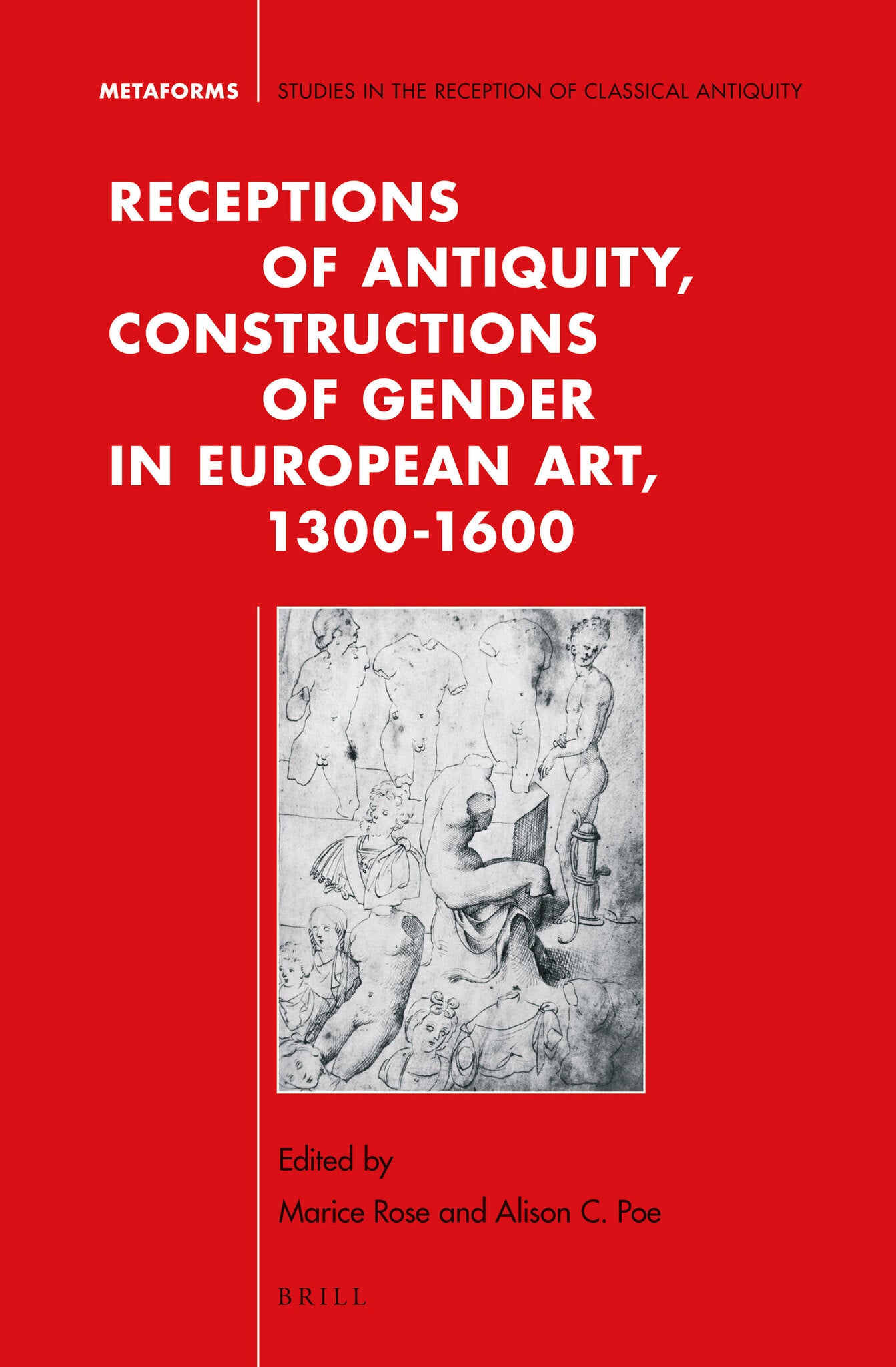
Receptions of Antiquity, Constructions of Gender in European Art, 1300-1600 presents scholarship in classical reception at its nexus with art history and gender studies. It considers the ways that artists, patrons, collectors, and viewers in late medieval and early modern Europe used ancient Greek and Roman art, texts, myths, and history to interact with and shape notions of gender. The essays examine Giotto's Arena Chapel frescoes, Michelangelo's Medici Chapel personifications, Giulio Romano's decoration of the Palazzo del Te, and other famous and lesser-known sculptures, paintings, engravings, book illustrations, and domestic objects as well as displays of ancient art. Visual responses to antiquity in this era, the volume demonstrates, bore a complex and significant relationship to the construction of, and challenges to, contemporary gender norms.

Price: $234.00
Pages: 468
Publisher: Brill
Imprint: Brill
Publication Date:
05 June 2015
ISBN: 9789004278745
Format: Hardcover

"Overall, this collection of essays explores new, gendered ground in the firmly rooted classical tradition in Renaissance art, and scholars from art history, literature, and gender studies will all find this book to be informative. The volume sheds much light on an important subject that has not received the attention it deserves from scholars; (...) I have no doubt that future explorations of gendered receptions of antiquity in Renaissance visual culture will draw on the many insights of these essays." Allison Fisher, Renaissance Quarterly, Volume 70, Number 1
"As is often found with such books, there is variability among the essays, but the overall quality is excellent.There are numerous figures included within the essays demonstrating the care with which each scholar considered the evidence for their claims.(...) The variety of approaches to the topic of gender in the reception of classical art highlights how fruitful this topic is. The overall effect is the demolition of static, prescriptive notions of gender over the period in question and to demonstrate the multivalence of many classical motifs." Natasha Amendola, The Medieval Review 16.12.12
"Ultimately, the collection of essays is perhaps the ideal format for poststructuralist approaches to art history. A clear principle—the relative “horizon of expectations”—underpins the otherwise sui generis data of a multitude of case studies, each with her own nuanced stories that might be overshadowed by a broader narrative, and art history is richer as a result."
Rebecca Shields, Rutgers University, Woman's Art Journal 38, 1, summer 2017.
"A strength of the essays is the way in which scholars note that the interpretation of the classical figures was not static; repeatedly the reader is shown that interpretations change over time and are based on the circumstances of the viewer, differentiated by gender or by social and economic status. This book is a valuable and welcome addition to the study of late medieval and early modern receptions of gender and classical antiquity in visual culture. (...) The editors and most contributors are art historians, but the methodological perspectives and conclusions offered here will be of broad interest to scholars across the humanities."
Rita Keane, Drew University, Speculum, 94/4 (October 2019).
"As is often found with such books, there is variability among the essays, but the overall quality is excellent.There are numerous figures included within the essays demonstrating the care with which each scholar considered the evidence for their claims.(...) The variety of approaches to the topic of gender in the reception of classical art highlights how fruitful this topic is. The overall effect is the demolition of static, prescriptive notions of gender over the period in question and to demonstrate the multivalence of many classical motifs." Natasha Amendola, The Medieval Review 16.12.12
"Ultimately, the collection of essays is perhaps the ideal format for poststructuralist approaches to art history. A clear principle—the relative “horizon of expectations”—underpins the otherwise sui generis data of a multitude of case studies, each with her own nuanced stories that might be overshadowed by a broader narrative, and art history is richer as a result."
Rebecca Shields, Rutgers University, Woman's Art Journal 38, 1, summer 2017.
"A strength of the essays is the way in which scholars note that the interpretation of the classical figures was not static; repeatedly the reader is shown that interpretations change over time and are based on the circumstances of the viewer, differentiated by gender or by social and economic status. This book is a valuable and welcome addition to the study of late medieval and early modern receptions of gender and classical antiquity in visual culture. (...) The editors and most contributors are art historians, but the methodological perspectives and conclusions offered here will be of broad interest to scholars across the humanities."
Rita Keane, Drew University, Speculum, 94/4 (October 2019).
Marice Rose, Ph.D., is Associate Professor of Art History at Fairfield University. She publishes on the topics of classical reception, images of women and slaves in the late Roman empire, and art history pedagogy.
Alison C. Poe, Ph.D., is an Adjunct Instructor of Art History at Fairfield University specializing in Roman imperial-era and late antique funerary art and architecture as well as in classical reception.
Contributors to this volume are Katherine M. Bentz, Mary Edwards, Genevieve S. Gessert, Hetty Joyce, Claudia Lazzaro, Stephanie C. Leone, Maria F. Maurer, K. Sarah-Jane Murray (with Ashley A. Simone), April Oettinger, Patricia Simons, Timothy Smith and Ian Verstegen.
Alison C. Poe, Ph.D., is an Adjunct Instructor of Art History at Fairfield University specializing in Roman imperial-era and late antique funerary art and architecture as well as in classical reception.
Contributors to this volume are Katherine M. Bentz, Mary Edwards, Genevieve S. Gessert, Hetty Joyce, Claudia Lazzaro, Stephanie C. Leone, Maria F. Maurer, K. Sarah-Jane Murray (with Ashley A. Simone), April Oettinger, Patricia Simons, Timothy Smith and Ian Verstegen.