


Some error occured while loading the Quick View. Please close the Quick View and try reloading the page.
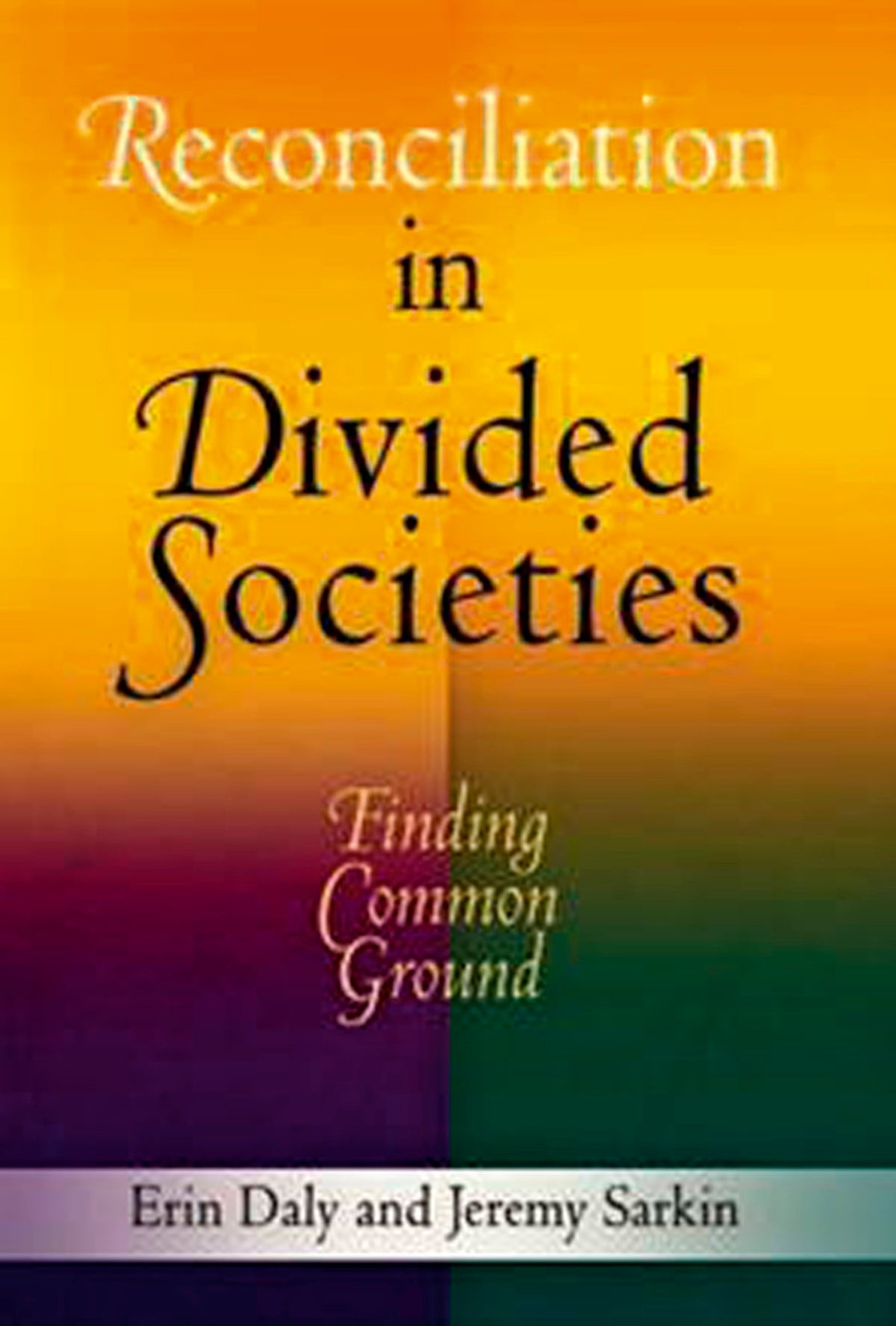
"As nations struggling to heal wounds of civil war and atrocity turn toward the model of reconciliation, Reconciliation in Divided Societies takes a systematic look at the political dimensions of this international phenomenon. . . . The book shows us how this transformation happens so that we can all gain a better understanding of how, and why, reconciliation really works. It is an almost indispensable tool for those who want to engage in reconciliation"—from the foreword by Archbishop Emeritus Desmond Tutu
As societies emerge from oppression, war, or genocide, their most important task is to create a civil society strong and stable enough to support democratic governance. More and more conflict-torn countries throughout the world are promoting reconciliation as central to their new social order as they move toward peace and stability.
Scores of truth and reconciliation commissions are helping bring people together and heal the wounds of deeply divided societies. Since the South African transition, countries as diverse as Timor Leste, Sierra Leone, Fiji, Morocco, and Peru have placed reconciliation at the center of their reconstruction and development programs. Other efforts to promote reconciliation—including trials and governmental programs—are also becoming more prominent in transitional times. But until now there has been no real effort to understand exactly what reconciliation could mean in these different situations. What does true reconciliation entail? How can it be achieved? How can its achievement be assessed? This book digs beneath the surface to answer these questions and explain what the concepts of truth, justice, forgiveness, and reconciliation really involve in societies that are recovering from internecine strife.
Looking to the future as much as to the past, Erin Daly and Jeremy Sarkin maintain that reconciliation requires fundamental political and economic reform along with personal healing if it is to be effective in establishing lasting peace and stability. Reconciliation, they argue, is best thought of as a means for transformation. It is the engine that enables victims to become survivors and divided societies to transform themselves into communities where people work together to raise children and live productive, hopeful lives. Reconciliation in Divided Societies shows us how this transformation happens so that we can all gain a better understanding of how and why reconciliation is actually accomplished.


"An invaluable contribution to our understanding of conflict and reconciliation."
Foreword by Archbishop Emeritus Desmond Mpilo Tutu
Preface
PART I. FINDING COMMON GROUND
Chapter 1. The Lay of the Land
PART II. RECONCILIATION IN LAYERS
Chapter 2. The Divided Self
Chapter 3. Reconciliation in Community
Chapter 4. National and International Reconciliation
PART III. RECONCILIATION'S INTERNAL LOGIC
Chapter 5. The Costs of Reconciliation
Chapter 6. Truth, Forgiveness, and Justice
Chapter 7. Reconciliation Redirected
PART IV. RECONCILIATION RECONSTRUCTED
Chapter 8. Politics and Money
Chapter 9. The Mechanics of Reconciliation
Notes
Bibliography
Index