


Some error occured while loading the Quick View. Please close the Quick View and try reloading the page.
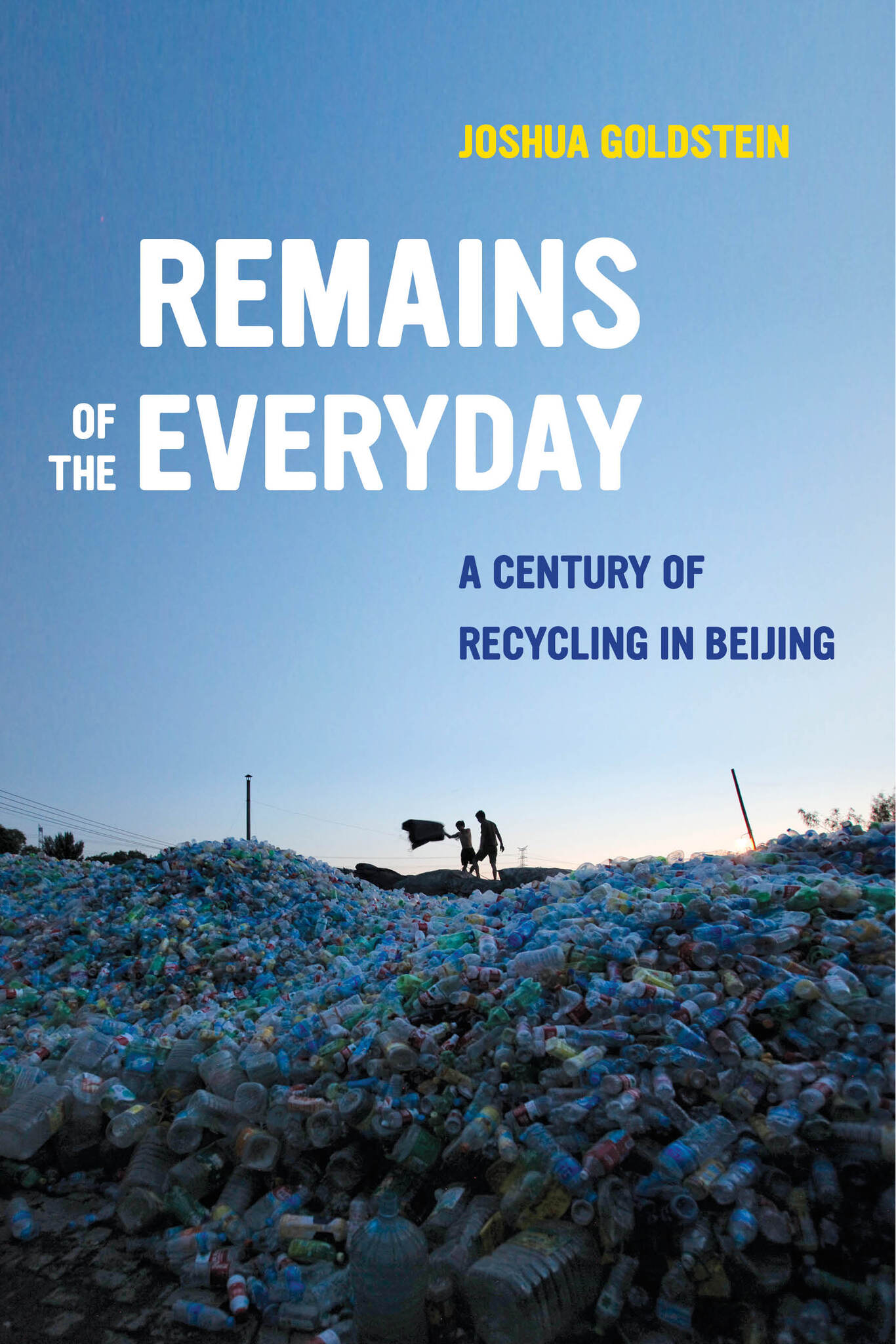
Remains of the Everyday traces the changing material culture and industrial ecology of China through the lens of recycling. Over the last century, waste recovery and secondhand goods markets have been integral to Beijing’s economic functioning and cultural identity, and acts of recycling have figured centrally in the ideological imagination of modernity and citizenship. On the one hand, the Chinese state has repeatedly promoted acts of voluntary recycling as exemplary of conscientious citizenship. On the other, informal recycling networks—from the night soil carriers of the Republican era to the collectors of plastic and cardboard in Beijing’s neighborhoods today—have been represented as undisciplined, polluting, and technologically primitive due to the municipal government’s failure to control them. The result, Joshua Goldstein argues, is the repeatedly re-inscribed exclusion of waste workers from formations of modern urban citizenship as well as the intrinsic liminality of recycling itself as an economic process.

Price: $34.95
Pages: 338
Publisher: University of California Press
Imprint: University of California Press
Publication Date:
22 December 2020
ISBN: 9780520971394
Format: eBook

List of Illustrations
Acknowledgments
List of Abbreviations
Introduction
Part One. The Republican Era (1912–1949)
Recycling of a Different Sort
1 Dreams of a Hygienic Infrastructure Deferred
2 From Imperial Capital to Secondhand Emporium
Modernity of a Different Sort
Part Two. The Mao Era (1949–1980)
Recycling According to Plan
3 The Rural Exile of Urban Wastes
4 Standardizing Chaos: Rationalizing the Junk Trades in the 1950s
5 Effortful Equilibriums of the State-Managed Scrap Sector, 1960–1980
Beijing’s Waste-Scape on the Cusp of Market Reform
Part Three. The Reform Era (1980–Present)
Fighting over the Scraps
6 A Tale of Two Cities, 1980–2003
7 Top of the Heap
8 No Longer the World’s Garbage Dump!
Whither Beijing’s Recyclers?
Appendix: Timelines of Selected Events in the Recycling and Sanitation Bureaucracies, 1949–2000
Notes
Index
Acknowledgments
List of Abbreviations
Introduction
Part One. The Republican Era (1912–1949)
Recycling of a Different Sort
1 Dreams of a Hygienic Infrastructure Deferred
2 From Imperial Capital to Secondhand Emporium
Modernity of a Different Sort
Part Two. The Mao Era (1949–1980)
Recycling According to Plan
3 The Rural Exile of Urban Wastes
4 Standardizing Chaos: Rationalizing the Junk Trades in the 1950s
5 Effortful Equilibriums of the State-Managed Scrap Sector, 1960–1980
Beijing’s Waste-Scape on the Cusp of Market Reform
Part Three. The Reform Era (1980–Present)
Fighting over the Scraps
6 A Tale of Two Cities, 1980–2003
7 Top of the Heap
8 No Longer the World’s Garbage Dump!
Whither Beijing’s Recyclers?
Appendix: Timelines of Selected Events in the Recycling and Sanitation Bureaucracies, 1949–2000
Notes
Index