


Some error occured while loading the Quick View. Please close the Quick View and try reloading the page.
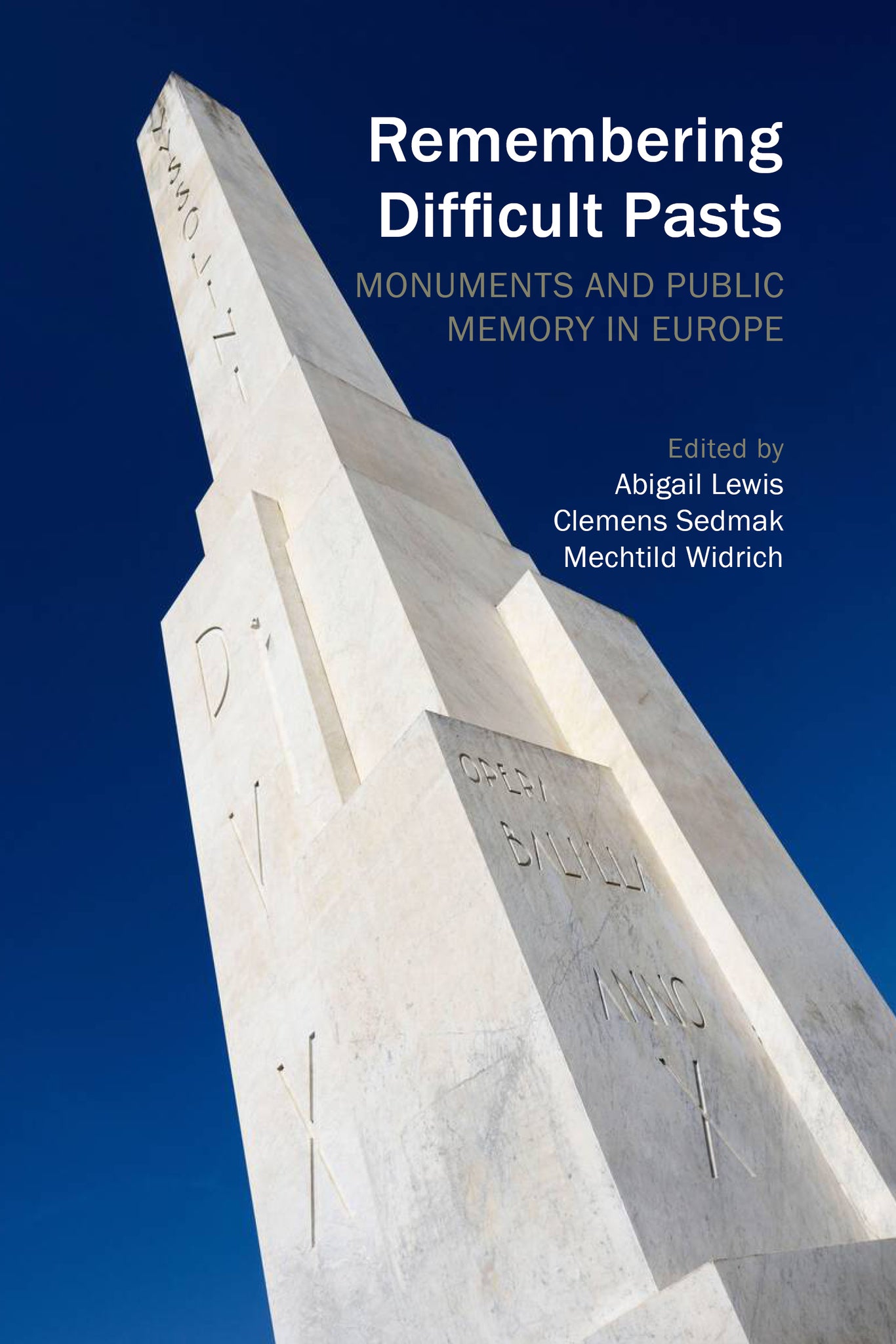
Monuments and memorials, as symbols built intentionally into the environment, are important frames for understanding how narratives of the past are constructed and reconstructed over time. Europe’s memorial landscape is rife with debate about which pasts to remember, how to remember them, and whose job it is to remember.
This book presents a range of case studies from the UK to Ukraine to better understand how European societies have grappled with their difficult pasts – whether traumatic, controversial, exclusionary, propagandistic or even embarrassing – through the built environment. Looking across national borders, the contributors explore how different countries, at different moments in time, have memorialized complicated histories, including fascism, socialism, the Holocaust, colonialism and other examples of contemporary violence; and also how they have removed monuments, memorials and architecture as a response to attempts to remember, as well as forget the past.
The book considers how memory divides as well as how it unites an increasingly globalized European populace and questions the stakes of memory in Europe, and how European societies remember their diverse and collective histories.


Abigail Lewis is a historian of modern French and European history. She received her PhD from the University of Wisconsin-Madison and her research focuses on photography, visual culture and collective memory during and after the Nazi occupation of France. She serves as the Executive Director of the Council for European Studies at Temple University.
Clemens Sedmak is Professor of Social Ethics and Director of the Nanovic Institute in the Keough School of Global Affairs, University of Notre Dame. He also holds concurrent positions with the Department of Theology and the Institute for Social Concerns. He was previously F. D. Maurice Professor of Moral and Social Theology at King’s College London.
Mechtild Widrich is Professor and Chair of the Department of Art History, Theory, and Criticism at the School of the Art Institute of Chicago. Her books include Performative Monuments: The Rematerialisation of Public Art (2014), Monumental Cares: Sites of History and Contemporary Art (2023).
Introduction
Mechtild Widrich and Abigail E. Lewis
Part I Holocaust Memory
1. Negative Spaces and the Play of Memory: The Memorial Art of Horst Hoheisel and Andreas Knitz
James E. Young
2. Tilting Austria’s Past
Mechtold Widrich
3. Contested Histories at the Jasenovac Memorial Site
Jelena Subotic
4. Paris as a Site of Holocaust Memory? Holocaust Memorialization in Postwar Paris
Abigail E. Lewis
Part II Totalitarianism/Fascism
5. Is There Such a Thing as Fascist Architecture? Architectural Design and Politics in Interwar Rome
Steven Semes
6. Monuments to ‘those fallen for God and Spain’: A Truly Present Legacy
Xurxo Ayán Vila
7. ‘No Memory Found’: Inframemory
Pedro Aguilera-Mellado
Part III Post-Socialist Memory
8. Living Memory and the Politics of History: Holocaust Memory Activism in Illiberal Hungary
Maya Nadkarni
9. When Monuments Tell What We Don’t Want to Hear: Confronting Contested Monuments in Croatia
Željko Tanjić & Jasna Ćurković Nimac
10 Divided by the Past: The Turbulent Fate of a Monument and the Challenges of Difficult Heritage in Contemporary Poland
Robert Traba and Magdalena Lemańczyk
11. “Center to Periphery: Constantin Brancusi’s Monumental Ensemble ‘Heroes’ Boulevard’
Andrei Pop
Part IV Colonialism and Slavery
12. Contested Monuments in England: Toppling the Colston Statue in Bristol
Tim Cole
13. Doit le Duc d’Orléans tomber? French Colonial Monuments in the Age of Rhodes Must Fall
Jennifer Sessions
14. Revamping a Colonial Patriarch: Hans Pauli Olsen’s Statue of Christian IV (2019) and Royal Maintenance Art in Denmark
Mathias Danbolt
Part V Warfare and Contemporary Violence
15. Contested Monuments in Ukraine during the Full-Scale Russian Invasion: Between Discourses of Identity and Sustainable Development
Danylo Sudyn
16. Remembering the First World War in the Irish ‘Borderlands’
Georgina Laragy and David Murphy
17. Sarajevo Roses: Civilian, Deserter, Soldier
Lejla Šabić-Džumhur
18. Epilogue: The Stories Monuments Tell – and Are
Clemens Sedmak