


Some error occured while loading the Quick View. Please close the Quick View and try reloading the page.
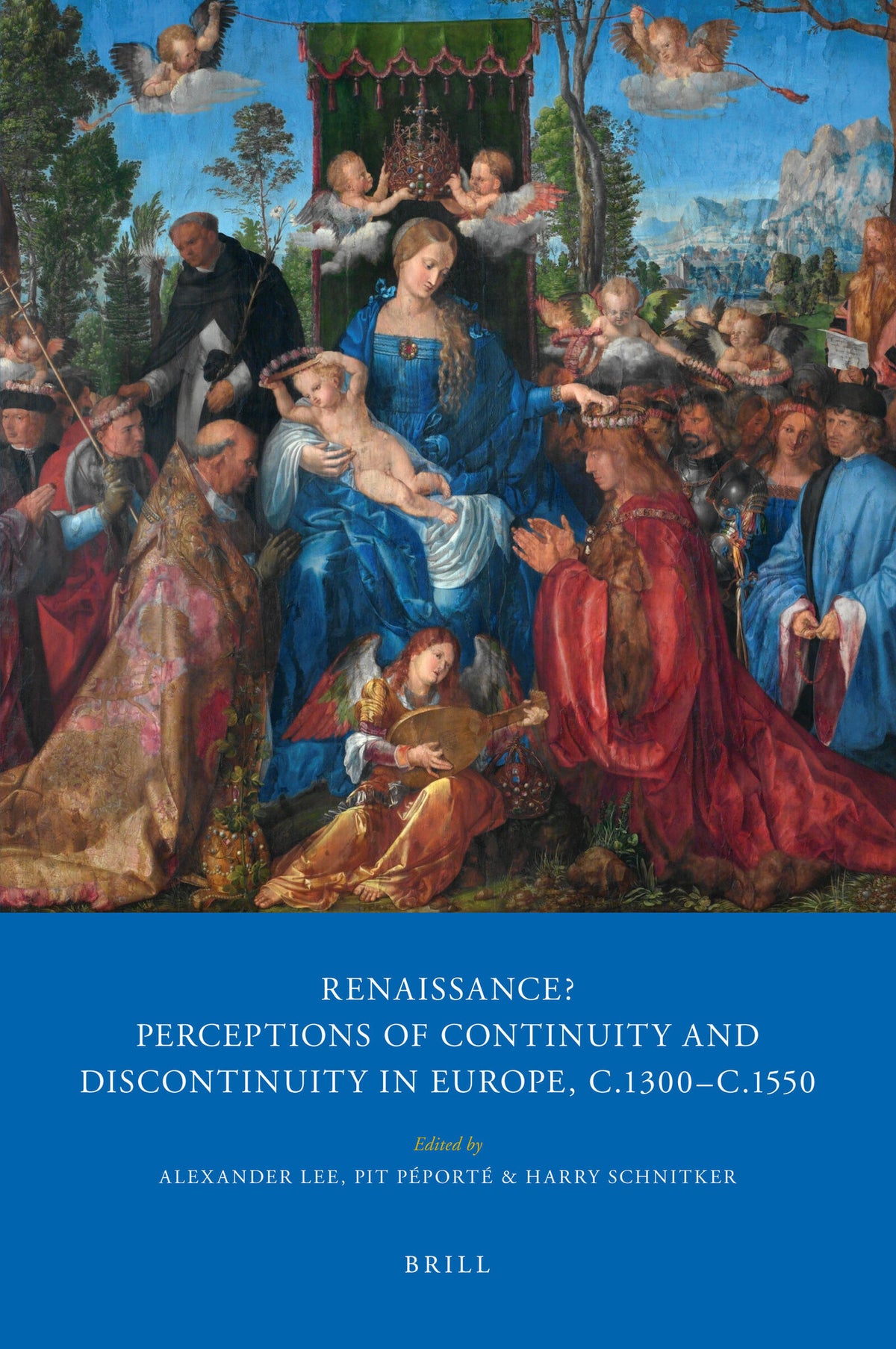
At least since the publication of Burckhardt’s seminal study, the Renaissance has commonly been understood in terms of discontinuities. Seen as a radical departure from the intellectual and cultural norms of the ‘Middle Ages’, it has often been associated with the revival of classical Antiquity and the transformation of the arts, and has been viewed primarily as an Italian phenomenon. In keeping with recent revisionist trends, however, the essays in this volume explore moments of profound intellectual, artistic, and geographical continuity which challenge preconceptions of the Renaissance. Examining themes such as Shakespearian tragedy, Michelangelo’s mythologies, Johannes Tinctoris’ view of music, the advent of printing, Burgundian book collections, and Bohemian ‘renovatio’, this volume casts a revealing new light on the Renaissance.
Contributors include Klára Benešovská, Robert Black, Stephen Bowd, Matteo Burioni, Ingrid Ciulisová, Johannes Grave, Luke Houghton, Robin Kirkpatrick, Alexander Lee, Diotima Liantini, Andrew Pettegree, Rhys W. Roark, Maria Ruvoldt, Jeffrey Chipps Smith, Robin Sowerby, George Steiris, Rob C. Wegman, and Hanno Wijsman.
Contributors include Klára Benešovská, Robert Black, Stephen Bowd, Matteo Burioni, Ingrid Ciulisová, Johannes Grave, Luke Houghton, Robin Kirkpatrick, Alexander Lee, Diotima Liantini, Andrew Pettegree, Rhys W. Roark, Maria Ruvoldt, Jeffrey Chipps Smith, Robin Sowerby, George Steiris, Rob C. Wegman, and Hanno Wijsman.

Price: $240.00
Pages: 370
Publisher: Brill
Imprint: Brill
Publication Date:
September 24, 2010
ISBN: 9789004183346
Format: Hardcover

… each contributor causes the reader to reflect anew on the fundamentals of what it is to study the Renaissance.
Stella Fletcher, Journal of Northern Renaissance, November 2011
Stella Fletcher, Journal of Northern Renaissance, November 2011
Alexander Lee, Ph.D. (2009) in History, University of Edinburgh, is a post-doctoral fellow at the University of Luxembourg and the University of Warwick. His research concentrates on the interaction between classical philosophy and Christian theology in the thought of Francesco Petrarca.
Pit Péporté, Ph.D. (2008) in History, University of Edinburgh, is a post-doctoral researcher at the University of Luxembourg. With a background in the medieval history of the Low Countries, he has also published in the fields of historiography and collective memory.
Harry Schnitker, Ph.D. (2008) in History, University of Edinburgh, is a research fellow in ecclesiastical history at the Maryvale Institute (Birmingham). His current research is concerned with the role of the veneration of saints in the creation of identities in the fifteenth and sixteenth centuries.
Pit Péporté, Ph.D. (2008) in History, University of Edinburgh, is a post-doctoral researcher at the University of Luxembourg. With a background in the medieval history of the Low Countries, he has also published in the fields of historiography and collective memory.
Harry Schnitker, Ph.D. (2008) in History, University of Edinburgh, is a research fellow in ecclesiastical history at the Maryvale Institute (Birmingham). His current research is concerned with the role of the veneration of saints in the creation of identities in the fifteenth and sixteenth centuries.