


Some error occured while loading the Quick View. Please close the Quick View and try reloading the page.
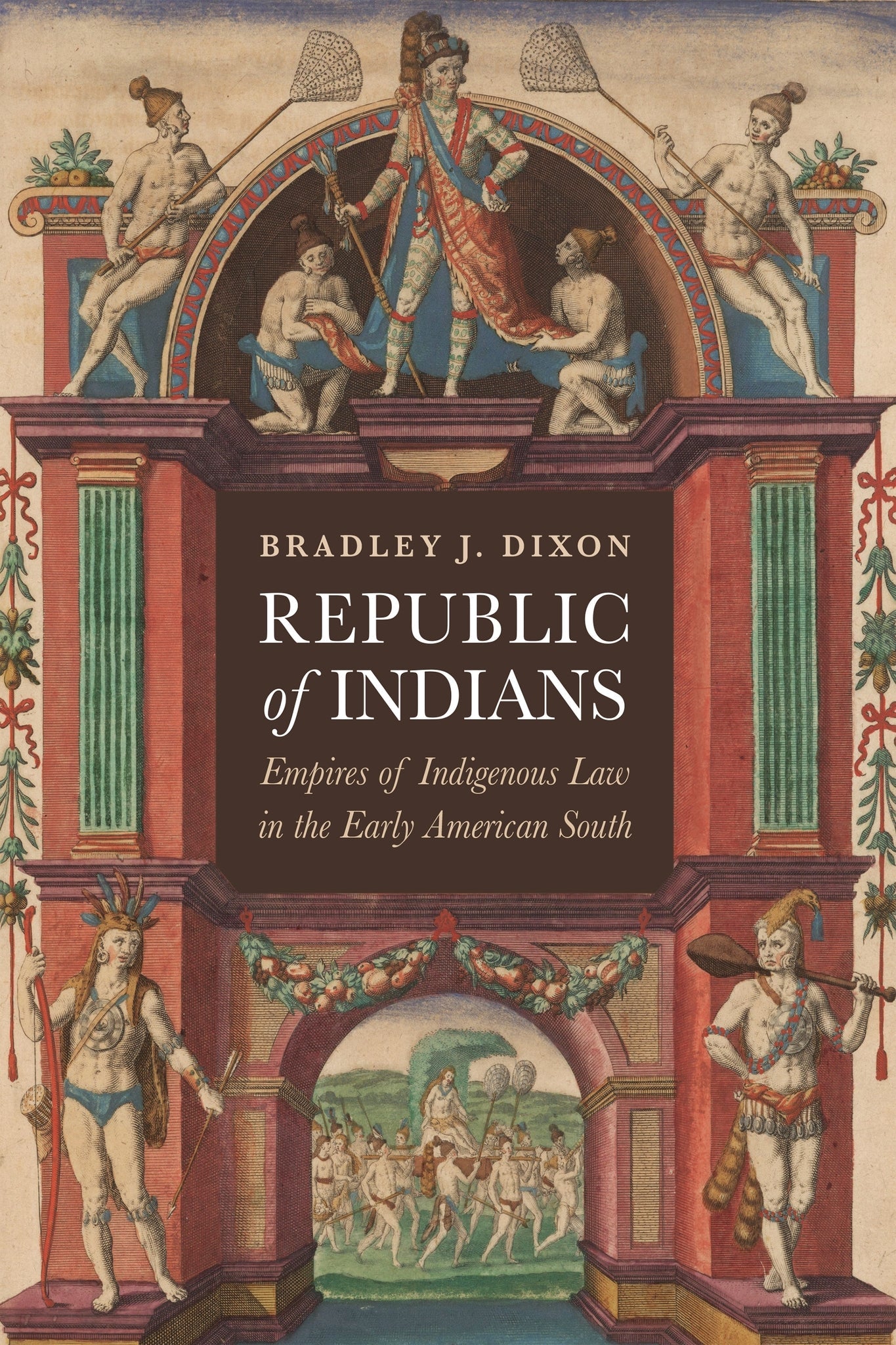
A sweeping history of the Native Southerners who wrote their principles into Spanish and English law
A sweeping history of the Native Southerners who challenged European empires from the inside, Republic of Indians tells the story of Indigenous leaders who wrote their principles into Spanish and English law.
While in the Spanish Empire, Natives were a recognized part of “la república de indios,” the “republic of Indians,” other Natives across the early American South understood themselves to be joined with European colonists in larger polities, each jealously guarding their own bodies of liberties under royal sanction. Thus, rather than simply rejecting European pretensions to rule them as subjects and vassals, Native Southerners as diverse as the Apalachees, Pamunkeys, Powhatans, and Timucuas redefined their status to become political players in legislative assemblies and the courts of distant monarchs. They pushed for incorporation in larger political systems in which they had a say and were themselves instrumental in creating.
Adapting pre-invasion practices to the technology of writing and the challenges of colonialism, Indigenous petitioners sought exemptions from labor and protection for “the lands that God gave to them,” as well as the right to install preferred leaders, avoid enslavement, ally with the Crown against colonists, ease harsh colonial laws, and even amend the terms of treaties and compacts. Bradley J. Dixon shows how their petitions also stand as enduring contributions to American political thought and how it was these “vassals” and “subjects” who gave meaning to the modern idea of tribal sovereignty. In the South, the Spanish and English empires came to resemble one another precisely because they were both dependent to a remarkable degree on maintaining Indigenous political consent and were founded in large part on Indigenous conceptions of law.


Contents
Prologue. “A Residencia for the Dead” 1
Chapter 1. Caciques and Kings, 1608–1632
Chapter 2. “Poor Indians,” 1633–1673
Chapter 3. “Emboldened Indians,” 1674–1678
Chapter 4. “Neither Vassals nor Subjects,” 1670–1700
Chapter 5. “As the Spaniards Always Have Done,” 1700–1715
Epilogue. The Authors of Their Sovereignty
List of Abbreviations
Notes
Index
Acknowledgments