


Some error occured while loading the Quick View. Please close the Quick View and try reloading the page.
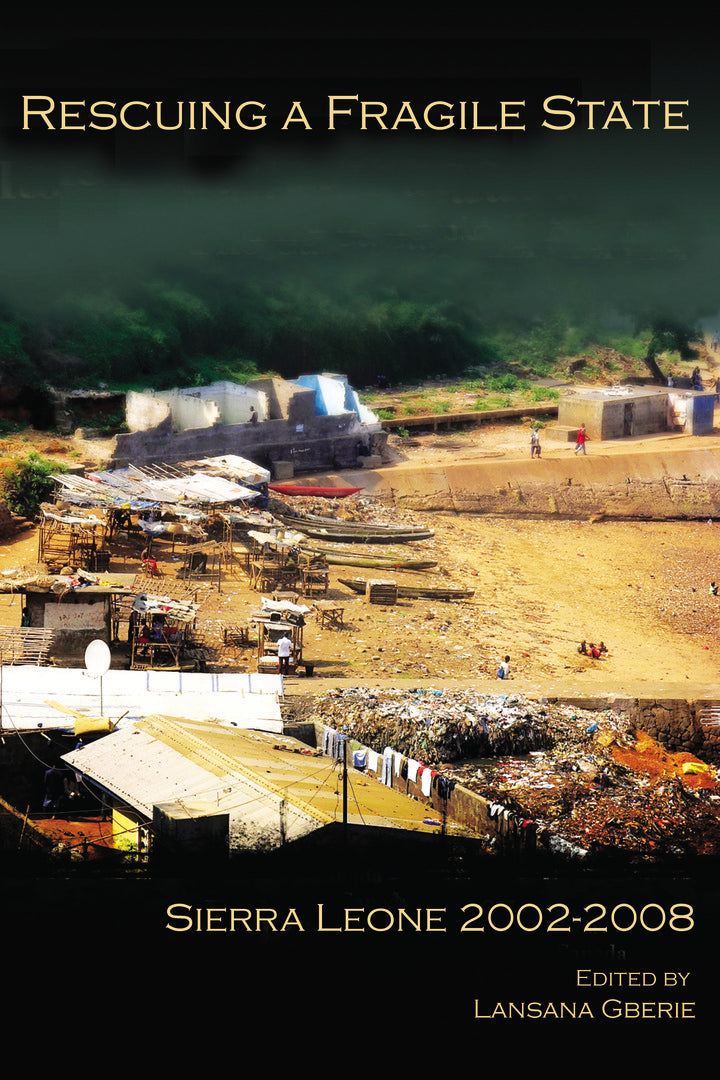
In Sierra Leone in 2000, British commandos intervened to prevent a bloody coup as UN forces faced collapse at the hands of the Revolutionary United Front. Sanctions were imposed on the rebel group and its key backer, the government of Charles Taylor of Liberia. Disarmament of over 70,000 militia fighters followed, and in 2002 Sierra Leone conducted successful democratic elections. The country was officially declared at peace, but it remains decidedly fragile.
Contributors examine Sierra Leone’s transition from war to peaceful democratic rule, arguing that while progress in the country has been remarkable, its development partners must remain fully engaged for many more years in order for the progress to be sustained.
Published by the Laurier Centre for Military, Strategic and Disarmament Studies and distributed by Wilfrid Laurier University Press.


— Chris Mahony, University of Oxford, Journal of Modern African Studies, Volume 50/3, 2012, 2012 December
Lansana Gberie is a senior associate of the International Center for Transitional Justice (ICTJ) and head of its Liberia Program. He was a key researcher for Partnership Africa Canada’s Human Security and International Diamond Trade project. Gberie has written extensively on conflict and conflict management in Africa, including A Dirty War in West Africa: The RUF and the Destruction of Sierra Leone (2005).
Table of Contents for Rescuing a Fragile State: Sierra Leone 2002–2008, edited by Lansana Gberie
Introduction Rescuing a Fragile State: The Class of Sierra Leone | Lansana Gberie
Chapter One Orphan of the Storm: Sierra Leone and 30 Years of Forgotten Aid | Ian Smillie
Chapter Two “Witness to the Truth”:The TRC of Sierra Leone—An Overview | Zoe Dugal
Chapter Three Beyond the TRC: Governance in Sierra Leone | Ozonnia Ojielo
Chapter Four The Special Court for Sierra Leone: A Critical Analysis | Peter Penfold
Chapter Five “Blood Diamonds”: A Postscript | Lansana Gberie
Chapter Six “Serving the Nation?” The Disintegration and Reconstitution of the Sierra Leone Army, 1961–2007 | Ismail Rashid
Chapter Seven Taming a Tiger: Developing a Professional Army in Post-War Sierra Leone | Don Saunders
Chapter Eight Security and Development in Sierra Leone: DFID’s Approach | Mark White
Chapter Nine Citizens and Soldiers: Community Defence in Post-War Sierra Leone | Danny Hoffman
Notes on Contributors