


Some error occured while loading the Quick View. Please close the Quick View and try reloading the page.
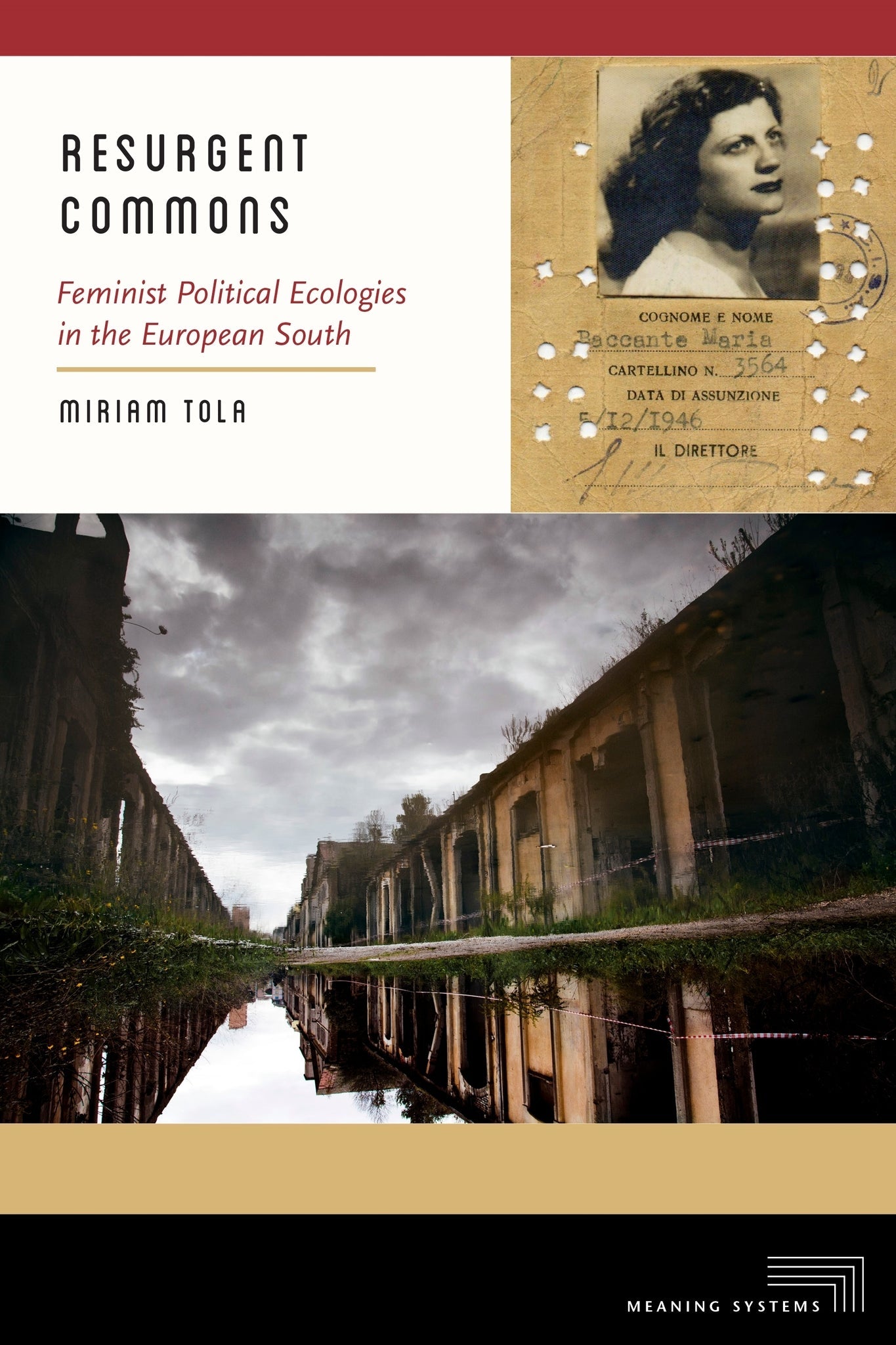
Once dismissed as “tragedy,” the commons have been making a comeback. Amid intensifying social and environmental injustices in neoliberal regimes, scholars and activists have turned to the commons—historically, the shared ownership of land—as a way to express more just ways of living within and against the grasp of capitalism. Resurgent Commons reframes the commons by foregrounding relations of care and socio-ecological reproduction, while questioning anthropocentric formulations that would render the commons a set of available resources and the product of human cooperation. Interdisciplinary in nature, Tola’s book troubles universalist accounts of the commons by unearthing its ambivalent role in European colonial histories marked by racial and sexual violence and environmental destruction.
As central case studies, the book considers contemporary political projects that enact feminist, anti-racist and more-than-human practices of urban commoning in Rome, a sprawling built environment in the European South that is also a city of ruins. From transfeminist commons to struggles for repairing areas where industrial ruins and recalcitrant natures coexist, to encounters with indigenous perspectives from the Americas, resurgent commons enact forms of life that are at odds with dominant regimes of property and governance. The book shows how a reconsideration of a supposedly obsolete mode of shared ownership can enable new modes of inhabiting the earth.


Expertly weaving together complex philosophical arguments and the lessons of activist practices, Tola develops an original and provocative conception of the commons.---Michael Hardt, author of The Subversive Seventies
Introduction: Resurgences | 1
Part I: Uneasy Genealogies
1. Reading Across Commons Archives | 27
2. Transatlantic Ecologies of Dispossession | 46
Part II: Production, Reproduction, Care
3. Engaging Potentials and Limits of the Marxist Common | 71
4. Transfeminist Commons: Inhabiting the Earth Otherwise | 93
Part III: Political Ecologies
5. Cosmopolitical Commoning in a City of Ruins | 117
6. Crossing the Storm: Encountering Decolonial Perspectives | 137
Epilogue: On Instituting |159
Acknowledgments | 165
Notes | 169
Works Cited | 183
Index | 205