


Some error occured while loading the Quick View. Please close the Quick View and try reloading the page.
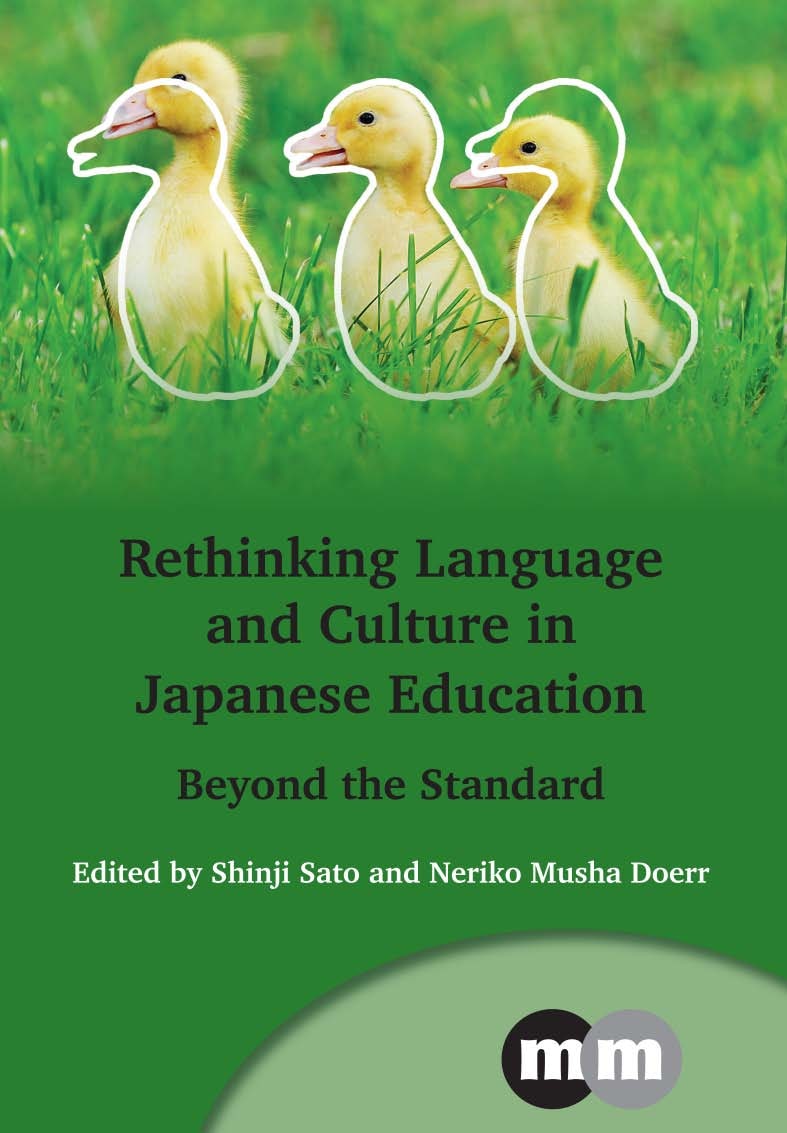
How does language or culture come to be standardized to the degree that it is considered 'homogeneous'? How does teaching language relate to such standardization processes? How can teaching be mindful of the standardization processes that potentially involve power relations? Focusing on the case of Japanese, which is often viewed as homogenous in terms of language and culture, this volume explores these questions in a wide range of contexts: the notions of translation and modernity, the ideologies of the standardization of regional dialects in Japan, current practices in college Japanese-as-a- Foreign-Language classrooms in the United States, discourses in journals of Japanese language education, and classroom practices in nursery and primary schools in Japan. This volume’s investigation of standardization processes of Japanese language and culture addresses the intersections of theoretical and practical concerns of researchers and educators that are often overlooked.


This is a fascinating original study of the politics involved in standardizing Japanese language. It is the first to jointly examine Japanese language education for 'native' speakers (kokugo) and for 'non-native' speakers. Its interdisciplinary approach makes the book enlightening for anyone interested in language, education, or Japanese society.
Shinji Sato is Senior Lecturer and Director of the Japanese Language Program, Department of East Asian Studies, Princeton University, USA. His research interests include language policy and teaching and the critical examination of commonplace ideas in language education.
Neriko Musha Doerr teaches at Salameno School of American and International Studies, Ramapo College of New Jersey, USA. Her research interests include bilingual and heritage language education and the anthropology of education.
1. Shinji Sato and Neriko Musha Doerr: Introduction
2. Ryuko Kubota: Standardization of Language and Culture
3. Naoki Sakai: Identity of Language and the Regime of Translation
4. Neriko Musha Doerr: On the Necessity of “Being Understood”: Rethinking the Ideology of Standardization in Japan
5. Shigeko Okamoto: Rethinking “Norms” for Japanese Women’s Speech
6. Shinji Sato: Constructing and Constructed Japanese: History of Standard Japanese and Practice at a Japanese Preschool
7. Uichi Kamiyoshi: How Japanese Education for Young People Has Been Discussed: A Critical Analysis from a Relational Viewpoint
8. Yuko Okubo: A Consideration of the Discourse on Mother Tongue Instruction in Japanese Language Education: A Case Study of the Practices of Japanese Language Classes for Chinese Returnees and Vietnamese Residents
9. Hazuki Segawa: The Japanese Mind and Thought: Theorization over Patterns of Thought in Post-War Japanese Language Education
10. Yuri Kumagai: On Learning Japanese Language: Critical Reading of a Japanese Language Textbook
11. Ryuko Kubota: Critical Teaching of Japanese Culture
12. Yuri Kumagai: The Process of Standardization of Language and Culture in a Japanese-as-a-Foreign-Language Classroom: Analysis of Teacher-Student Interactions
13. Neriko Musha Doerr: Conclusion and Departure: Shifting Thinking