


Some error occured while loading the Quick View. Please close the Quick View and try reloading the page.
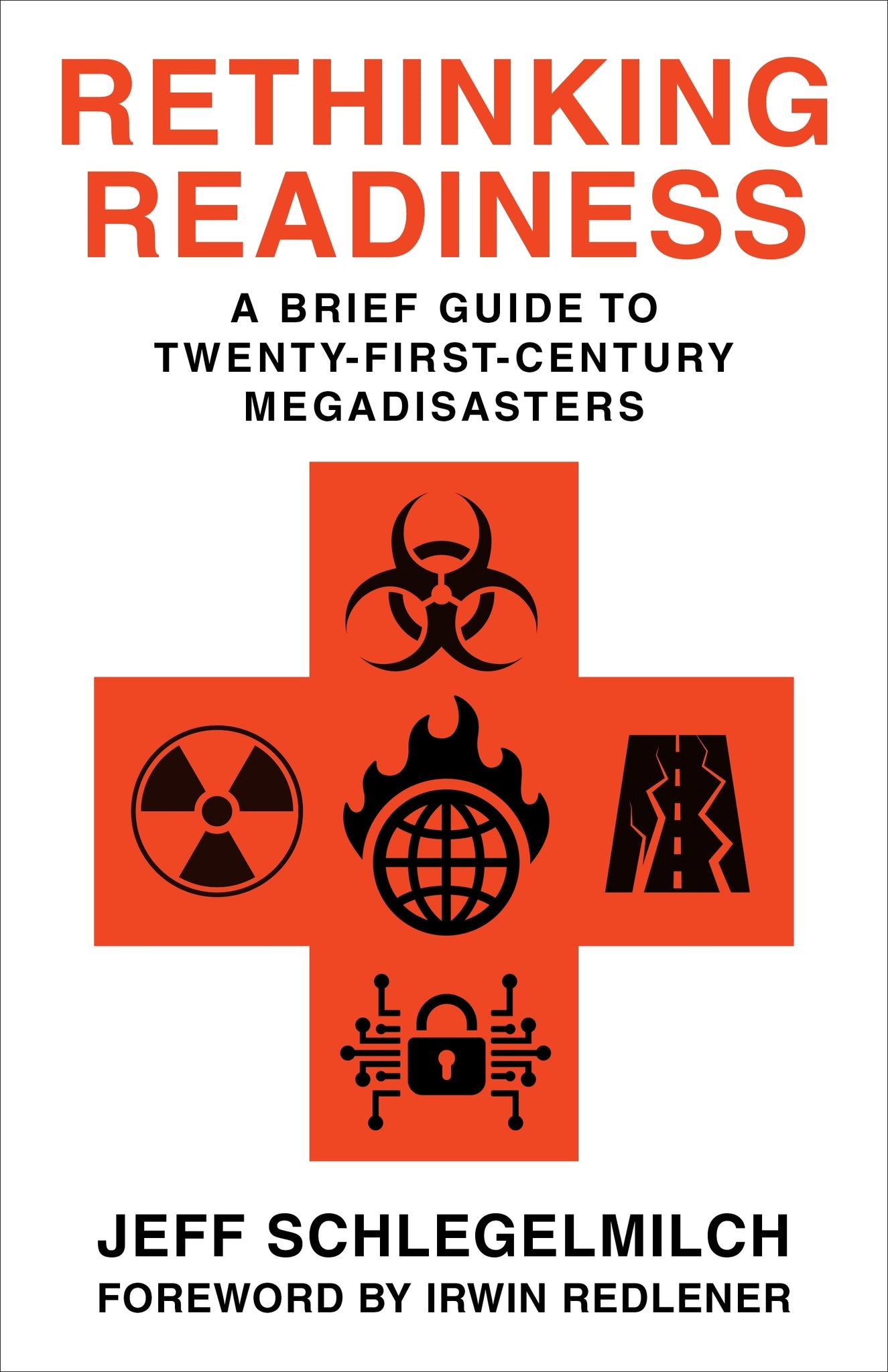
As human society continues to develop, we have increased the risk of large-scale disasters. From health care to infrastructure to national security, systems designed to keep us safe have also heightened the potential for catastrophe. The constant pressure of climate change, geopolitical conflict, and our tendency to ignore what is hard to grasp exacerbates potential dangers. How can we prepare for and prevent the twenty-first-century disasters on the horizon?
Rethinking Readiness offers an expert introduction to human-made threats and vulnerabilities, with a focus on opportunities to reimagine how we approach disaster preparedness. Jeff Schlegelmilch identifies and explores the most critical threats facing the world today, detailing the dangers of pandemics, climate change, infrastructure collapse, cyberattacks, and nuclear conflict. Drawing on the latest research from leading experts, he provides an accessible overview of the causes and potential effects of these looming megadisasters. The book highlights the potential for building resilient, adaptable, and sustainable systems so that we can be better prepared to respond to and recover from future crises. Thoroughly grounded in scientific and policy expertise, Rethinking Readiness is an essential guide to this century’s biggest challenges in disaster management.


— Tom Ridge, forty-third governor of Pennsylvania and first U.S. Secretary of Homeland Security
This timely book both looks ahead to the mega-disasters on the horizon—disasters that tank economies, shred infrastructure, and take lives—and outlines how communities can start preparing now. It is an essential guide for policy makers and concerned citizens alike who want to build a better future.
— Alice C. Hill, former senior director of resilience policy on the National Security Council
Covering a wide range of natural hazards and man made threats, Schlegelmilch's book pushes us to think through the question that we ask all too often: are we truly prepared? With chapters on biothreats, climate change, critical infrastructure failure, cyberthreats, and nuclear conflict, he sets out a framework to ensure that we take serious risks head on and build resilience to them. A must read.
— Daniel P. Aldrich, author of Black Wave and Building Resilience and director of the Security and Resilience Program at Northeastern University
Rethinking Readiness brings information on the scientific elements and socially constructed origins of megadisasters together in a clear and organized way. Schlegelmilch illustrates the interconnectivity of multiple drivers, showing how research and practice should consider these if we are to reach a more sustainable future.
— Ksenia Chmutina, coauthor of Disaster Risk Reduction for the Built Environment
Schlegelmilch provides a new perspective on the major threats and vulnerabilities facing modern society. Readers will find the discussion of megadisasters intriguing and the argument for better preparation compelling. Rethinking Readiness argues for a broader view of disasters and for a sustained effort to reduce the threats and societal vulnerability.
— William L. Waugh Jr., Professor Emeritus, Georgia State University
Rethinking Readiness is a must-read for everyone committed to understanding the most existential threats we face, reinforced by the inclusion of multiple examples of inadequate response, including the identification of risks, opportunities, and misapplications embedded in practice. Compelling reading.
Jeff Schlegelmilch is a research scholar and the director of the National Center for Disaster Preparedness at Columbia University’s Earth Institute. He previously worked for the Yale New Haven Health System Center for Emergency Preparedness and Disaster Response, as well as the Boston Public Health Commission.
Irwin Redlener is the founder and currently a senior research scholar and the director of the Pandemic Resource and Response Initiative at the National Center for Disaster Preparedness at Columbia University’s Earth Institute. His books include The Future of Us: What the Dreams of Children Mean for Twenty-First-Century America (Columbia, 2017).
Foreword
Preface
Acknowledgments
Introduction
1. Biothreats
2. Climate Change
3. Critical Infrastructure Failure
4. Cyberthreats
5. Nuclear Conflict
6. Crosscutting Threats and Vulnerabilities
Conclusion: Investing in Today, Investing in Tomorrow
Notes
Bibliography
Index