


Some error occured while loading the Quick View. Please close the Quick View and try reloading the page.
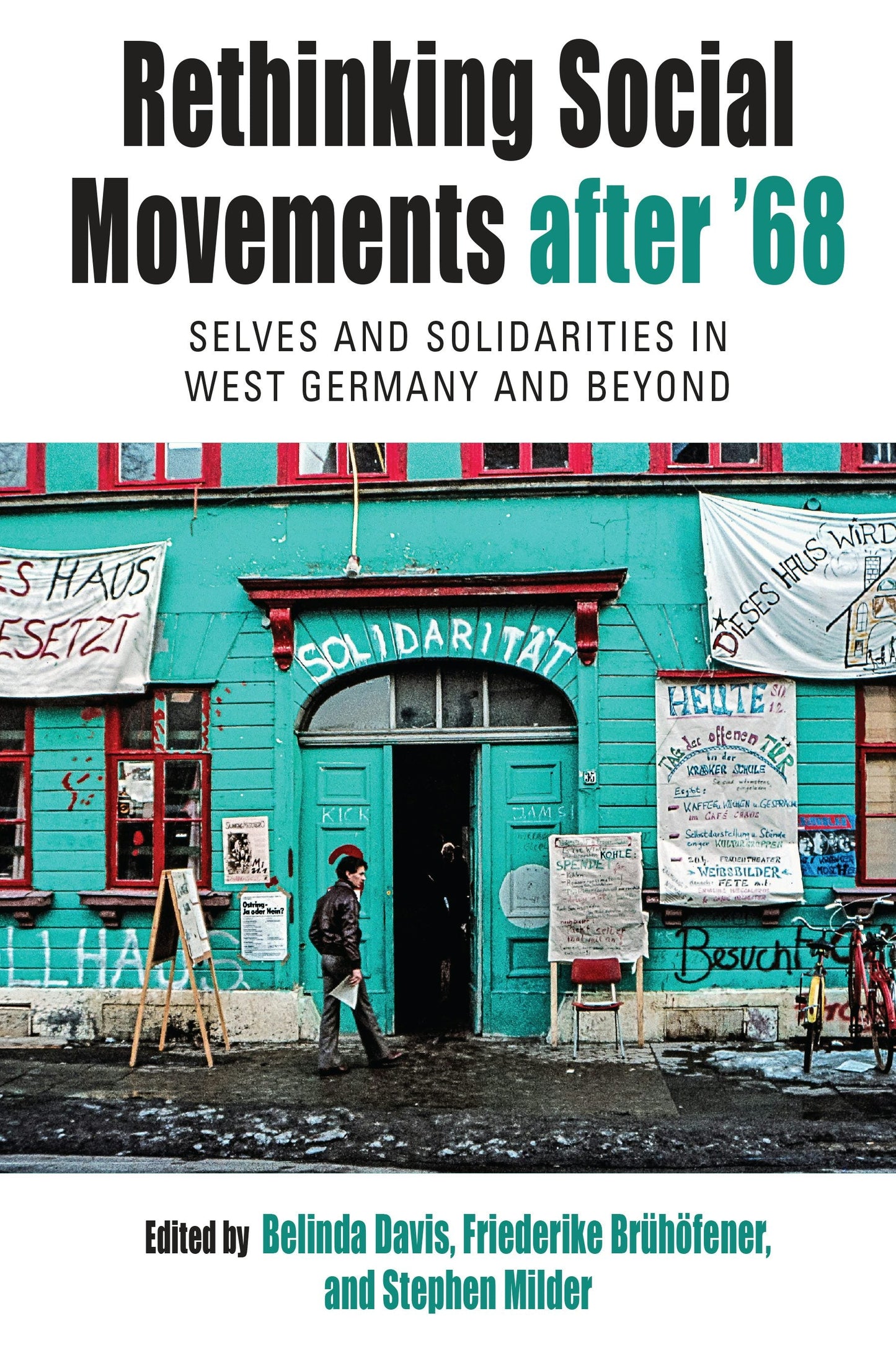
The year 1968 has widely been viewed as the only major watershed moment during the latter half of the twentieth century. Rethinking Social Movements after ’68 takes on this conventional approach, exploring the spaces, practices, organization, ideas and agendas of numerous activists and movements across the 1970s and 1980s. From the Maoist Communist League to the women’s movement, youth center movement, and gay liberation movement, established and emerging scholars across Europe and North America shed new light on the development of modern European popular politics and social change.


“A volume on social movements in the 1970s and 1980s is very welcome and timely. Now that there exists a solid corpus of monographs on the Long Sixties, serious research on the 1970s is slowly beginning to see the light of day – less so on the 1980s. Thus, Rethinking Social Movements after ’68 will begin to fill a growing need.” • Gerd-Rainer Horn, Sciences Po
Belinda Davis is Professor of History at Rutgers University. She is author or co-editor of five books, including Changing the World, Changing Oneself: Political Protest and Transnational Identities in 1960s/70s, West Germany and the U.S. (Berghahn Books, 2010) (co-edited with M. Klimke, C. MacDougall, and W. Mausbach); and The Inner Life of Politics: Extraparliamentary Opposition in West Germany, 1962-1983 (Cambridge University Press, forthcoming).
List of Figures
List of Abbreviations
Acknowledgements
Introduction: Social Movements after ’68: Histories, Selves, Solidarities
Stephen Milder, Belinda Davis, and Friederike Brühöfener
Part I: Working with—and against—the past
Chapter 1. Leaving the borderlands … but for where? 1968 and the New Registers of Political Feeling
Geoff Eley
Chapter 2. Conceptions of Democracy and West German New Social Movement Activism
Michael Hughes
Chapter 3. New Social Movements and the New Role of the Intellectual: From the “’68ers” Critique to the “Specific Intellectual”
Ingrid Gilcher-Holtey
Chapter 4. Fighting with feelings: Experiences of Protest and Emotional Practices in the Autonomous West German Women’s Movement during the 1970s and 1980s
Bernhard Gotto
Part II: “Start where you are”
Chapter 5. “Break down the violence in a place where it is vulnerable”: The Urban ‘68 and Its Aftermath – Expert Critique, “Tenant Campaigns,” and Squatter Movements
Freia Anders
Chapter 6. Running Over Trees in Germany: Social Movements and the US Army, 1975-1985
Adam Seipp
Chapter 7. Radical Change Close to Home: Transforming the Self and Relations in West German Alternative Politics
Belinda Davis
Chapter 8. Changing the World for the Better: Women Activists’ Redefinitions of Identities, Relationships, and Society
Friederike Brühöfener
Chapter 9. From Self-Organization to Self-Management: Paradigms of Social Movements in West Germany from ‘68 to the early 1980s
David Templin
Part III: “Learn to live in solidarity”
Chapter 10. The Gay Movement in 1970s West Germany: Liberation in its Multi-dimensional Context
Craig Griffiths
Chapter 11. Radical Protest or Shadow Diplomacy? The Decolonization of Zimbabwe and West German Maoism, 1960-1980
David Spreen
Chapter 12. Supporting a Revolution: West German Nicaragua Solidarity and its transnational connections with the Nicaraguan Sandinistas
Christian Helm
Chapter 13. East German Environmental Activism and the West: Connections, Common Ground, and Difference across the Iron Curtain
Julia Ault
Chapter 14. Activists Divided? Continental Imaginations in West Germany’s 1968 and Beyond
Anna von der Goltz
Conclusion: Democracy in the Streets, Social Change in the Countryside: Grassroots Struggles, Solidarity Work, and Political Power after ’68
Stephen Milder