


Some error occured while loading the Quick View. Please close the Quick View and try reloading the page.
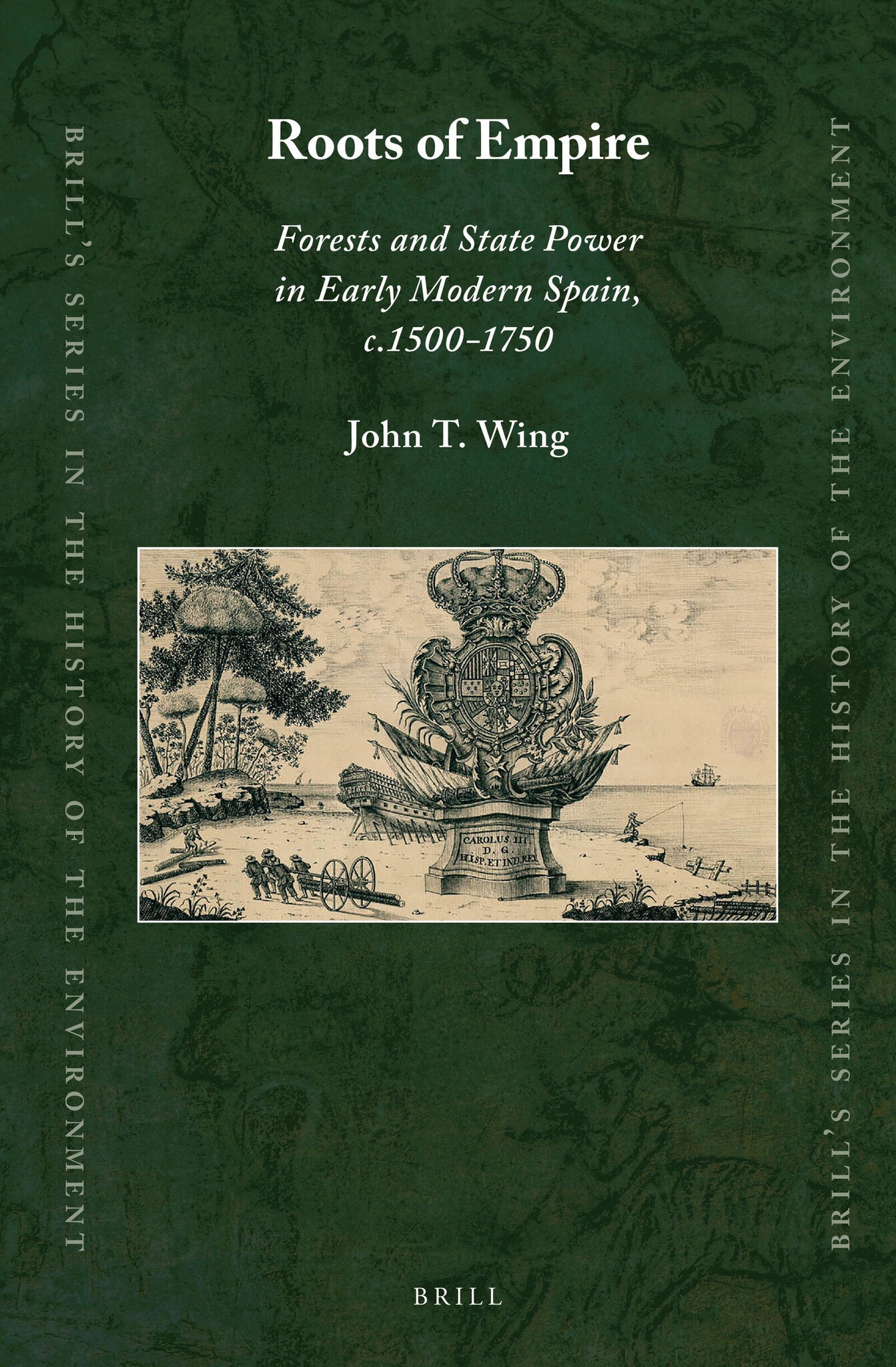
Roots of Empire is the first monograph to connect forest management and state-building in the early modern Spanish global monarchy. The Spanish crown's control over valuable sources of shipbuilding timber in Spain, Latin America, and the Philippines was critical for developing and sustaining its maritime empire. This book examines Spain's forest management policies from the sixteenth century through the middle of the eighteenth century, connecting the global imperial level with local lived experiences in forest communities impacted by this manifestation of expanded state power. As home to the early modern world's most extensive forestry bureaucracy, Spain met serious political, technological, and financial limitations while still managing to address most of its timber needs without upending the social balance.

Price: $183.00
Pages: 268
Publisher: Brill
Imprint: Brill
Publication Date:
08 January 2015
ISBN: 9789004261365
Format: Hardcover

This is a complex and well-written book that presents a powerful argument about the emergence of the state in connection to local practices (the use of forests) and global activities (empire, commerce, war).
- Antonio Barrera (Colgate University) American Historical Review, December 2018, 1752-1753 pp.
This book provides a rich, well-presented raw narrative for anyone interested in learning about processes of central state formation in early modern Europe, the military in mercantile empires, environmental history in the early modern world economy, and of course for specialists in Spanish history.
- Eva-Maria Swidler (Goddard College & The Curtis Institute of Music), Environmental History, vol 21, no 4, October 2016, 768-769 pp.
[…] it should be apparent that Wing makes a major contribution to our understanding of early modern Spain, Spanish seapower, Spanish environmental history, and state formation in early modern Spain. […] His monograph [...] is also a major contribution to the burgeoning field of environmental history in all its aspects. It is founded on an impressive command of the secondary literature and of key primary (archival) source materials, above all the Guerra series in Simancas for the Habsburg era and the Marina series in the same archive for the eighteenth century. The work is the more effective for Wing’s lucidity of conceptualization, argument and expression. While Spanish seapower, forests and state formation have been explored before for different periods […] they have not been put together hitherto in this way for the entire period and in English.[...] In sum, a work to be recommended for all interested in maritime history – and others. Christopher Storrs (University of Dundee, UK), The International Journal of Maritime History 2016, Vol. 28(3) 576–600 pp.
The author states several times his affinity for the area, which comes across in this engagingly written, entertaining, and informative work. Maritime historians and anyone with an interest in human interactions along the world’s waterways will find it useful reading.
- Robert S. Shelton (Cleveland State University), The International Journal of Maritime History, 2016, Vol. 28(3): 635-636 pp.
Forests were not only strategic resources for state navies, but also commons for local groups. John Wing’s Roots of Empire explores the process through which the Spanish monarchy gained increasing legal and effective control over littoral forests first and inland forest later. [...] Wing studies the history of forest management in relationship to the geopolitics of imperial naval expansion (or lack thereof ) during three distinct historical periods.
- Jorge Cañizares-Esguerra (University of Texas at Austin), Renaissance Quarterly, Vol. LXIX, No. 4, 1495-1496 pp.
- Antonio Barrera (Colgate University) American Historical Review, December 2018, 1752-1753 pp.
This book provides a rich, well-presented raw narrative for anyone interested in learning about processes of central state formation in early modern Europe, the military in mercantile empires, environmental history in the early modern world economy, and of course for specialists in Spanish history.
- Eva-Maria Swidler (Goddard College & The Curtis Institute of Music), Environmental History, vol 21, no 4, October 2016, 768-769 pp.
[…] it should be apparent that Wing makes a major contribution to our understanding of early modern Spain, Spanish seapower, Spanish environmental history, and state formation in early modern Spain. […] His monograph [...] is also a major contribution to the burgeoning field of environmental history in all its aspects. It is founded on an impressive command of the secondary literature and of key primary (archival) source materials, above all the Guerra series in Simancas for the Habsburg era and the Marina series in the same archive for the eighteenth century. The work is the more effective for Wing’s lucidity of conceptualization, argument and expression. While Spanish seapower, forests and state formation have been explored before for different periods […] they have not been put together hitherto in this way for the entire period and in English.[...] In sum, a work to be recommended for all interested in maritime history – and others. Christopher Storrs (University of Dundee, UK), The International Journal of Maritime History 2016, Vol. 28(3) 576–600 pp.
The author states several times his affinity for the area, which comes across in this engagingly written, entertaining, and informative work. Maritime historians and anyone with an interest in human interactions along the world’s waterways will find it useful reading.
- Robert S. Shelton (Cleveland State University), The International Journal of Maritime History, 2016, Vol. 28(3): 635-636 pp.
Forests were not only strategic resources for state navies, but also commons for local groups. John Wing’s Roots of Empire explores the process through which the Spanish monarchy gained increasing legal and effective control over littoral forests first and inland forest later. [...] Wing studies the history of forest management in relationship to the geopolitics of imperial naval expansion (or lack thereof ) during three distinct historical periods.
- Jorge Cañizares-Esguerra (University of Texas at Austin), Renaissance Quarterly, Vol. LXIX, No. 4, 1495-1496 pp.
John T. Wing, Ph.D. (2009), University of Minnesota, is Assistant Professor of History at the College of Staten Island, The City University of New York. He has published articles on Spanish forest history in Environmental History and the Journal of Early Modern History.