


Some error occured while loading the Quick View. Please close the Quick View and try reloading the page.
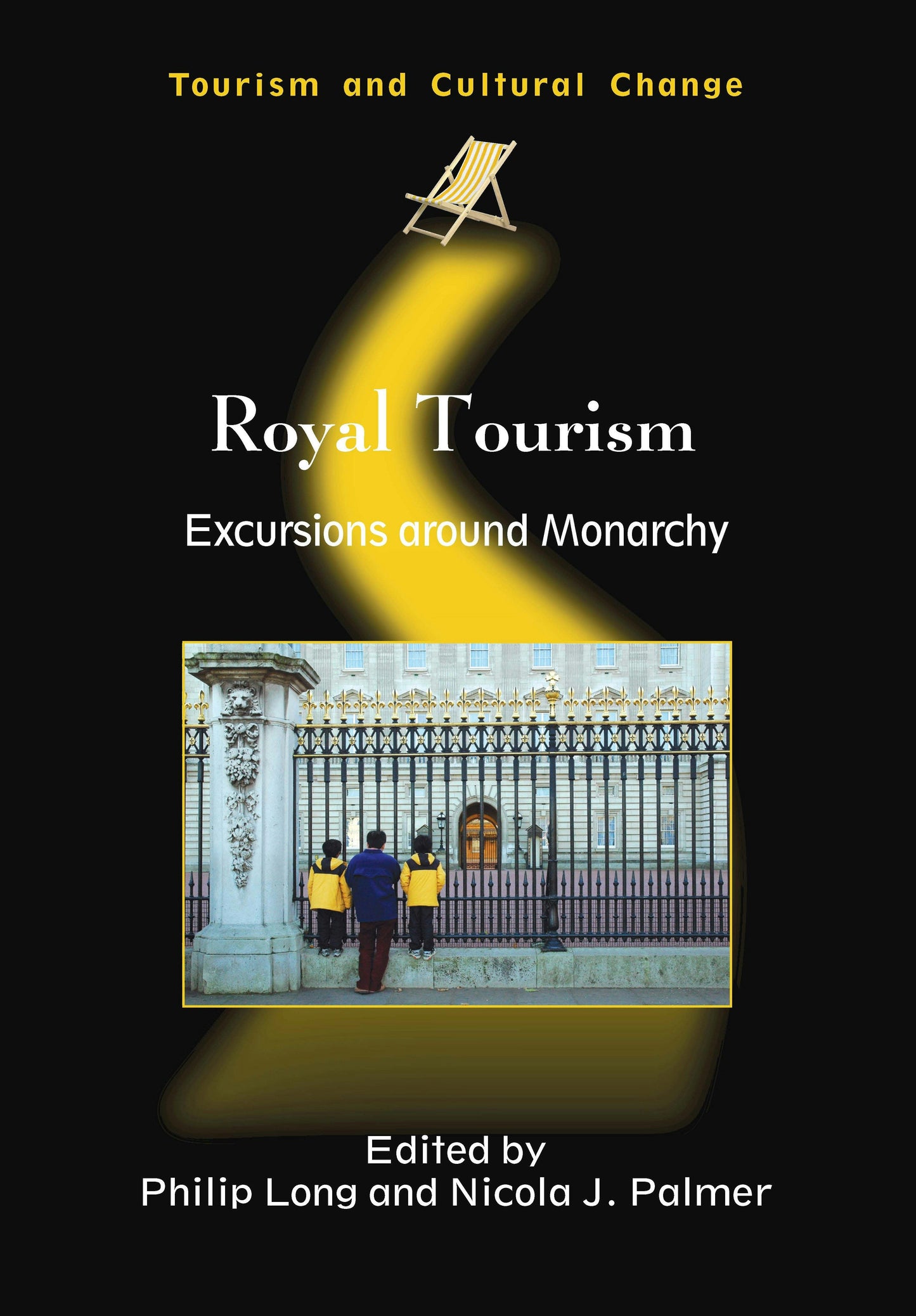
There are multiple and complex relationships between royalty and tourism which have received little attention in the academic literature. This book draws on historical, sociological and cultural perspectives in its collection of chapters that examine the royal tourism phenomenon in several international and theoretical contexts. Authors in this volume examine for example: the history, development and trajectories of 'royal tourism'; 'royal tourism' and national identities; the interpretation of royalty to tourists; the image(s) and representations of 'royal tourism'; tourist perceptions of royalty and royal properties and sites; royalty, tourism and national image, identity and citizenship.


The book is to be welcomed by tourism scholars and is likely to provoke more research into what can be a noteworthy component of tourism for many destinations.
Philip Long (PhD, PGCLT, BA Hons, MTMI) is a Principal Research Fellow at the Centre for Tourism and Cultural Change at Leeds Metropolitan University, UK. Philip has research interests in the tourism dimensions of festivals and cultural events, tourism - media relationships and, social exclusion from tourism participation. He is also interested in research-based professional development for the destination management and festivals sectors.
Nicola Palmer (PhD, PGCLT, BA Hons, M.Inst.TT is a Senior Lecturer in the Centre for International Tourism Research (CITouR), Sheffield Hallam University, Sheffield, UK. Nicola has research interests in destination image, tourist perceptions and the role of tourism in national identity building. She is also interested in public policy and the relationships between the state and tourism agencies. Geographically, her research focus spans from the UK to Central Asia.
Introduction - Philip Long
1. The Construction of the Past and the Origins of Royal Tourism in Nineteenth Century Britain - John Baxendale
2. The History and Development of Royal Tourism in Scotland: Balmoral, the Ultimate Holiday Home? - Richard W. Butler
3. Imprinting the Crown on Irish Holiday-ground: Marking and Marketing the Duke of York Route, 1897 - K. J. James
4. Franco and the Spanish Monarchy: A Discourse Analysis of the Tourist Guides Published by the Patriminio Nacional (1959-1987) - Bart Maddens and Kristine Vanden Berghe
5. Eternally Will Austria Stand: Imperial Tourism in Austria between Timeless Predisposition and Political Statement - Oliver Haid
6. Colonisation and “Taking the Waters” in the 19th Century: The Patronage of Royalty in Health Resorts of Opatija, Habsburg Empire and Rotorua, New Zealand - Sanda Corak and Irena Ateljevic
7. Morbid Tourism: The Case of Diana, Princess of Wales and Althorp House - Thomas Blom
8. By Royal Association: British Monarchy as a Place Representation Tool - Nicola J. Palmer
9. Who’s King of Monmouthshire’s Castles? Using Royal Heritage in Tourism Businesses to Develop a Sense of Place - Claire Haven-Tang and Eleri Jones
10. “Just Like Our Family”: Royalty, National Identity, and Tourism - Catherine Palmer
11. Monarchy, Citizenship, and Tourism - Heather Piper and Dean Garratt
12. International Royal Tourist Expectations, Experiences and Reflections on Royal Encounters: A Demand-side Perspective - Nicola J. Palmer
Conclusions - Philip Long and Nicola Palmer