


Some error occured while loading the Quick View. Please close the Quick View and try reloading the page.
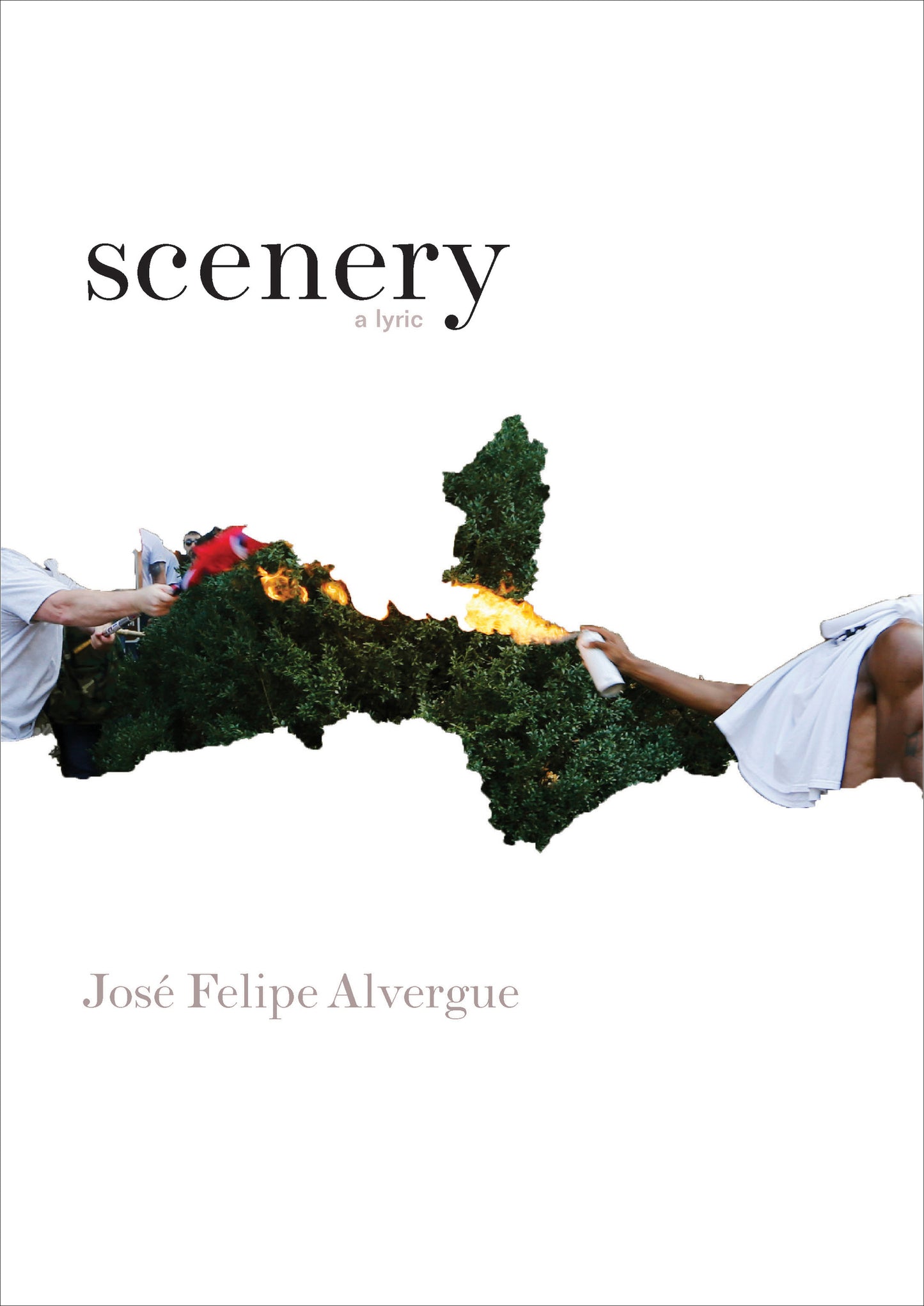
In scenery, lyric’s public voice and memoir’s personal reconciliations confront the archives of America’s racial and legal histories, resulting in a genre-bending exploration of what it means to exist as oneself for an Other. The author, a Salvadorean immigrant and parent, reflects on the status of personhood in America between racial supremacy and racial disavowal, thinking through his own structural role as a naturalized citizen, and naturalization’s historical condition in the denial of full legal and emotional Black personhood.
This daring work delves into the archive of liberal humanism from colonial era writing on the competing status of slaves to the present, while the visual archive of public news provides an ekphrastic environment to the author’s bigger lyric-memory: being the parent of a biracial American-born child in a contemporary era accentuated by violence, white nationalism, and fear.
From seventeenth-century casta paintings up to contemporary coverage of domestic unrest and riots, from the delivery room to scenes of parenthood, Alvergue ponders: What is the kind of emotion a face demonstrates, or a body, an assembly? scenery approaches, in an asymptotic manner, the empathy we come to feel when the language we’ve made is dulled by the roles we are also expected to occupy against one another.


scenery is ‘a kind of study /that is a bracing/ for impact.’ What José Felipe Alvergue tenses for in and perhaps through this brilliant and vulnerable book is the wrack of reckoning. That wreckage sets on the pages in visual and lexical entanglements: ‘gnarls’ of complicity and protest, privilege and trammel, particular bodies and abstraction. Alvergue moves us through these ruins with unflagging emotional immediacy and intellectual urgency, turning, again and again, on the image of his newborn son, ashen, breathless. scenery is a powerful work, stirred from an instance of the author’s desperate powerlessness. We should study this.---Douglas Kearney