


Some error occured while loading the Quick View. Please close the Quick View and try reloading the page.
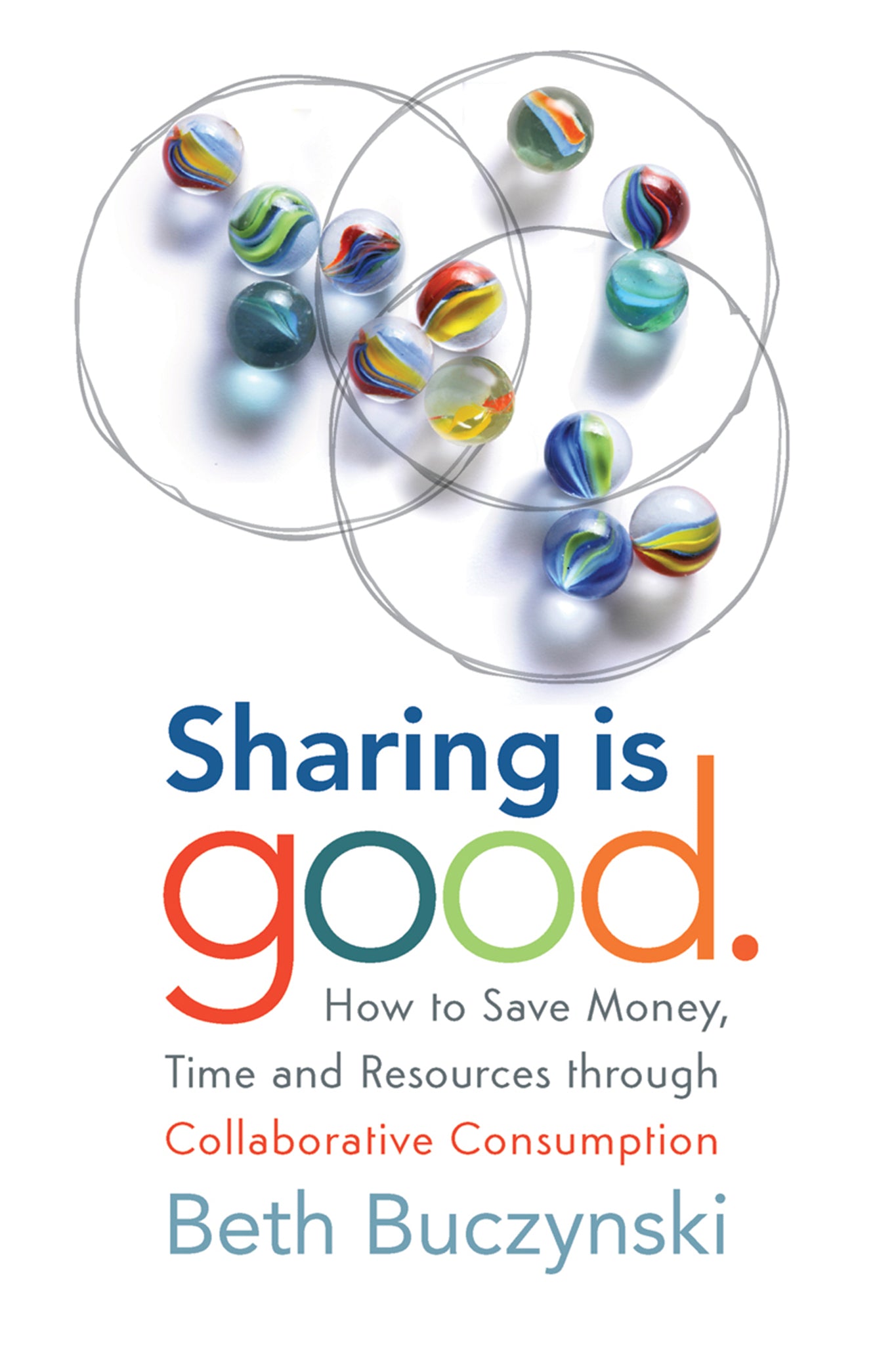
Collaborative consumption is a new way of living in which access is valued above ownership, experience is prized over material possessions, and "mine" becomes "ours," allowing everyone's needs to be met with minimum waste. Bursting at the seams with hundreds of helpful tips and valuable resources, Sharing is Good is a practical guide to this new and exciting "sharing economy."

Price: $17.99
Pages: 192
Publisher: New Society Publishers
Imprint: New Society Publishers
Publication Date:
21 October 2013
ISBN: 9781550925449
Format: eBook
BISACs:
BUSINESS & ECONOMICS / Consumer Behavior, BUSINESS & ECONOMICS / Environmental Economics, HOUSE & HOME / Sustainable Living, SOCIAL SCIENCE / Popular Culture

Beth Buczynski is a freelance writer and editor who covers clean technology, sustainable design and environmental issues for some of the most popular green sites on the web. The coauthor of two popular ebooks on coworking, Beth believes that building a new economy based on sharing and community is key to ending our dangerous obsession with consumer culture and creating greater social equality. A regular contributor to Care2, Inhabitat, and Shareable Magazine, and Green Living editor at EarthTechling, Beth has been named one of the top 75 Environmentalists to Follow on Twitter by Mashable, and one of the Top 3 Green Twitterati by At Home magazine.
Sharing is Good – TOC
Introduction
History of Sharing
Bartering, trading, swapping throughout early civilizations
Why money does not equal or determine true value
Alternative currencies (past and present)
New collaborative consumption movement/sharing economy
Examples/resources/citations:
Why we don’t share/Barriers to sharing
(You’re not the only one who’s skeptical!)
Time
Safety
Money
People
Trust
.
Why Share Now?
Impact of consumption (Great Pacific Garbage Patch, pollution, climate change, debt)
The problem with the Green Economy
Paradigm shift: We already have everything we need
Sharing our way to happiness
Examples/resources/citations:
What sharing does for community/local economy
Community involvement/participatory government
Encourages proactive behavior/accountability/grassroots change
Creates a network of support for local businesses
Encourages innovation/entrepreneurship
Supports underserved populations/provides access otherwise denied
Examples/resources/citations:
What sharing does for the environment
Reduced waste and consumption
Reduced energy use, utilizes space more efficiently
Reduced carbon footprint (individual and community level)
Encourages investment in alternative energy, durable goods, and DIY solutions
Renews focus on local resources/producers, which are often managed more responsibly than those controlled by corporate interests.
Examples/resources/citations:
What sharing does for your wallet
Cost/risk of owning/accessing high quality, durable goods is spread among many
Spend less on food, fuel, and supplies through collective buying/reduced need
Access services (transportation, home repair) at a reduced labor cost
Access to items and experiences that would otherwise be too costly
Examples/resources/citations:
How To Share (and with whom)
P2P (with those who are in close physical proximity to you, or part of an existing community)
Online (strangers, like minded communities, international)
As a business - both B2B and B2C sharing
Examples/resources/citations:
What To Share (possibly include “green, greener, greenest” options so that those facing the barriers mentioned in the previous chapter can see immediate inroads and ways to get started?)
Goods (Clothes, Media, Tools, Cords, Furniture, Swaps, Freecycling, Craig’s List)
Examples/resources/citations:
Skills/Time - (TaskRabbit, FreeSchools, TimeBanks, Teach, Worker Coops, Child Care)
Examples/resources/citations:
Lodging/Travel - (Airbnb, Tripping, TripTrotting, House Swap)
Examples/resources/citations:
Lodging/Short-term
Examples/resources/citations:
Lodging/Long-term
Examples/resources/citations:
Cohousing/Coliving
Examples/resources/citations:
Transportation - (bike sharing, car sharing, ride sharing)
Car Sharing
Examples/resources/citations:
Ride Sharing
Examples/resources/citations:
Bike Sharing
Examples/resources/citations:
Food - first step co-op/CSA, (growth, preparation, and consumption)
Examples/resources/citations:
Space (work/jobs/coworking, business, etc)
Examples/resources/citations
Money
Examples/resources/citations:
Conclusion
Resources for sharing
Index
Introduction
History of Sharing
Bartering, trading, swapping throughout early civilizations
Why money does not equal or determine true value
Alternative currencies (past and present)
New collaborative consumption movement/sharing economy
Examples/resources/citations:
Why we don’t share/Barriers to sharing
(You’re not the only one who’s skeptical!)
Time
Safety
Money
People
Trust
.
Why Share Now?
Impact of consumption (Great Pacific Garbage Patch, pollution, climate change, debt)
The problem with the Green Economy
Paradigm shift: We already have everything we need
Sharing our way to happiness
Examples/resources/citations:
What sharing does for community/local economy
Community involvement/participatory government
Encourages proactive behavior/accountability/grassroots change
Creates a network of support for local businesses
Encourages innovation/entrepreneurship
Supports underserved populations/provides access otherwise denied
Examples/resources/citations:
What sharing does for the environment
Reduced waste and consumption
Reduced energy use, utilizes space more efficiently
Reduced carbon footprint (individual and community level)
Encourages investment in alternative energy, durable goods, and DIY solutions
Renews focus on local resources/producers, which are often managed more responsibly than those controlled by corporate interests.
Examples/resources/citations:
What sharing does for your wallet
Cost/risk of owning/accessing high quality, durable goods is spread among many
Spend less on food, fuel, and supplies through collective buying/reduced need
Access services (transportation, home repair) at a reduced labor cost
Access to items and experiences that would otherwise be too costly
Examples/resources/citations:
How To Share (and with whom)
P2P (with those who are in close physical proximity to you, or part of an existing community)
Online (strangers, like minded communities, international)
As a business - both B2B and B2C sharing
Examples/resources/citations:
What To Share (possibly include “green, greener, greenest” options so that those facing the barriers mentioned in the previous chapter can see immediate inroads and ways to get started?)
Goods (Clothes, Media, Tools, Cords, Furniture, Swaps, Freecycling, Craig’s List)
Examples/resources/citations:
Skills/Time - (TaskRabbit, FreeSchools, TimeBanks, Teach, Worker Coops, Child Care)
Examples/resources/citations:
Lodging/Travel - (Airbnb, Tripping, TripTrotting, House Swap)
Examples/resources/citations:
Lodging/Short-term
Examples/resources/citations:
Lodging/Long-term
Examples/resources/citations:
Cohousing/Coliving
Examples/resources/citations:
Transportation - (bike sharing, car sharing, ride sharing)
Car Sharing
Examples/resources/citations:
Ride Sharing
Examples/resources/citations:
Bike Sharing
Examples/resources/citations:
Food - first step co-op/CSA, (growth, preparation, and consumption)
Examples/resources/citations:
Space (work/jobs/coworking, business, etc)
Examples/resources/citations
Money
Examples/resources/citations:
Conclusion
Resources for sharing
Index