


Some error occured while loading the Quick View. Please close the Quick View and try reloading the page.
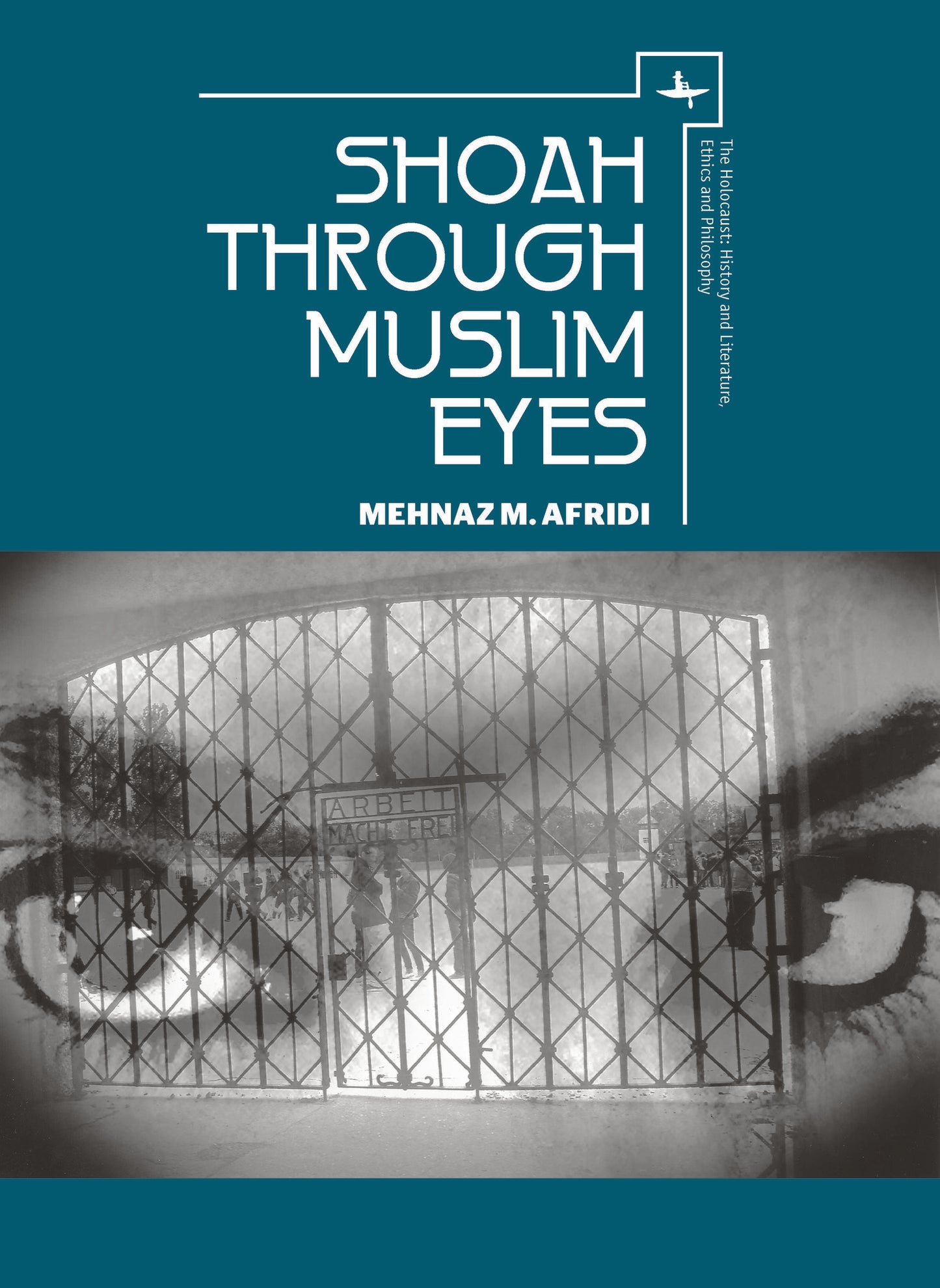
In Shoah through Muslim Eyes, the author discusses her journey with Judaism as a Muslim.
Her book is based on the struggle of anti-Semitism within Muslim communities and her interviews with survivors. Rejecting polemical myths about the Holocaust and Jews, Afridi offers a new way of creating understanding of two communities through the acceptance and enormity of the Shoah. Her journey is both personal and academic in which the reader can find nuances of her belief in Islam, principles of justice, and the loneliness of such a journey. The chapters discuss the Holocaust and how it is unprecedented, interviews with survivors, antisemitism and Islamophobia, and Islam and memory. Afridi includes Muslim-Arab narratives that enhance the reach of the Holocaust into Muslim lands under the Vichy and Nazi government.


— Khaleel Mohammed, San Diego State University.
"This is a book by a religious Muslim–on the faculty of a Catholic college–teaching about the Holocaust and other genocides. Professor Mehnaz Afridi has taken a remarkably courageous stance by breaking down facile stereotypes and revealing the sad truth of rampant antisemitism and Holocaust denial in the Muslim world. Yet she also bravely notes how Muslims served as rescuers of Jews both in Europe and North Africa. Shoah through Muslim Eyes is an honest and scholarly work that naturally evolved out of Afridi’s Holocaust research (which included personal interviews of survivors) along with a series of courses she has taught on the Holocaust and on religion and genocide at Manhattan College. An extraordinary achievement, Mehnaz Afridi’s insistence on speaking truth and seeking justice epitomizes the true meaning of 'jihad:' striving to do what is right in the path of God."
— Reuven Firestone, Regenstein Professor in Medieval Judaism and Islam, Hebrew Union College
"This is a powerful book, written by a courageous scholar, which helps Jews and Muslims to better understand each other. One hopes that it is widely read and discussed in Muslim and Jewish circles, and especially in those circles where Jews and Muslims sit together."
— Amir Hussain, Professor of Theological Studies, Loyola Marymount University
"Shoah Through Muslim Eyes" is an excellent study of overlooked facts connecting Muslims, Arabs and Jews. Afridi’s intelligent analysis successfully breaks down common stereotypes and misconceptions and provides vital lessons from the past that can easily be implemented.
— Dunia El-Zobaidi
"... One of the most profound and important books that I have read in recent years. Professor Mehnaz Afridi, an American Muslim woman of Pakistani origin, has written an academic and at the same time very personal book entitled Shoah through Muslim Eyes, which is as inspirational as it is informative. ... It should certainly be read by everyone who studies the Shoah and other genocides, and by everyone engaged in interreligious understanding and cooperation in today’s world. Its deeply interreligious message concerning the need for greater understanding of the pain and suffering of the other is of paramount importance in our world where there is far too much ignorance, apathy, disinformation and misunderstanding, which leads to more and more hatred and violence."
"This book is a fresh breeze that brings other voices into earshot, voices that the West wishes to hear, voices that the Moslem world must hear, voices to which the Jewish people and Israeli society should also listen. ... Afridi’s book is a call for cooperation, for a different way of contemplating the 'other.' One need not agree with everything that Afridi has written to be impressed with the power of her writing and her passion for authentic change in the society that we inhabit. It is, indeed, a very optimistic book."
Introduction
Chapter One: Why the Shoah?
Chapter Two: My Journey through Academia, Jerusalem, and Dachau
Chapter Three: Why is the Shoah Unprecedented?
Chapter Four: The Document
Chapter Five: Is Islam Antisemitic? No.
Chapter Six: Muslims and the Memory of a Colonial Holocaust
Conclusion
Afterword
Bibliography
Index