


Some error occured while loading the Quick View. Please close the Quick View and try reloading the page.
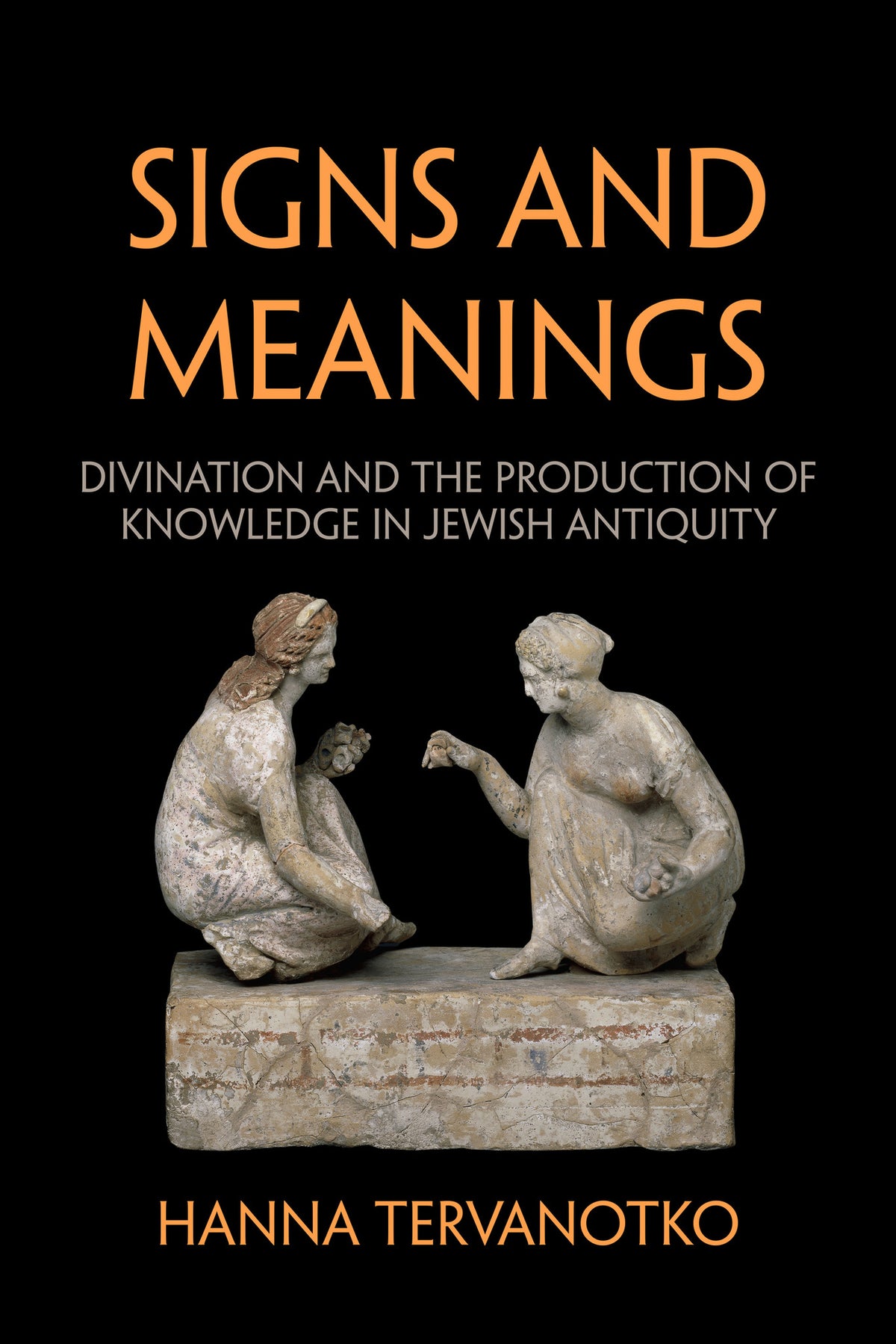
Signs and Meanings explores the range of divinatory techniques that appear in Jewish texts of the Greco-Roman era, from lot oracles and death oracles to human physiognomy and use of the Scriptures. Pushing back against the view of divination as irrational and superstitious, Hanna Tervanotko looks beyond the Hebrew Bible to a broader range of ancient Jewish texts, including the Dead Sea Scrolls and the pseudepigrapha, and draws on anthropological frameworks that consider divination as a knowledge system in its own right. Considering Jewish divinatory practices in the broader context of ancient Eastern Mediterranean and Near Eastern cultures, this book demonstrates that ancient Jews did not live in isolation from neighboring cultures, but rather on a cultural continuum within the ancient Eastern Mediterranean world. This book focuses on individuals instead of institutions, highlighting marginalized people—including women—and lived traditions that show the efficacy of these ancient practices even in today's world. Tervanotko's lived religion approach provides a fuller and more equitable representation of divinatory practices in the ancient world.


Hanna Tervanotko is Associate Professor of Religious Studies at McMaster University and author of Denying Her Voice: The Figure of Miriam in Ancient Jewish Literature.
CONTENTS
Acknowledgments
1. Introduction
Two Types of Divination
Material and Methods
Goals of the Study
2. Letting the Dice Determine: The Lot Oracle
Materiality of the Lots
Lots in the Decision-Making of the Qumran Community
When the Lots Fail
Mundane Activity . . . but God Casts the Lots
The Popularity of the Lots
Conclusions
3. Revealing the Quality of the Mind from the Quality of the Body: Physiognomic Examination as a Tool to Predict the Future
Jewish Physiognomic Descriptions
Physiognomic Awareness: Sarah’s Beauty in The Genesis Apocryphon
Physiognomy as Method to Protect Communal Spaces
Physiognomic Awareness
Conclusions
4. Exchanges with the Deceased: The Oracle of the Dead
Prohibitions on Practicing Necromancy
Necromancy in Jannes and Jambres
Oracles, Graves, and Bodies
Communicating with the Dead as an Exchange
Necromancy and Foreignness
Conclusions
5. Divinatory Use of the Scriptures: Books as Living Knowledge
An Inspired Divinatory Approach to the Scriptures
Technical Consultation of the Scriptures: Bibliomancy and Other Avenues of Accessing the Text
Consulting the Scriptures Like Gods
Comparison
Conclusions
6. Agents, Objects, and Rituals: The Many Manifestations of Jewish Divinatory Techniques
Materiality
Technical Divination and Rituals
Crisis Management
7. Conclusions
Epilogue
Notes
Bibliography
Index