


Some error occured while loading the Quick View. Please close the Quick View and try reloading the page.
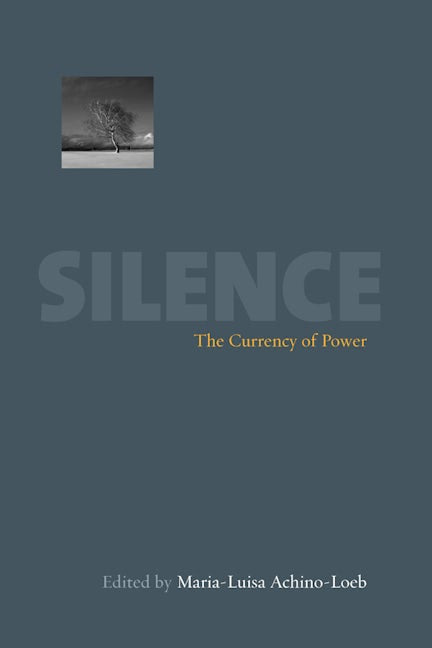
This book is about silence and power and how they interact. It argues that only by studying how silence works—how it is implicated in the construction of meaning—can we arrive at the elusive roots of power in all its dimensions. Silence becomes the currency of power by delineating the margins or what we perceive and through a sleight of hand wherein behaviors undertaken in the service of self-interest appear instead as inevitable and devoid of human agency. The theoretical load of this argument is carried by vivid ethnographic material dealing with music, linguistic behavior, racial conflicts, work dislocations, and the construction of anthropological subjects and texts.


“The overall message and demonstration that silences are heterogeneous and essential formations within cultural meaning is an important contribution to scholarship on power.” · American Ethnologist
“Silence, says [the author], allows us to belief that the un-said is non-existent: hence the close relationship between silence and language and between silence and ideology. This research promises a radical renewal in the study and in the very way we think about the connection between silence and language.” · Italian Review
Maria-Luisa Achino-Loeb, PhD, teaches at New York University's Gallatin School of Individualized Studies where she continues to develop courses on silence. She has done research with Waldensians and other minorities within religious groups. Her work has been published in journals such as American Anthropologist and Theory in Psychology, among others. She currently co-chairs the Advisory Council of the Anthropology Section, New York Academy of Sciences.
Introduction: Silence as the Currency of Power
Maria-Luisa Achino-Loeb
PART I: SILENCE, CONTEXT, AND CATEGORIES OF IDENTITY
Chapter 1. Silence in Music
William O. Beeman
Chapter 2. Silence and the Imperatives of Identity
Maria-Luisa Achino-Loeb
Chapter 3. Language Policies and the Erasure of Multilingualism in South Africa
Susan E. Cook
PART II: SILENCE AND POWER IN ETHNOGRAPHIC PERSPECTIVE
Chapter 4. Strategic Alterity and Silence in the Promotion of California’s Proposition 187 and of the Confederate Battle Flag in South Carolina
Ann E. Kingsolver
Chapter 5. No/ma(i)ds: Silenced Subjects in Philippine Migration
Pauline Gardiner Barber
Chapter 6. The Muzzled Saint: Racism, Cultural Censorship, and Religion in Urban Brazil
Robin E. Sheriff
PART III: SILENCE AND THE PLIGHT OF THE OBSERVER
Chapter 7. Between Silences and Culture: A Partisan Anthropology
Gerald Sider
Chapter 8. Silences of the Field
James W. Fernandez
Contributors
Author Index
Subject Index