


Some error occured while loading the Quick View. Please close the Quick View and try reloading the page.
The Hill Times: Best Books of 2017
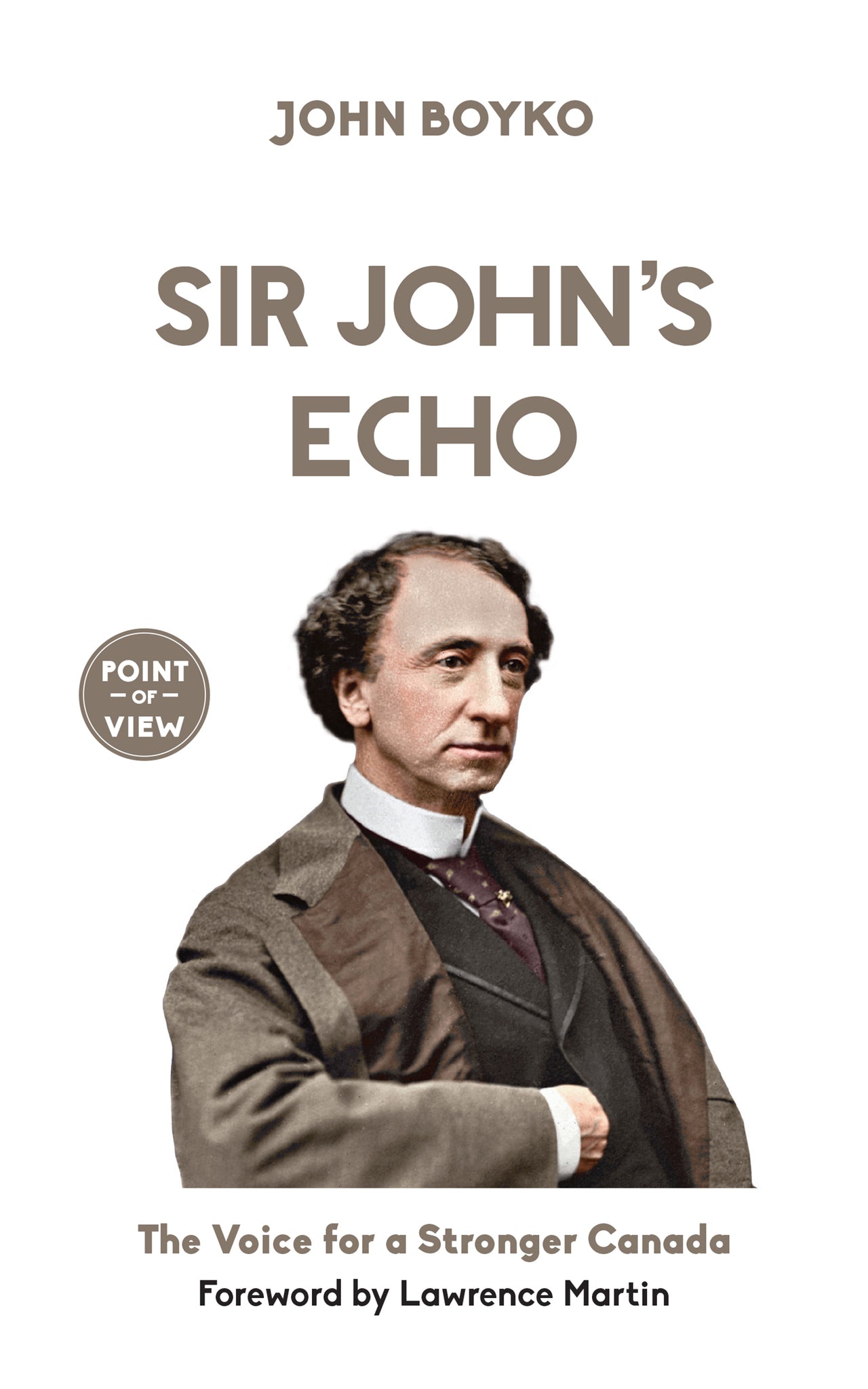
As Sir John A. Macdonald intended, the federal government must be recognized as the nation’s voice.
Power. It is the capacity to inspire while encouraging and enabling change, and it matters. When handled in a positive way, power is the key to the state’s ability to strengthen the nation and improve lives. But state power, John Boyko argues forcefully, works best when concentrated on a federal level, as Sir John A. Macdonald and Canada’s other founders intended.
Provincial governments are essential, tending to local matters, administering and helping to fund national programs, and sometimes acting as incubators for ideas that grow to become national programs. But in fighting for scraps of power, premiers have often distracted from and occasionally hindered national progress. It is the federal government, as Boyko explains, that has been the primary force in nation building and emergency response, and is the only entity with the authority to speak for all Canadians. Canada has been at its best, and its strength will continue to grow, if we are true to Macdonald’s vision, with the federal government speaking for us in one voice, a voice that will remain Sir John’s echo.
As Sir John A. Macdonald intended, the federal government must be recognized as the nation’s voice.
Power. It is the capacity to inspire while encouraging and enabling change, and it matters. When handled in a positive way, power is the key to the state’s ability to strengthen the nation and improve lives. But state power, John Boyko argues forcefully, works best when concentrated on a federal level, as Sir John A. Macdonald and Canada’s other founders intended.
Provincial governments are essential, tending to local matters, administering and helping to fund national programs, and sometimes acting as incubators for ideas that grow to become national programs. But in fighting for scraps of power, premiers have often distracted from and occasionally hindered national progress. It is the federal government, as Boyko explains, that has been the primary force in nation building and emergency response, and is the only entity with the authority to speak for all Canadians. Canada has been at its best, and its strength will continue to grow, if we are true to Macdonald’s vision, with the federal government speaking for us in one voice, a voice that will remain Sir John’s echo.

Price: $19.99
Pages: 216
Publisher: Dundurn Press
Imprint: A J. Patrick Boyer Book
Series: Point of View
Publication Date:
25 April 2017
Trim Size: 8.00 X 5.00 in
ISBN: 9781459738157
Format: Paperback
BISACs:
POLITICAL SCIENCE / History & Theory, Central / national / federal government, POLITICAL SCIENCE / Political Ideologies / Nationalism & Patriotism, POLITICAL SCIENCE / Commentary & Opinion, Constitution: government & the state

John Boyko's book illuminates with perceptive precision the dynamic that made Canada work. It is a striking contribution to the understanding of our history.
John Boyko has written seven books including the bestselling Blood and Daring: How Canada Fought the American Civil War and Forged a Nation and the critically acclaimed Cold Fire: Kennedy’s Northern Front. The Globe and Mail has deemed him, “a distinguished scholar of Canadian political history.” John lives in Lakefield, Ontario.
Foreword by Lawrence Martin
Introduction: The Question
1 The Founders’ Intentions
2 The Great War
3 The Crash
4 War Again
5 Concrete and Community
6 Rights and Resources
7 The Provincial Phoenix
Notes
Acknowledgements
Introduction: The Question
1 The Founders’ Intentions
2 The Great War
3 The Crash
4 War Again
5 Concrete and Community
6 Rights and Resources
7 The Provincial Phoenix
Notes
Acknowledgements