


Some error occured while loading the Quick View. Please close the Quick View and try reloading the page.
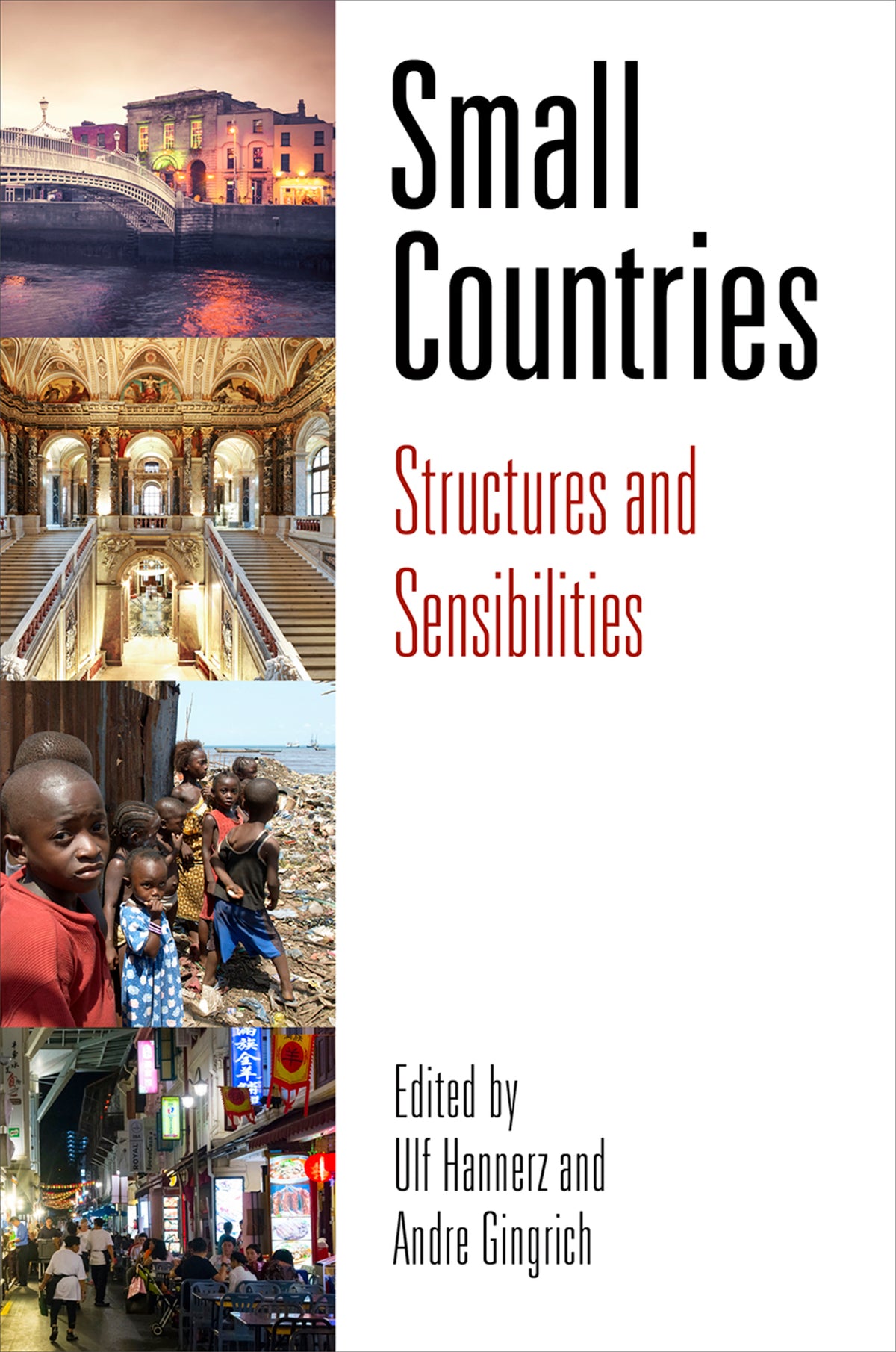
What is a small country? Is a country small because of the size of its territory or its population? Can smallness be relative, based on the subjective perception of a country's inhabitants or in comparison with one's neighbors? How does smallness, however it is defined, shape a country and its relations with other countries? Answers to these questions, among others, can be found in Small Countries, the first and only anthropological study of smallness as a defining variable.
In terms of population size, some two thirds of the countries of the world can now be considered small countries, and they can be found in all world regions except North America and East Asia. They exhibit great diversity with regard to culture, history, and institutional arrangements, so there can be no model of any "typical" small country. Yet the essays collected by Ulf Hannerz and Andre Gingrich identify a range of family resemblances in such areas as internal connectivity and sensibilities of identity. Contributors describe a number of similar problems with which small countries must cope, on domestic levels as well as in their transnational and global encounters. For some small countries, challenges such as media organization and branding have a negative impact on real or perceived vulnerability, while for others, the same challenges facilitate success stories.
Comparative case studies cover a diverse set of regions, including the Caribbean, Middle East, Africa, and Europe, and employ diverse anthropological approaches. Tacit assumptions about scale, identities, and networks in everyday social life are best revealed through close, interpretive effort. At times a sense of shared belonging comes to the fore with particular events, such as a national crisis or an unexpected success in international sports, offering scope for situational analyses. In showing how small countries confront globalization, Small Countries reveals how the sense of scale intensifies when the world as a whole shrinks.
Contributors: Regina F. Bendix, Aleksandar Bošković, Virginia R. Dominguez, Thomas Hylland Eriksen, Andre Gingrich, Beng-Lan Goh, Ulf Hannerz, Sulayman N. Khalaf, Eva-Maria Knoll, Jacqueline Knörr, Orvar Löfgren, João de Pina-Cabral, Don Robotham, Cris Shore, Richard Wilk, Helena Wulff.


"Small Countries is unique: its chapters cover a range of societies that do not get much analyzed anthropologically, a potpourri of far-flung places from New Zealand to Sierra Leone to Norway to Palestine united by the common trope of smallness. It is also remarkable because of the down-to-earth quality of its prose: its chapters are a delight to read. Not just anthropologists, but anyone who reads the Economist or Foreign Affairs, or for that matter a daily newspaper, can enjoy and learn from this collection of essays."