


Some error occured while loading the Quick View. Please close the Quick View and try reloading the page.
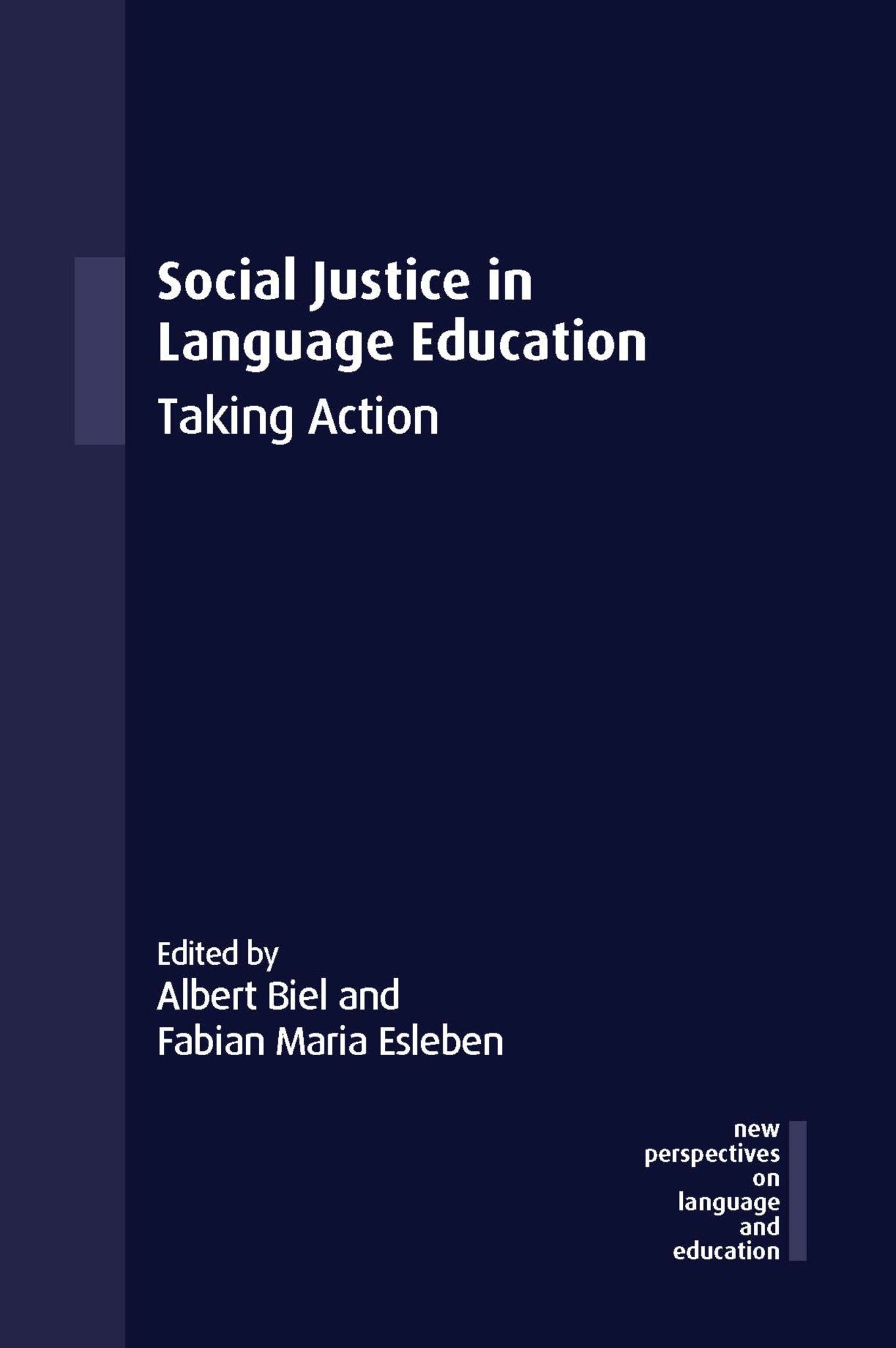
Because of its focus on mutual understanding, the language classroom is uniquely situated to discuss and enact ideas about social justice. This book brings together authors from different geographical and professional contexts united by a common goal: to bring about a change in language teacher education and language classrooms. The chapters represent the perspectives of authors at a range of stages in their careers; together they take the reader on a journey from conceptual dilemmas and their place in applied linguistics, through specific critical issues which are positioned within the theoretical landscape surrounding social justice, to projects with clear pedagogical implications. The book represents a much-needed step in broadening the conversation about social justice in and through language education, and will be of interest to language teachers and researchers as well as students of applied linguistics.


In this remarkable new contribution to critical language education scholarship, Biel and Esleben skillfully bridge the conceptual and practical aspects of social justice language education. The chapters in this thoughtfully edited volume offer fresh insights into the why, what, and how of critical language education, making it an essential resource for scholars and practitioners alike.
This fascinating collection is a journey of action, for action, and is inspired by commitment to take action through centring social justice in language education. It threads together much-needed connections, creating an expansive vision for socially just arrangements in education, with provocations, debates, concrete examples, and pointers towards a future of goodnesss and activism.
This book is a valuable resource for educators and researchers alike committed to social justice in language learning. It sits at the crossroads of language teaching, critical pedagogy, social justice, and educational activism. In addition to the aspects already discussed, I would conclude by saying that the way in which Social Justice in Language Education: Taking Action foregrounds the role of educators as agents of change and encourages reflective practice makes this volume a significant tool for the professional and personal development of language educators.
A major feature of this text is its variety. Interviews rub shoulders with duoethnography, reflective narratives with empirical research. Many issues are covered. As well as the expected linguicism and racism, lesser discussed topics such as wealth inequality, water-access, and anti-fatness also appear. There are voices from outside of the usual UK/US axis, with the German context well represented alongside contributions from Colombia, Italy, and Austria. It is also notable that the authors include academics, teacher trainers, and teachers of varying lengths of experience – from those still in training to those who have taught for many decades [...] this volume would make a good addition to the shelf of any language teacher or researcher interested in acting on social justice issues.
The volume is without a doubt an important contribution, offering encouragement and practical tools for activist teachers and teacher educators. Noteworthy strengths include the focus on action, the inclusion of contributors at different career stages (itself an act of justice), and the willingness to confront ontological questions about language and education.
— Johanna Ennser-Kananen, University of Jyväskylä, Finland, ELT Journal 2026
Biel and Esleben’s Social Justice in Language Education: Taking Action is an engaging volume that is both timely and relevant. Perhaps its greatest strength is the diverse range of authors and perspectives it gives voice to. Canvassing both theoretical and practical aspects of critical language teaching, it will be of interest and use to anyone curious about taking their teaching in a more critical direction, and as such, is highly recommended.
Albert Biel is a research assistant and PhD student at the University of Duisburg-Essen, Germany. His research interests revolve around social justice in language education in general and more specifically about queer-informed language education practices.
Fabian Maria Esleben is currently a teacher trainee at Nordmarkt Primary School, Dortmund, Germany. His research centres on the role of language in teaching contexts with a focus on English as a lingua franca and social justice.
Contributors
Acknowledgements
Albert Biel and Fabian Maria Esleben: Taking Action: A Journey towards Social Justice in Language Education
Part 1: Conceptual Considerations of Social Justice in Language Education
Chapter 1. Carolyn Blume and David Gerlach: Searching for Social Justice in English Language Education in Germany
Chapter 2. Stacey Margarita Johnson, L.J. Randolph Jr. and Albert Biel: The Theory, Research and Practice of Social Justice in Language Classrooms: An Interview
Chapter 3. Katy Highet: The Ethics and Politics of 'Taking Action'
Chapter 4. Kaishan Kong and Andie Wang: Making Sense of Social Justice and Taking Action in World Language Education
Part 2: Looking at Language(s) in Social Justice Language Education
Chapter 5. Rachel Wicaksono and Clara Jean Wicaksono: Ethical Subjectivity and Ontologies of English: Implications for Social Justice in English Language Education
Chapter 6. Marta Guarda and Gisela Mayr: Infusing Social Justice into the Classroom through Inclusive Plurilingual Education: The Role of Teacher Attitudes and Beliefs
Chapter 7. Elizabeth J. Ehrling and Anouschka Foltz: Towards Social Justice in English Language Education: Promoting Multilingual Possibilities in the Classroom
Part 3: Looking at Content in Social Justice Language Education
Chapter 8. Thorsten Merse: Queering English Language Education: Five Propositions for the Future of LGBTIQ+ Inclusion
Chapter 9. Natalie Güllü and Mareen Lüke: Anti-Fatness and Fat Activism: Approaches for Addressing Structural Discrimination in Critical Language Education in Germany
Chapter 10. Ricardo Römhild: Sustainability and English Language Education: Taking Action for Socio-Environmental Justice
Part 4: What Taking Action Can Look Like: Concrete Social Justice Projects
Chapter 11. Annika Berg and Carolyn Blume: Negotiating Plurilingual Identities in Superdiverse Contexts – A Unit from Eighth-Grade English
Chapter 12. Jhon Eduardo Mosquera Pérez, Angela Hurtado Torres and Daniel Elias Pérez Diaz: Embracing Social Justice in English Language Teaching: A Proposal of Social Justice Aware Materials
Chapter 13. Niklas Collissi: Yourintuitionpodcast: A Podcast About Individual Experiences with Social Injustice
Chapter 14. Nina Kansy, Julia Kulpa, Stella Munkes and Lisa Weichsel: Lessons Learned - Reflecting on Social Justice Issues and the Significance of Taking Action in Language Teacher Education
Helen Sauntson: Conclusions and Future Directions: Language Education and Research as Social Justice Activism
Index