


Some error occured while loading the Quick View. Please close the Quick View and try reloading the page.
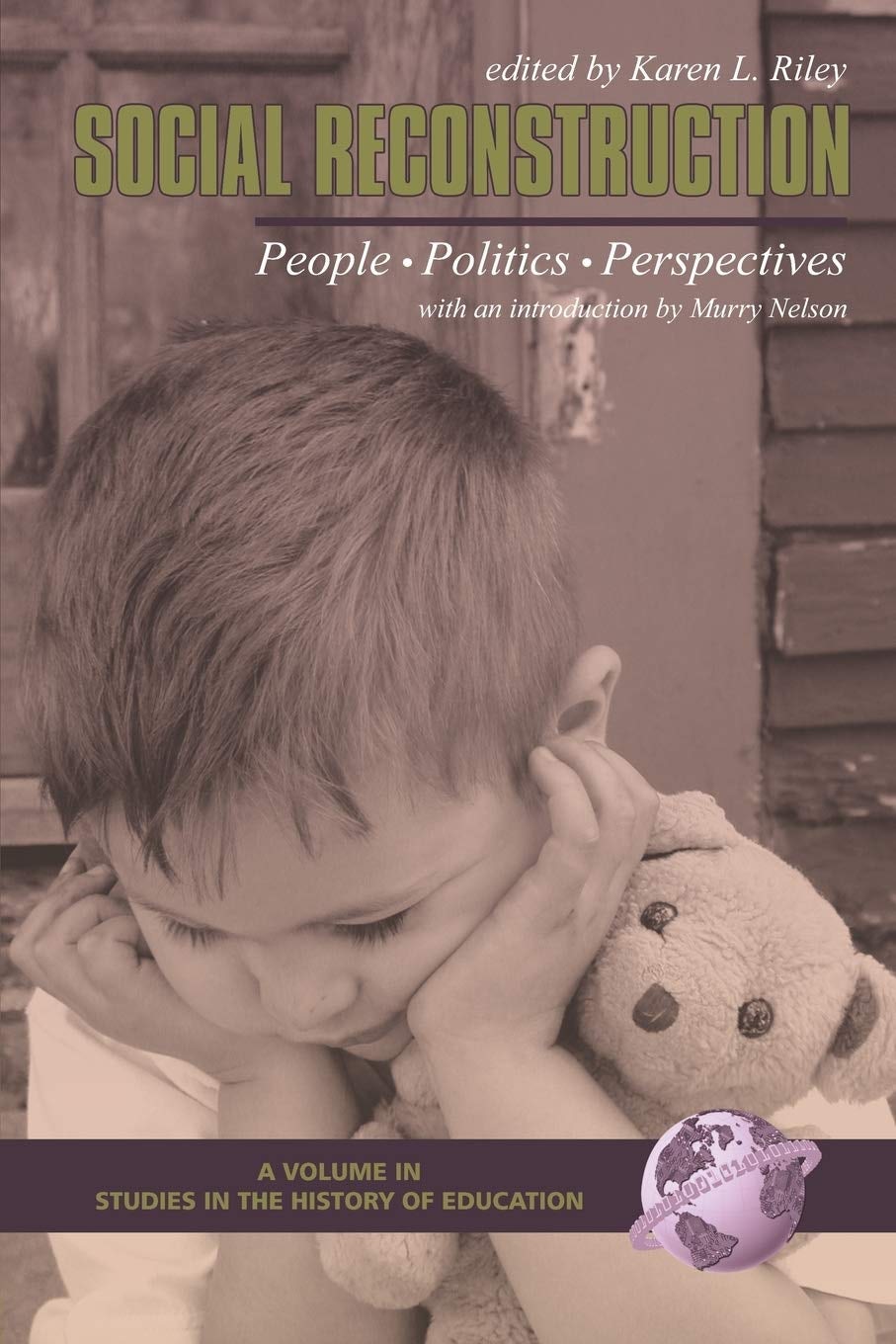
Social Reconstruction as a philosophy, stream of thought or “official program” ois often synonymous with Depression-era Progressivism. But, Social Reconstruction, unlike progressivism, enjoyed political stardom. The spirit of progressivism, at least in terms of education, found a home in those enthusiasts who supported a child-centered perspective of education. Others, such as the essentialists viewed their progressive role as one that advanced the view of essential or basic education as the most sound approach to curriculum and teaching. Still others, more radical in their outlook, believed that progress should be framed with questions about social justice and equity. Proponents of social reconstruction included Harold Rugg and George Counts, although the “movement” was rich with supporters. To date, social reconstruction is only a by word in most texts that deal with the Progressive Era or progressive education, perhaps, because Rugg and Counts, the two most visible proponents, sought and received the political limelight, no matter how glaring. In any event, the depths of social reconstruction have yet to be plumbed. Hence, the first book in this series will offer a comprehensive treatment of Social Reconstruction, which include chapters that examine its proponents, political nature, and social justice programs born of and within the tumultuous context of progressive politics.


Introduction; Murry Nelson.
Part I. People.
Chapter 2. The Origins of Social Reconstructionism; Gerald Gutek and George S. Counts.
Chapter 3. Social Reconstruction with a Purpose: The Forgotten Tradition of William Bagley; J. Wesley Null.
Chapter 5. Social Studies vs. The United States of America: Harold Rugg and Teaching for Social Justice; Ronald Evans.
Chapter 7. Theodore Brameld: Reconstructionism for Our Emerging Age; Craig Kridel.
Part II. Politics.
Chapter 8. Education for Social Reconstruction in Critical Context; William B. Stanley.
Chapter 9. The Triumphism of Americanism: The American Legion vs. Harold Rugg; Karen L. Riley.
Chapter 11. Recent Social Trends, Social Reconstructionism, and the American Historical Association, 1929–1941; Joseph Watras.
Chapter 12. Social Reconstructionism and Educational Policy: The Educational Policies Commission, 1936–1941; Wayne Urban.
Part III. Perspectives.
Chapter 13. Curriculum Design and Harold Rugg: Implementing Social Reconstructionism; Barbara Slater Stern.
Chapter 14. In Search of Curriculum Theory: The Reconstructionists; Marcella L. Kysilka and Susan Brown.
Chapter 15. Social Reconstruction in Education: Searching Out Black Voices; William H. Watkins.
Chapter 16. Social Reconstructionist Curriculum Impulses: Pragmatism, Collectivism and the American Problem; Gerald Ponder.